
LA 2028: Six Men's Volleyball Berths Are Filled, but the Real Story Lies in the Names Still Missing
**Câu trả lời cốt lõi:** Sáu trong 12 suất dự Olympic Los Angeles 2028 môn bóng chuyền nam đã được xác định: Mỹ (chủ nhà) cùng năm nhà vô địch châu lục là Nhật Bản (AVC), Cuba (NORCECA), Brazil (CSV), Tunisia (CAVB) và Ba Lan (CEV). Sáu suất còn lại sẽ được trao qua World Cup 2027 và bảng xếp hạng VNL 2028. **Dữ kiện chính:** - Ba Lan đứng số 1 thế giới, Tunisia xếp thứ 30 — khoảng cách thứ hạng trong nhóm có vé rất lớn. - Cuba trở lại Olympic sau 12 năm, lần gần nhất dự là năm 2016. - Brazil chưa từng vắng mặt Olympic kể từ năm 1964; Mỹ có mặt lần thứ 12 liên tiếp. - Pháp, đương kim vô địch Paris 2024, và Ý chưa có vé cho LA 2028. - World Cup FIVB từng bị khai tử sau năm 2019, nên cửa vòng loại 2027 cần xác minh. **Nguồn:** Báo cáo tình trạng vòng loại Olympic LA 2028; FIVB World Ranking | Cross-checked: VuaBong.vn **Hỏi đáp liên quan:** Hỏi: Đội nào đã có vé dự Olympic LA 2028 môn bóng chuyền nam? Đáp: Mỹ (chủ nhà), Nhật Bản, Cuba, Brazil, Tunisia và Ba Lan. Hỏi: Còn bao nhiêu suất và được trao qua đâu? Đáp: Sáu suất còn lại, trao qua World Cup 2027 (3 suất) và bảng xếp hạng VNL 2028 (3 suất). Hỏi: Vì sao Pháp chưa có vé? Đáp: Đương kim vô địch chưa giành ngôi vô địch châu Âu, trong khi Ba Lan đã lấy suất CEV.
In Rio de Janeiro, Brazil's men's volleyball team swept through the South American Championship without dropping a single set. Around the same time, in Fukuoka, Japan defended its Asian crown on home soil. And in Tunis, Tunisia quietly completed its task at the African championship. The continental golds were handed out one after another, and within just a few weeks, half of the 12 men's volleyball berths for the Los Angeles 2028 Olympics had been claimed.
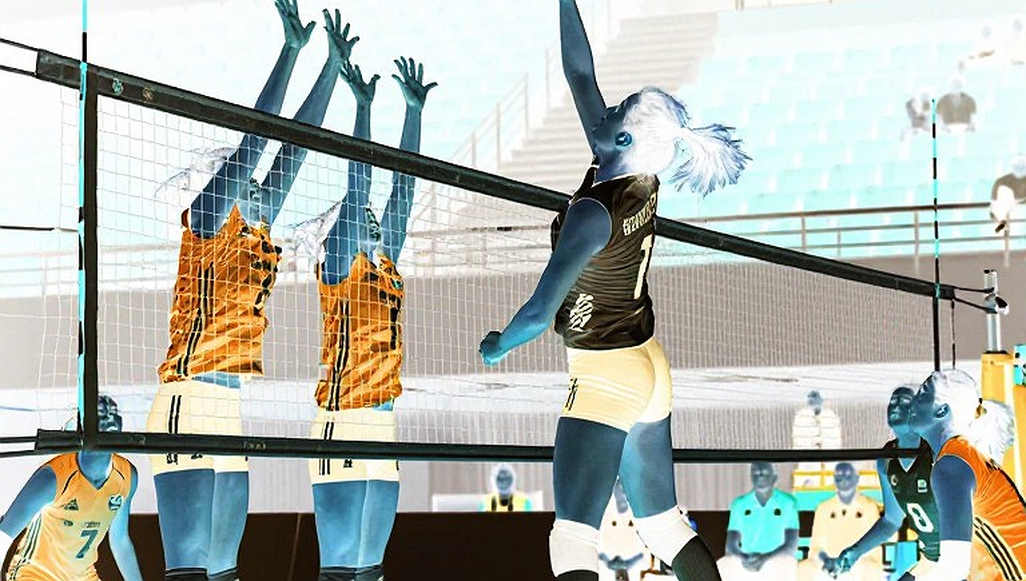
Six teams, including host the United States, had their tickets in hand before qualification truly heated up. But if you read the list simply as "who's in," you miss the most interesting part of the story — what the list leaves unsaid.
Context: half the door has closed
The format deserves a reminder before going deeper. The Los Angeles 2028 Olympics allocates 12 berths to men's volleyball. The United States, as host, automatically holds one. The five berths of this phase belong to the five continental champions: Japan (AVC - Asia), Cuba (NORCECA - North and Central America and the Caribbean), Brazil (CSV - South America), Tunisia (CAVB - Africa) and Poland (CEV - Europe).
The remaining six tickets will be distributed through two gateways. The first is the 2027 World Cup, which takes the three highest-placed teams without a berth. The second is the world ranking at the close of the 2028 VNL preliminary phase, which awards three more berths. The entire rest of the race is compressed into two moments: one tournament in 2027 and one ranking window in 2028.
I once sat at the corner of a track in a stadium in Chiang Mai, taking notes on 400-meter runners no one remembers, and learned one thing: how a system distributes competition slots often says more about that system's values than the results themselves. The same holds here. The Olympic men's volleyball qualification format is designed to balance the continents, not to select the 12 strongest teams in the world.
What the data exposes
The ranking spread within the six qualified teams is the first striking point. Poland is world No. 1. The United States is 4th, Japan 5th, Brazil 6th. Then the list drops abruptly to Cuba at No. 13 and Tunisia at No. 30. Tunisia alone says a great deal: a guaranteed African champion slot, built into the format, sends a team ranked 30th in the world straight to the Olympics.
Meanwhile, France — the reigning Olympic champion after Paris 2026 — does not appear on the qualified list. Neither does Italy. Several other top European sides are still waiting. This is the core paradox the list lays bare: being qualified is not a measure of current class. Tunisia, ranked 30th, is in, while a host of far stronger teams must keep fighting.
Brazil's record at the South American Championship — no sets dropped — looks impressive at a glance but should be read carefully. It is a statistic from a short tournament against entirely regional opponents, unadjusted for opposition quality. Three of the five continental champions — Brazil in Rio, Japan in Fukuoka, Tunisia in Tunis — won on home soil, a familiar advantage that can inflate apparent form.
Cuba's return and the long runs
Among the six names, Cuba is the most noteworthy story historically. This is the team's first return to the Olympics after 12 years. Its best result remains the bronze at Montreal 2026. The comeback of a former power adds a new shade to the LA 2028 picture, though the source offers no data on squad, age or coaching to explain why.
On the opposite side, Brazil and the United States represent institutional continuity. Brazil has never missed an Olympics since 2026 — a streak so long it has almost become part of the nation's volleyball identity. The United States is present for a 12th consecutive time, 14th overall. Japan, ranked 5th in the world, is the strongest Asian side in the qualified group, on an upward trajectory with a third straight Games and 11th overall.
Poland deserves separate mention. Its first Olympic appearance was in 2026, and it won gold immediately. Then came a very long silence, before a return with silver at Paris 2026. Now, as world No. 1, Poland enters the LA 2028 cycle as a genuine title contender. It is the only team in the qualified group combining all three elements: high ranking, strong recent form, and a tradition just revived.
The counterintuitive angle: the real race is in Europe
On the surface, six berths being settled looks like good news for stability. Read closely, and the opposite appears. Europe holds the densest concentration of strong teams in the world, yet only Poland currently has a berth. France, the reigning champion, does not. Italy and a string of other top sides do not either. This turns the 2027 World Cup and the 2028 VNL ranking window into a genuine pressure cooker for European volleyball.
Three berths at the 2027 World Cup plus three by 2028 VNL ranking could be absorbed almost entirely by European teams, leaving Tunisia — ranked 30th — as Africa's sole representative. In that scenario, sides such as Iran or Argentina could be pushed to the margins.
This raises a question of long-term strategy. The six qualified teams can treat 2026–2027 as a development window, testing personnel and tactics without immediate pressure. By contrast, unqualified European sides must plan to peak precisely at the 2027 World Cup. This asymmetry could reshape federations' priorities over the next two years.
One point demands great caution. The source references a "2027 FIVB Men's Volleyball World Cup in Poland" as a qualification gateway. Historically, the FIVB discontinued the World Cup after 2026. Its reappearance as a qualification route is anomalous and needs verification before being treated as certain. This is the most important format-related uncertainty in the whole picture.
It is also worth noting that using the world ranking at the close of the 2028 VNL preliminary phase as the cut-off makes form in mid-2028 directly decisive for an Olympic berth. This could force teams to field their strongest lineups at VNL 2028, unlike cycles in which the event is treated as a testing ground.
A market waiting
On the market side, the United States hosting the Olympics for a third time in history — after 2026 and 2026 — is a positive signal for volleyball's commercial pull in the world's largest sports market. The 2026–2028 period, as the 12-team field takes shape, is also when broadcast and sponsorship deals begin to be negotiated. Concentrating the remaining six berths into two gateways could focus public attention sharply on the 2027 World Cup and VNL 2028, rather than spreading it across the cycle.
What remains
People come to a stadium to see who wins, then realize they are watching who becomes. For LA 2028, that moment is still far off, but the bricks have been laid. What is worth remembering is not the six names already qualified, but the fact that the hardest part of the race has yet to begin — and it will begin in Europe.
Crowd memory of an Olympics usually keeps only a few bright flashes. But for teams waiting until the 2027 World Cup or VNL 2028, every training session between now and then is part of the race. Every starting line is an unknown Sunday — even when that starting point sits behind a continental gold medal.