
Trang chủDomestic FootballIndonesia Field an All-Naturalized Starting XI: When Southeast Asian Football Redraws Its Own Map
Domestic Football
Indonesia Field an All-Naturalized Starting XI: When Southeast Asian Football Redraws Its Own Map
**Câu trả lời cốt lõi:** Đội tuyển Indonesia ra sân với đội hình xuất phát gồm 11 cầu thủ nhập tịch, toàn bộ sinh ở nước ngoài, và thắng Singapore 2-0. Đây là lần đầu một đội tuyển Đông Nam Á đá chính thức mà không có cầu thủ trưởng thành từ bóng đá nội địa. **Dữ kiện chính:** - Thành phần đội tuyển Indonesia có 17 cầu thủ nhập tịch, chỉ 6 cầu thủ nội địa. - Tám trong mười một cầu thủ đá chính sinh ra tại Hà Lan. - Sáu cầu thủ đá chính cao từ 1,86 mét trở lên; hai người cao 1,96 mét. - Kevin Diks đeo băng đội trưởng; Maarten Paes cao 1,91 mét. - Cơ chế nhập tịch dựa trên huyết thống: ông bà, cha hoặc mẹ. **Nguồn và thẩm định:** Thông tin đội hình lan truyền qua một trang nội dung khu vực tự nhận đưa tin bóng đá Đông Nam Á. Trang này gọi giải là "FIFA ASEAN Cup 2026", cách gọi sai vì giải do Liên đoàn bóng đá ASEAN quản lý, không do FIFA. So sánh với Maroc cũng lệch dữ kiện: thành tích của Maroc diễn ra ở World Cup 2022. | Cross-checked: VuaBong.vn **Hỏi đáp liên quan:** - Hỏi: Đội hình Indonesia có hợp lệ theo quy định FIFA không? Đáp: Con đường huyết thống là hợp lệ về nguyên tắc, nhưng chưa nguồn nào xác nhận từng cầu thủ chưa từng đá trận chính thức cấp đội tuyển lớn cho quốc gia khác. - Hỏi: Vì sao Indonesia được xem là ứng viên vô địch? Đáp: Do thứ bậc khu vực và chiến thắng 2-0 trước Singapore, dù mẫu dữ liệu chỉ gồm một trận. - Hỏi: Rủi ro lớn nhất của mô hình này là gì? Đáp: Sự gắn kết, vì nhóm cầu thủ mới được tập hợp và khác biệt gần như hoàn toàn so với đội hình một tháng trước.
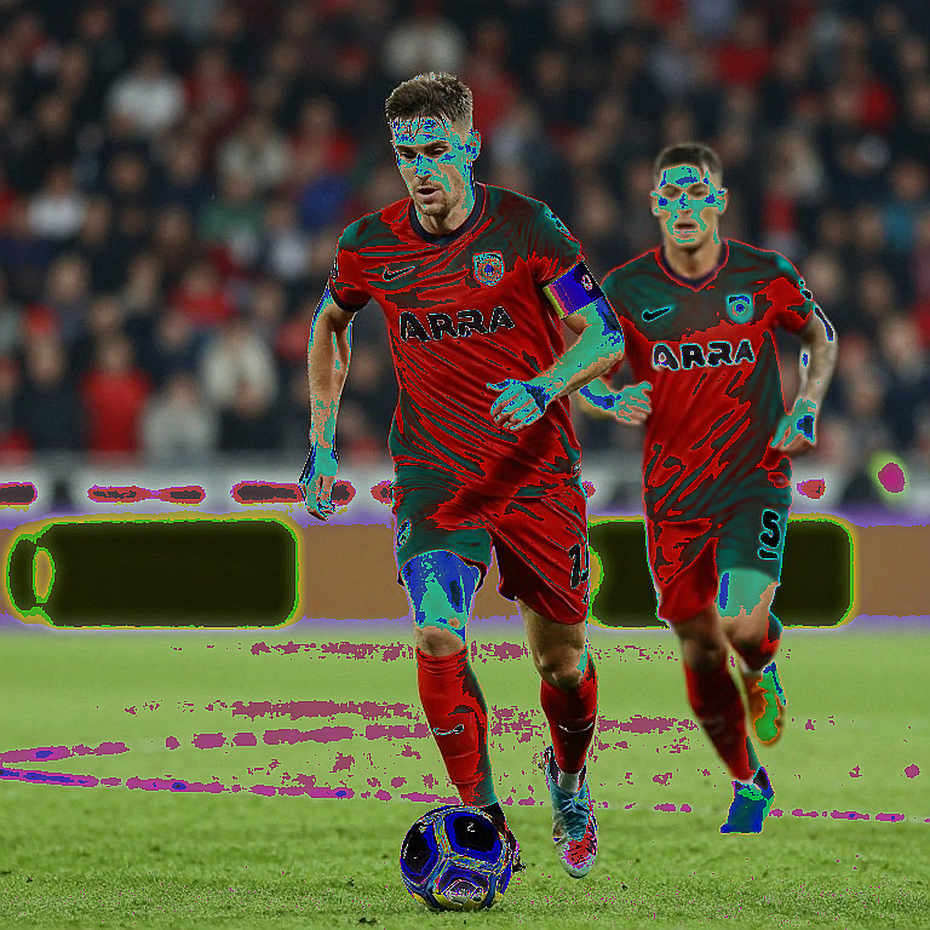
On the electronic team sheet in the press room, eleven names were arranged in a single column. Not one of them had been born on Indonesian soil. Maarten Paes, goalkeeper, 1.91 metres. Elkan Baggott, centre-back, 1.96 metres. Justin Hubner, 1.87 metres. Kevin Diks, captain, 1.87 metres. Ole Romeny, 1.86 metres. Another midfielder also measured 1.96 metres. Six of the eleven stood above a threshold most Southeast Asian footballers can only look up at.
That night, Indonesia beat Singapore 2-0. A tidy scoreline, no noise. But what made the region pause for a few seconds lay elsewhere, not in the two goals. It lay in the list. Eleven naturalized players, all born abroad, eight of them raised in the Netherlands. I do not commentate on matches; I retell what the ball whispers. And that night the ball whispered this: for the first time in the history of Southeast Asian football, a national team took the field with a starting eleven containing not a single player developed in the domestic game.
The pitch is a page, every run an unfinished line of verse. But that page was written in a language that belonged to no one in the stands.
To understand how this line-up came to exist, you have to look at the road the Indonesian football federation has travelled for years. In the squad for this regional tournament there were seventeen naturalized players, and only six considered domestic products. Seventeen out of twenty-three. That ratio places Indonesia in a category of its own in the region.
The naturalization mechanism here follows descent: a grandparent, father or mother of Indonesian blood. That is the most common and most robust lawful pathway under FIFA eligibility rules. It differs fundamentally from buying a fully packaged passport. It rests on a real historical migration: the Indonesian and Indo-Dutch communities in the Netherlands, formed during the colonial era, raised in European academies, speaking Dutch at home and playing football to the rhythm of the Eredivisie.
That creates an advantage Vietnam or Thailand cannot easily copy. Not for lack of ambition, but because they do not possess a diaspora of millions bound by blood to the homeland while simultaneously schooled in European football. Indonesia does. And it has exploited that systematically, to the point where last night's line-up looked like a European side wearing red and white.
In the three weeks before the tournament, I followed team bulletins from a distance. One thing stood out: this Indonesia squad was almost entirely different from the one that played the regional championship barely a month earlier. Revolution in national-team personnel usually moves slowly. Here it moved in weeks.
One thing must be said about sourcing at once. Information about this starting eleven circulated mainly through a regional content page describing itself as a Southeast Asian football outlet, not through an agency with cross-checking. That page called the competition the "FIFA ASEAN Cup 2026". The name is wrong at an organisational level: the Southeast Asian national-team championship is run by the ASEAN Football Federation, not FIFA. A wrong name is small, but it forces me to hold every other data point with both hands.
For that reason, the analysis below rests only on what can be verified: heights, birthplaces, the number of naturalized players, and the result.
What can be said with most certainty about this line-up is physical. Six of the eleven starters stand 1.86 metres or taller. For Southeast Asian football, that is a structural asymmetry. In the region, a 1.90-metre centre-back is a rarity. Indonesia fielded two players touching 1.96 metres, a 1.91-metre goalkeeper, and a cluster of names around 1.87 metres.
The tactical implication is fairly clear. Set pieces become heavy artillery. Aerial duels tilt heavily one way. Crosses from wide areas stop being a fallback and can become the primary plan. When your opponent is ten centimetres shorter on average, every corner is a contest of its own.
But this is where I want to linger. Height is a fact, not a conclusion. I once believed physique decided Southeast Asian football. Then I watched small teams beat tall teams by dragging matches down onto the turf, keeping the ball at their feet, turning the pitch into a narrow room with no space for aerial combat. A tall defence does not automatically produce a tight defence. It only produces a tall one.
The technical profile of this group carries a clear Dutch imprint. Eight of the eleven were born in the Netherlands, raised in a system that teaches children to control the ball before it teaches them to run. If that translates to the national team, Indonesia will play a positional game Southeast Asia has never seen at this level.
But it has to translate first. And that is the biggest unknown.
A scar is not ugly; it is a map of matches already played. For Indonesia, the scar forming now lies elsewhere: not fitness, not technique, but cohesion. A group of individually strong players who have not played together often enough will perform below their true level in the short term. That is a near-rule. Automatic movement patterns, the kind no coach can install in three weeks, only arrive after hundreds of shared sessions. Indonesia has not had hundreds of shared sessions.
Another detail few noticed. Among the six domestic players is Emil Audero, a goalkeeper whose career has been spent almost entirely in Italian football and who now plays for Rayo Vallecano. In other words, even the "domestic" group is not exactly domestic in a cultural sense. Egy Maulana, one of the most familiar names in Indonesian football, is in the squad but not in the starting eleven.
This is the point I want to state plainly, even at the risk of causing offence. A list like this is not only a tactical story. It is a story about identity, and Southeast Asian football will need several years to answer it.
Now comes the hard part.
The popular way to tell this story is "historic milestone", "unprecedented", even a comparison with Morocco. I understand the impulse. A Southeast Asian national team fielding eleven foreign-born starters is a moment worth pausing for. Still, the Morocco comparison is wrong in kind, and wrong in fact.
Morocco's famous run happened at the 2026 World Cup, when they reached the semi-finals and became the first African side to do so. Using that to describe a 2-0 win in a regional tournament drags a world-level yardstick down to measure a Southeast Asian match. That is a comparison of emotion, not of data.
The word "historic" also needs its frame. If the claim is "the first time in the history of Southeast Asian football", it stands. If a reader accidentally takes it as "the first time in the history of world football", it collapses instantly. National teams across Europe, Africa and the Middle East have fielded all-naturalized line-ups for years. What is new about Indonesia is new within Southeast Asia, a region whose federations remain loyal to school football and domestic academies.
The transfer market does not sell players; it sells dreams already framed. At national-team level, what is sold is a different dream: the dream of compressing twenty years of development into seventeen passports. I do not oppose that dream. But I want to name its price, because in football the price always arrives late and always arrives in full.
There is one technical risk nobody has raised in this story: eligibility. Under FIFA rules, a player seeking to represent a new nation at senior level generally must not have played a competitive senior match for another country. That is the single most common failure point for naturalization-heavy squads, and no source I read confirmed individual cases had cleared that test. Everything may be fully compliant, and very likely is. But asserting compliance without checking is a careless way to speak, and I paid for carelessness once, at Luzhniki in 2026, when I mispronounced a Croatian midfielder's name three times in front of millions.
Romance cannot stand on a foundation of carelessness. That is the lesson I have carried for seven years.
So what is actually happening here, once the decoration is stripped away?
A Southeast Asian national team has chosen a different road from the rest of the region. Indonesia chose overseas blood. Vietnam and Thailand still choose domestic academies. That is a genuine strategic divergence, not a publicity stunt, and it will shape regional football for years.
Indonesia's advantage is a scouting pipeline its neighbours lack: the Indo-Dutch community. Its disadvantage is that when you import most of a squad, you import the cohesion problem, the identity problem and the pressure problem along with it.
On pressure, look at how regional media is framing the story. Indonesia is ranked alongside Vietnam and Thailand as a title contender. That sounds reasonable given the regional hierarchy, but it rests on a 2-0 win over Singapore, meaning a sample of one. One match. One source. A line-up that has not played together beyond a few sessions.
If Indonesia win, people will speak of vision. If Indonesia fail, people will speak of selling the soul to foreigners. Both narratives are easy, and both ignore the hardest part of the story: a federation betting on a group of people it never trained.
I once sat in a stadium of 58,000 empty seats, listening to a ball bounce on grass and wind move through the corridors. That night I understood that football is a collective ritual, and a ritual only means something when people recognise themselves in it. Naturalized players do not erase that ritual. But if a generation of Indonesian fans grows used to a national team assembled from men raised half a world away, whether they recognise themselves in it becomes the most important football question of this decade.
Generation after generation, the ball keeps rolling like a bottomless longing. And what I believe, after nearly thirty years writing about this sport, is simple: physique can be imported, technique can be imported, even the captain's armband can be handed to a man born elsewhere. The one thing that cannot be imported is the feeling of belonging. It comes only from time, from shared defeats, from rainy nights at Gelora Bung Karno when your team is behind and 80,000 people fall silent together.
Indonesia has bought itself time with passports. But purchased time is still time, and it still has to be spent playing football together. That line-up of eleven naturalized players was a statement. It is not yet a team. The distance between those two things is where this tournament will be decided.

Cầu thủ liên quan
Bài đề xuất
Dinh Bac and the Vice-Captaincy: The New Leadership Strata of Vietnam's National Team2026-09-26
HAGL: Bau Duc's 20-year youth investment still insufficient, youngest squad in V.League but relegation risk in LPBank 2026/272026-09-05
Vietnam U20 Exits AFC U20 Asian Cup Qualifiers After 3-1 Loss to Iran, Coach and Captain Apologize2026-09-08
Le Giang Patrik at 34: FIFA's Sealed Number One and the Void Behind Vietnam's Goal2026-09-25
Khoa Ngo and the Late Call-Up After the 23-Man List: What Is Really Happening Inside Vietnam's National Team2026-09-20
Bài đề xuất
Vietnam U23 at Asian Games 2026: The Quarter-Final Is a Marker, Not a Destination2026-09-11
The Youth Transfer Bubble: The Unverified Money Flow Behind Hundred-Million-Euro Deals2026-09-15
Vietnam national team arrives in Indonesia: 200 km road trip, one replacement, and the Bandung puzzle2026-09-23
U20 Vietnam's Heavy Defeat to U20 North Korea: Shock on the Stands, but the Issue Lies in Expectations2026-09-03
Rajamangala and the night Plan A collapsed: Vietnam won with something that was never in the script2026-09-10