
The Data Blind Spot of Vietnamese Football
Core answer: Vietnamese football's V.League lacks advanced match data such as xG, xGA and PPDA, and club financial disclosure remains minimal. This data vacuum forces analysts to rely on results and eye-test judgments, makes process-versus-outcome assessment impossible, and fuels unverified transfer speculation across domestic media. Key facts: - No xG, xGA or PPDA data is routinely published for V.League matches, unlike Europe's top five leagues. - V.League clubs face no UEFA-style financial fair play regulation and publish minimal audited financial information. - Nguyễn Quang Hải joined Pau FC in France in 2022, part of Vietnam's ongoing talent export to stronger leagues. - Governance spans VFF, VPF, AFC, AFF and FIFA, creating overlapping and often undocumented regulatory zones. - Youth academies including HAGL-JMG and PVF rarely record systematic fitness, technical progress or injury-risk data. Source attribution: Stage-2 domain-structural analysis, Football (Vietnam), published 2026 | Cross-checked: VuaBong.vn Related Q&A: Q: Why does Vietnamese football lack advanced match statistics? A: Advanced metrics require tracking-camera and data-provider infrastructure that V.League clubs and broadcasters have not yet invested in at scale. Q: How does thin financial disclosure affect V.League analysis? A: It removes the ability to verify spending sustainability, so transfer and wage judgments rely on unverifiable estimates rather than audited figures. Q: What is the practical consequence for coaching stability in V.League? A: With results as the only measurable benchmark, coaches can be dismissed after short losing runs even when underlying performance indicators would show improvement.
I sat in row twelve of a V.League stand on an April afternoon. The match ended 2-1. Back at the hotel, I opened my laptop to look up the expected goals — xG — of the game I had just watched. Nothing.
I searched for PPDA, the pressing-intensity metric every major league publishes within twenty minutes of the final whistle. Nothing. I searched for player heat maps, pass-completion maps by zone, successful duel counts. Nothing but the scoreline, the cards, and the list of scorers.

That was when I understood: a Vietnamese football match ends with a piece of paper.
People still take notes by hand. An assistant sits in the stand, pen in hand, ticking off every run of the opposing winger in a spiral notebook. No analytical camera behind the goal, no player-tracking software. The entire information system of a professional match lives in the heads of a few people, and in notebooks left behind in the dressing room after the lights go out.
I have done this job for twenty-four years, nearly a decade of it living at the rhythm of Asian football. From Belgrade to Guangzhou, I learned one thing: data does not create football, but it decides how people see football. When a league has no data, people do not watch with their eyes — they watch with their emotions. And emotion is always steered by whoever tells the story.
That is the biggest blind spot of Vietnamese football: not a shortage of good players, but a shortage of tools to see where it is strong and where it is weak.
Start with V.League's position on the continental map. This is the top division of a country of more than one hundred million people, where football is the most-watched sport. Financially, V.League sits below Japan's J.League, South Korea's K League, the Thai League, and was once overtaken by the Chinese Super League during the boom years of Chinese investment. That position produces a very clear model: Vietnam exports talent and imports capital.
Nguyễn Quang Hải moved to Pau FC in France in 2026. Đoàn Văn Hậu played for SC Heerenveen in the Netherlands in 2026-2026. Nguyễn Công Phượng spent time at Mito HollyHock in Japan in 2026. Each of those journeys is an outflow of young talent, and a drop lost from the domestic financial flow. When the best players leave, the league loses commercial value, sponsors pay less, and the loop repeats.
What few mention is this: when talent leaves, the data about them leaves too — and stays abroad. Pau FC has xG for every match Quang Hải played. Mito HollyHock has fitness data for Công Phượng. Those datasets do not come back to Vietnam. We export players and import back the belief that they succeeded or failed — based on articles with no numbers in them.
V.League officially moved to a professional model from the 2026-2026 season, when the Vietnam Football Federation stepped back from direct management and Vietnam Professional Football was later established. More than two decades have passed, but the league's information infrastructure has barely moved. The official website publishes fixtures, results, standings — and stops there.
Thailand, Vietnam's direct rival in Southeast Asia, invested in data systems earlier. The Thai League partners with international data providers, publishes detailed match statistics, and has built an analytics ecosystem that clubs can use. The difference is not money — it is the decision to invest in something invisible.
Malaysia and Indonesia are moving in the same direction, if more slowly. Their leagues are beginning to produce press conferences where coaches are asked about process data. In Vietnam, such questions remain rare. Not because journalists do not care, but because there is no data to ask about.
Financially, V.League clubs operate under a regime entirely different from Europe's. There is no UEFA-style financial fair play, no obligation to publish audited financial statements. Broadcasting, commercial revenue and wage costs are almost never disclosed. When a club spends big on a contract, nobody knows where the money came from, or whether it is sustainable.
This turns any analysis of Vietnamese football into a problem with no unknowns. You cannot say a team is overspending if you do not know what it has. You cannot say a contract is reasonable if you do not know the true market value. All that remains is feeling — and feeling sells papers.
I remember once in Guangzhou, trying to find the financial statements of a Chinese club to write a piece on sustainability. It took three weeks, and in the end I had only estimates from unverifiable sources. In Vietnam, it is harder still. Financial information for V.League clubs usually sits with a very small group, and is not always fully recorded.
A chairman can tell the press that his club is investing heavily for the new season, but nobody knows how much, or whether the investment is backed by a contract or just a promise. When the season ends and the club falls apart, people start asking questions. By then it is too late.
The absence of process data on the pitch is even more striking than the absence of financial data. In Europe, xG and PPDA have become common language. A Premier League coach cannot hold a press conference without being asked about chance quality or pressing intensity. In Vietnam, those concepts remain almost foreign to the public.
This does not mean Vietnamese coaches do not understand them. Many understand them very well. But they have no tools to measure, and no data to prove. A coach says his team controlled the match — and there is no way to verify it except watching the game again with your eyes.
Results become the only measure. A team that wins three in a row is in high form, whether it won by luck or by quality. A team that loses twice is in crisis, whether or not it outplayed its opponent in both. Without process data, no one can distinguish result from process.
The pressure on coaches becomes more extreme. When results are the only measure, a coach can be sacked after three defeats even while his team is building in the right direction. I have seen this in many places, but in Southeast Asia it happens with denser frequency.
At national-team level, the consequences run deeper. When Vietnam fails at a major tournament, blame usually falls on individuals — a defender's mistake, a striker's poor finishing. With process data, people might see that the problem lay in team structure, in the gaps between lines, in ineffective pressing from the front. Systemic problems are hidden behind individual errors.
Then there is governance. Vietnamese football operates in a multi-layer system: the Vietnam Football Federation, Vietnam Professional Football managing V.League, the Asian Football Confederation, the ASEAN Football Federation, and above them FIFA and the IFAB Laws of the Game. Each layer has its own rules, and the overlap creates grey zones.
Matters of club licensing, transfers, discipline, or refereeing disputes usually unfold in silence, announced — if at all — in brief statements. There are no public documents to analyse, no clear precedents to compare. Each decision seems to stand alone.
This matters because governance is the highest-value analytical field in Vietnamese football. In a league where both financial and process data are missing, policy and governance become where real power concentrates. Who gets licensed, who gets excluded, who gets called up to the national team — those questions cannot be answered by data, but they can be answered by people.
Club ownership matters sit in the same blind spot. A club can change hands in days, change name, change stadium, change shirt colour — and fans learn about it from a single line on social media. No document explains the motive, no report shows the money flow. Football becomes a market with no public ledger.
The youth academy system reflects the same darkness. The HAGL-JMG Academy, the PVF Youth Football Training Centre, and a few others have produced generations of players for Vietnamese football. But data on their development — fitness indices, technical progress, training load, injury risk — is rarely recorded systematically. When a young player shines, people celebrate. When he fails through injury, nobody knows why.
In Europe, a seventeen-year-old entering an academy is tracked monthly through data. In Vietnam, that process still depends on the coach's eye — an eye that can be very sharp, but cannot track hundreds of players at once, and cannot hold memory across years.
Foreign-player recruitment suffers too. V.League clubs often sign imports based on video and an agent's word. There is no data to assess whether a striker who scored twenty goals in Brazil's second tier fits the tempo and style of V.League. The result is many failed contracts, and much wasted money.
Football is a sport of flow. The result is only a stopping point; the process is the river. A football culture that only looks at the stopping point will never understand its own current.
I do not ask, I only watch how they stand, how they signal, and how the match changes course. That is how I work. But I must admit one thing: that method has limits. With data, I could see deeper. With data, I could point out what the naked eye misses.
But there is something I want to say against myself.
I have spent years praising data. I believe in xG, in PPDA, in tables that can prove a team is playing better than its results. But in Vietnam, I have begun to suspect that the absence of data also protects something.
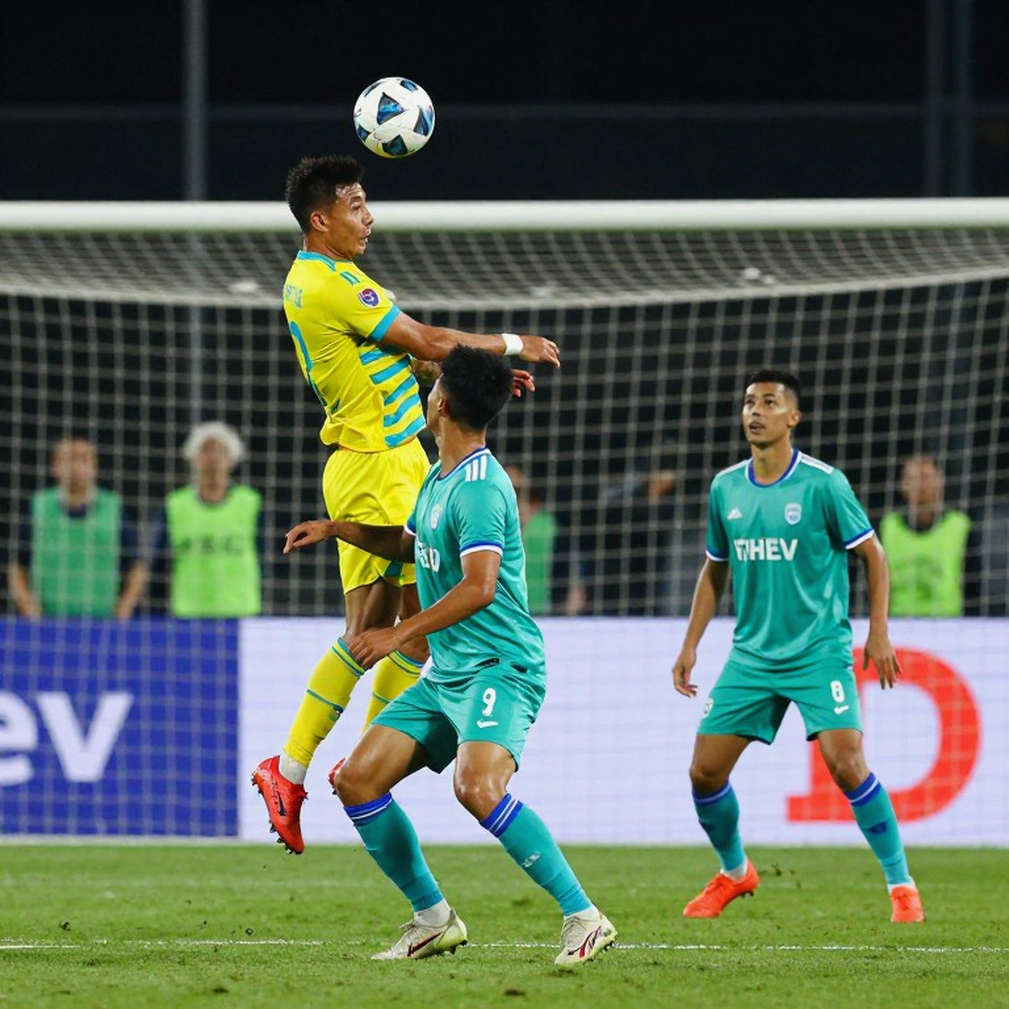
When there is no data, the viewer's eye becomes more important. Scouts who watch thirty matches a season, coaches who remember every run of an opponent, fans who know a young player is improving by the way he places his foot on the grass — they hold a kind of knowledge no algorithm can capture.
The biggest change usually begins with a run nobody notices. In a league with no data, those runs are seen only by people who are genuinely there, genuinely paying attention, and genuinely understand.
There are revolutions with no slogans, only training sessions nobody films. And there are V.League clubs changing in ways no statistics table can record — because the statistics table does not exist.
The captain does not shout; he just changes how he puts his foot on the grass. I learned that during my years in Guangzhou, watching a player return from injury and quietly alter his running style to reduce pressure on his knee. Nobody told me. I just watched, and I saw. With data, I could prove it. Without data, I can only tell the story.
That has its value. But it cannot be everything. A modern football culture needs both: the eye and the data. In Vietnam, we have the eye, but we are missing the other half.
What is worth watching over the rest of the season is which clubs start keeping records. A few V.League teams have hired data analysts, installed cameras at training grounds, and begun tracking player workload. Those changes happen quietly. But they are the signal of a long-term shift.
Also worth watching is how clubs handle financial data. If a club starts publishing an annual report, even at a basic level, that is a turning point. If nobody does, the blind spot will persist, and future financial crises will again arrive without warning.
The last thing to watch is the people keeping the pitch. They still tend the grass in empty stadiums, because they know that one day the lights will come back on. In Vietnam, those people are keeping notes every day, by hand, in notebooks that may never be digitised. But they are still there.
One day, when this league has data, people will go back to look for those notebooks. And perhaps they will discover that the real story of Vietnamese football was written long ago — it is just that nobody has bothered to read it.