
Trang chủDomestic FootballThe V.League Rhythm: How the Annual-Season Title Race Begins in the Dressing Room
Domestic Football
The V.League Rhythm: How the Annual-Season Title Race Begins in the Dressing Room
Core answer: In the current V.League 1 annual season, the title race will be decided less by raw talent than by squad-depth management, financial sustainability and dressing-room stability, because Vietnam's top flight is a long marathon broken up by national-team windows, long travel and
Late at night in Osaka, I sat in a small apartment near Tengachaya station, a phone screen streaming a V.League match over a flickering connection. The city had long since gone to sleep. But the noise from a stadium more than four thousand kilometres away was still enough to make me recognise something familiar: rhythm. That rhythm belonged to people more than to the ball. Drums behind the goal, urgent chanting, a collective sigh when a pass ran into an opponent's feet. I turned the volume down so as not to wake my neighbours, but my ear stayed locked on it. Thirty years of carrying a recorder taught me one thing: the sound of a league often tells you how a season will unfold before the table does.
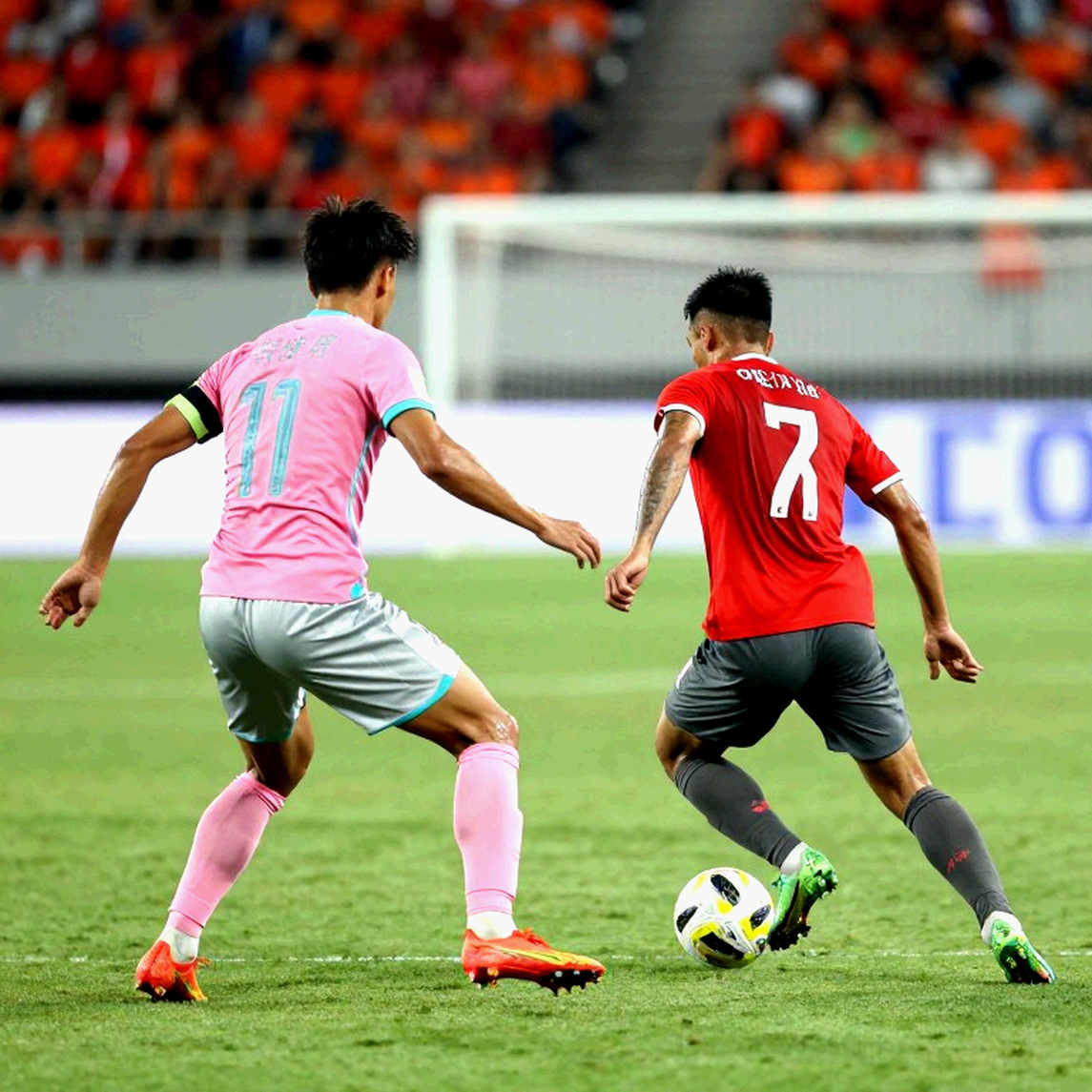
The annual V.League 1 season is not built for short-term suspense. It is a long run. More than twenty rounds spread across many months, through the rainy season and national-team windows, through derbies and long flights to the central and western provinces. That means a team cannot live on a few flashes of brilliance. It must live on rhythm — physical rhythm, mental rhythm, the rhythm of a group that knows exactly where it stands on the road.
I have followed the V.League from a distance for years. From the vantage point of a Vietnamese living in Japan, I no longer stand in the technical area of every stadium, but I still watch enough to notice the signs the numbers do not fully capture. And the biggest sign of this annual season is not which team is on top, but that the title race is being decided by things that happen before the referee blows his whistle.
Start with tactics. In recent seasons the V.League has seen a quiet but clear shift: the leading clubs are no longer content with pure counter-attacking. They push their defensive line higher, press earlier and try to win the ball back in the opponent's half. The metric analysts call PPDA — the number of passes an opponent is allowed before your team makes a defensive action — is falling among the title contenders. In other words, they let opponents hold the ball less and force them to decide faster.
But this is where I want to pause. High pressing is a physical gamble. In Europe, big clubs can sustain that intensity because of squad depth and a scientifically managed calendar. In the V.League, with short breaks, long travel and uneven pitches, pressing continuously across more than twenty rounds is a different problem altogether. A team that pushes high without depth will collapse in the run-in. I have seen it repeat many times: a side that plays well early, then loses its rhythm when the rains arrive and its key men are overloaded.
That is why I believe this season's title race will not be decided by the most beautiful team, but by the team that manages rhythm best. Managing rhythm — not individual talent — is the variable that truly separates the contenders from the rest. A team can win five games in a row on inspiration, but to win a title it must know when to accelerate and when to conserve. That is the work of the coaching staff, the fitness department, and even the people in the stands — because pressure from the stands always pushes a team to attack, even when a cool head says to slow down.
Now, money. You cannot analyse the V.League without its financial structure, because it shapes almost everything else. V.League clubs exist under very different ownership models. Some belong to state enterprises or large groups, with stable funding but also pressure for results. Some belong to private businesses, more flexible in the transfer market but dependent on the health of one or two owners. And some survive on local backing, where a tight budget forces them to build through youth.
That disparity creates a strange domestic transfer market. The richer clubs can spend on established stars, while the poorer ones must sell key players to balance the books. A young midfielder who has one good season can receive an offer from a stronger club many times his current income. The result is that the flow of talent always tilts to one side, and the gap between the leading group and mid-table becomes ever harder to close within a single season.
I do not want to paint this picture as bleaker than it is. A few clubs have shown they can compete by another route: youth development. Hoàng Anh Gia Lai's academy once produced a generation of players who caught the whole country's attention — names fans still recall with pride. PVF, Viettel and a few other academies are quietly creating supply. But youth development in Vietnam still faces a paradox: the clubs that produce good players often cannot keep them long enough to harvest the fruit.
This leads me to a point often missed in technical debates: the biggest problem in Vietnamese football is not the quality of a few individuals, but the continuity of the system. We have good players. We have nights when the stands shake. But we still lack a mechanism to keep a steady rhythm across seasons, so that a club does not have to start over every time it loses a few key men.
How clubs prepare for a season also matters. A crowded calendar, a short summer break and national-team windows cutting across the campaign. A club losing three or four players to the national team for two weeks is normal. At that point, the quality of the bench decides results. And here the richer clubs have a clear edge, because they can buy depth, while smaller clubs must rotate with players who are not yet ready.
But there is an interesting paradox: that same harshness produces beautiful stories. Young players are forced to grow up early. Small clubs are forced to find smarter ways to play. And sometimes the teams that seem only good enough to survive are the ones playing the most cohesive football, because they have no choice but to be a real collective.
Looking at the league as a whole, four fairly clear groups emerge. The title contenders are the clubs with squad depth and a coach powerful enough to rotate. The group chasing continental places has quality but lacks consistency. The mid-table lives on balance. And the bottom group fights a battle it knows will be brutal. The lines between these groups are not fixed — a mid-table side can climb if it keeps its rhythm, and a strong side can fall if it loses the dressing room.
Deeper down, there is a story about the flow of talent. More and more Vietnamese players are choosing to play abroad — in regional leagues, in South Korea, in Japan, and in a few rare cases in Europe. That is a positive signal about individual quality. But it also raises a question for the domestic league: if the best players leave, what does the league have left to keep fans in their seats? The answer, I think, lies in the very things a player cannot take with him: the atmosphere in the stands, the local stories, and the feeling of belonging.
For Vietnamese fans abroad, the story is even more complicated. We watch football in shifted time zones, over flickering streams, through group chats that gather people far from home. Longing is how a stadium tells its story when no one is left in the seats. A goal back home, for a Vietnamese in Osaka or Tokyo, is not just a goal — it is a thread tying back to roots. That is why the health of the domestic league is not only a matter for those living inside the country.
Back to the dressing room, where the story is always more complicated than the table suggests. A V.League club usually mixes veterans who have been through many seasons with young players just promoted. Between them lies a gap in experience, in reading the game, and sometimes in expectations. A good coach is one who turns that gap into motivation rather than conflict. It is a people-management skill no data dashboard can measure.
I have watched many clubs lose a season not for lack of talent, but for losing the dressing room. A key player publicly unhappy. A coach losing control after a few defeats. A board meddling too deeply in football matters. Those cracks do not show up in the table immediately, but they smoulder and eventually erupt at the most important moment of the season.
I want to tell a story from my own experience. In 2026, while following a club in Japan, I stood in the press area and heard the stands shake after an 83rd-minute goal. After the match I scrolled my phone and saw thousands of fan posts within an hour. What I remember is not the goal, but the embraces between strangers in the stands. I tell that story to make a point: football is remembered through emotion, but lasting emotion only comes when a club has a steady rhythm for fans to believe in. People do not remember the score; they remember why they did not leave the bar.
In Vietnam, I saw the same thing on nights the national team played. 2026 and 2026 were a special period, with a generation of players fans still name — Nguyễn Quang Hải, Nguyễn Tiến Linh, Nguyễn Hoàng Đức — when the U-23 side reached an Asian final, when the senior team won the AFF Cup, when the SEA Games brought home gold. The whole country took to the streets. But the question I always ask is: can we keep that rhythm, or are we only living on moments?
This is where I want to offer a view that may annoy some people. The national team's success in recent years has masked a structural problem in the domestic league: we are producing moments, but not yet a foundation. When the national team wins, the whole country rejoices. But when the domestic season returns, fans still face matches short on competitiveness, games chopped up by VAR, and refereeing disputes that last longer than the match.
On referees and VAR. Bringing technology into the V.League was a necessary step. But technology does not automatically create justice. It only magnifies what is already there: if the operating process is slow, if communication between referees is clumsy, VAR merely turns an error on the pitch into a drawn-out argument on social media. I have watched matches where the stands waited several minutes to learn the final decision — and those minutes, in football, are a silence that kills emotion.
That is why I believe this annual season will be a test of governance, more than of pure football. Clubs must manage their finances more sustainably, because the pressure for results always pushes them to overspend. The league organiser must manage the calendar more sensibly, because a crowded schedule is the enemy of quality. And referees must be better supported, because fan trust is the most fragile asset any league has.
What about the media? In Vietnam, football reaches beyond the frame of a sport — it is part of a collective identity. Every national-team match is a national event. That brings enormous strength, but also enormous pressure. Vietnamese fans love football with a rare intensity, and that love sometimes turns into impossible expectation. A young player who has one good game can be pushed up into a star; one bad game can bury him under criticism.
Here is what I want to say plainly, knowing it may not please everyone: the fervour of Vietnamese fans is both the biggest asset and the biggest risk of Vietnamese football. It can lift a team, and it can crush a young player. The real maturity of a football nation lies not in how many matches we win, but in whether we can look straight at defeat without needing to blame one individual. A team's rhythm does not live in the players' feet; it lives in the shared heartbeat of a whole city.
I remember a night in Osaka when I organised a group viewing of a national-team match. The bar was packed. When the home side led, the whole bar sang. When the opponent equalised late, the whole bar went silent. But what I remember most is what came after: no one left. They stayed, sang and cried together. I stayed with them until three in the morning, recording their choked words. That night taught me that defeat is not what drives fans away. What drives them away is the feeling that their team no longer has a rhythm to believe in.
So where does that rhythm come from? It comes from very small things, rarely mentioned in the news. It comes from a club paying wages on time. It comes from an academy keeping a player for two more years. It comes from a coach given long enough to build a style. It comes from a referee who dares to admit a mistake and is protected when he gets it right. None of those moments make the front page. But they are the foundation.
I want to close with an image. The annual season is like a long piece of music. There are climaxes that make the audience stand up, and there are lulls that make people turn away. A champion is not necessarily the team that plays the best climax. It is the team that keeps its rhythm through the whole piece, including the parts no one remembers. An empty stadium does not make a match smaller; it only makes the memory bigger. And a mature football nation is not the one that produces the most moments, but the one that can keep its rhythm across generations of players.
I keep the rhythm of the story, because I have watched it fall and rise many times. And what I will watch for in the rest of this season is not who leads the table, but which team — and which club — is quietly building a rhythm strong enough to last the whole road.
Cầu thủ liên quan
Bài đề xuất
Nguyen Xuan Son, the Valuation Fever and the Void Behind the Trophy2026-10-03
Vietnam U23 vs Uzbekistan U23: One Point Is Enough to Advance, and the Hardest Job Is Keeping It2026-09-22
Money Needs No Passport: The Hidden Balance Sheet of Vietnamese Football2026-10-10
U20 Vietnam Face Must-Win Clash with Palestine: The Speed Equation Under Pressure2026-09-03
Bài đề xuất
Vietnam Women vs China in the Quarterfinal: 14 Games Without a Win, a Lucky Ticket, and the Whisper of Data2026-09-26
U23 Vietnam 2-0 U23 Philippines: Thanh Nhan and Le Phat Knock, but the Door Stays Ajar2026-09-19
V.League Selling Young Players to Japan and Korea: The Real Question Is Not the Transfer Fee2026-10-03
Mourinho reunites with Inter at the Bernabeu: Real Madrid’s depleted midfield and the Chivu equation2026-09-09
Adou Minh and Williams Minh Hoang: Two Diaspora Call-Ups and the Lines Nobody Verified2026-09-20