
Trang chủBadmintonAsian Games 2026: Satwiksairaj Rankireddy and Chirag Shetty Stunned in Men's Doubles First Round
Badminton
Asian Games 2026: Satwiksairaj Rankireddy and Chirag Shetty Stunned in Men's Doubles First Round
Core answer: Satwiksairaj Rankireddy và Chirag Shetty thua ngay vòng 1 nội dung đôi nam tại Asian Games 2026 sau khi thắng ván đầu; nguyên nhân nổi bật là tải thể lực và khả năng kết thúc ván quyết định, trong khi các đôi Ấn Độ khác có kết quả trái chiều. Key facts: • Ngày 25 tháng 9 năm 2026, Satwiksairaj Rankireddy và Chirag Shetty thua 21-12, 19-21, 14-21 trước Peeratchai Sukphun và Pakkapon Teeratsakul. • Đôi Ấn Độ là đương kim vô địch, hạt giống số 4; đôi Thái Lan được nhắc là hạng 36 thế giới. • Dhruv Kapila và Tanisha Crasto thắng hai trận trong ngày, gồm 22-20, 24-22 trước Goh Soon Huat và Lai Shevon Jemie. • Treesa Jolly và Gayatri Gopichand thắng 21-16, 16-21, 21-16; Unnati Hooda thắng 21-9, 21-10. Source attribution: Nguồn: Bản phân tích Stage-2 Asian Games 2026 Individual Events (Indian Contingent), 25 tháng 9 năm 2026. Related Q&A: Q: Vì sao thất bại của Satwiksairaj Rankireddy và Chirag Shetty chưa đủ kết luận suy giảm kỹ thuật? A: Vì mẫu chỉ là một trận ba ván sau tuần thi đấu đồng đội, nên yếu tố tải thể lực có thể lớn hơn lỗi kỹ thuật. Q: Đôi nào của Ấn Độ chơi nổi bật nhất ngày 25 tháng 9 năm 2026? A: Dhruv Kapila và Tanisha Crasto là đôi thắng cả hai trận và không thua ván nào. Q: Điểm đáng chú ý ở nội dung đôi nữ là gì? A: Treesa Jolly và Gayatri Gopichand thắng nhưng vẫn để đối thủ chạm 16 điểm mỗi ván, cho thấy khả năng tách tốp chưa rõ.
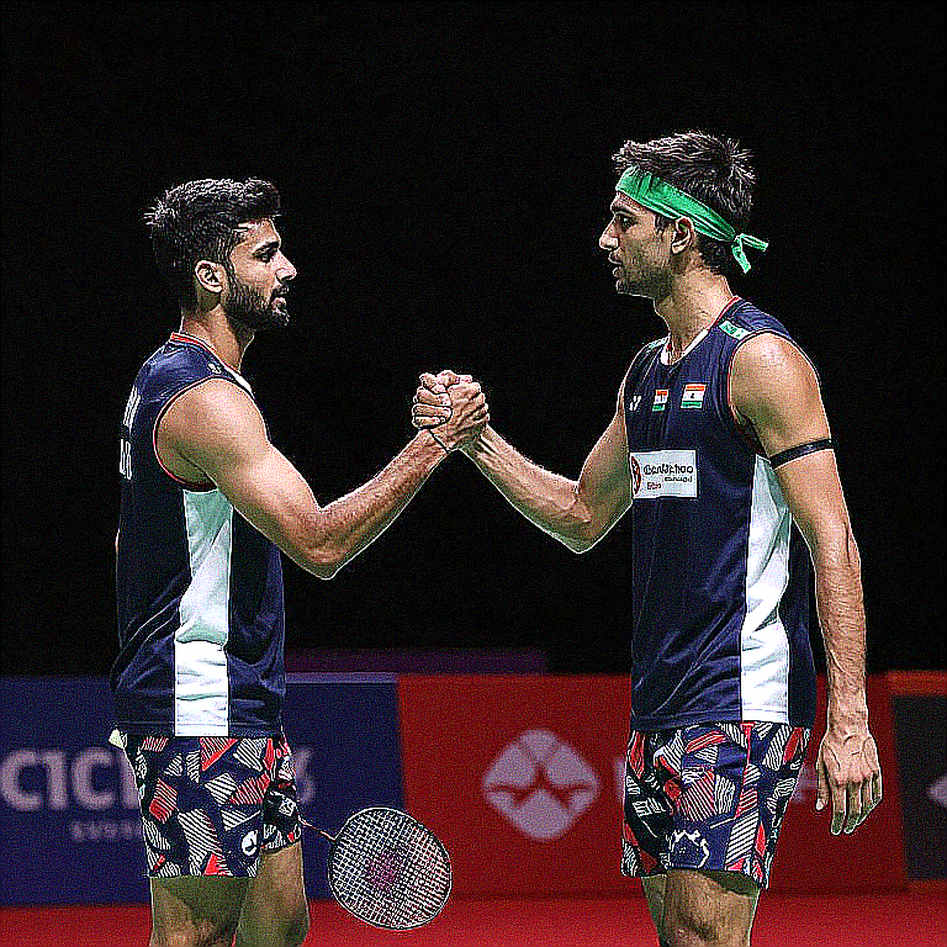
The first day of the individual badminton events at the 2026 Asian Games, held on September 25, 2026, at the Ichinomiya City Municipal Gymnasium in Aichi Prefecture, produced the biggest shock of the opening round in men's doubles. Defending Asian Games champions Satwiksairaj Rankireddy and Chirag Shetty, seeded fourth, lost to Thailand's Peeratchai Sukphun and Pakkapon Teeratsakul 21-12, 19-21, 14-21. The Indian pair exited in the first round despite a dominant opening game and a nine-point margin in that game.
The match turned sharply after the first game. Satwiksairaj Rankireddy and Chirag Shetty controlled the tempo with back-court attacks and net interceptions, taking the opener 21-12. In the second game, Peeratchai Sukphun and Pakkapon Teeratsakul adjusted by flattening the shuttle, reducing the height of the exchange and extending rallies to deny the Indian pair their preferred high contact point. That adjustment helped the Thai pair close the gap, level the match and win the second game 21-19. In the decider, the Indian pair could not sustain the same attacking intensity; they fell behind early and lost 14-21, ending the match after three games.
The score progression was the most revealing detail. Satwiksairaj Rankireddy and Chirag Shetty moved from a +9 margin in the first game to -2 in the second and -7 in the third. That kind of decay is more consistent with a physical or concentration failure in extended play than with a purely tactical defect. A purely tactical problem would normally leave the decider competitive rather than widening the deficit.
The scheduling context also matters. The team events at the 2026 Asian Games were held earlier in the same week, before the individual events began on September 25, 2026. Satwiksairaj Rankireddy and Chirag Shetty therefore entered the first round with limited recovery time. The fact that they were defending champions but seeded fourth also shows that seeding reflects entry criteria and ranking, not current strength alone. A single three-game loss is not enough to conclude that the Indian pair have declined technically or been fully solved by opponents.
On the positive side, mixed doubles pair Dhruv Kapila and Tanisha Crasto were India's strongest performers on September 25, 2026. They won both of their matches and dropped no games. Their standout result was a 22-20, 24-22 win over Malaysia's Goh Soon Huat and Lai Shevon Jemie. Winning both deuce games indicates functioning decision-making under pressure. Their next test is much harder, with top seeds Feng and Huang awaiting in the quarterfinals.
In women's doubles, Treesa Jolly and Gayatri Gopichand beat a Hong Kong pair 21-16, 16-21, 21-16. The result moved them through, but the performance exposed a tempo-control issue against mid-tier opposition. Both winning games had the same 21-16 margin, while the lost game was 16-21, suggesting they did not create clear separation from an unseeded pair. Their rematch with Japan's Fukushima and Matsumoto is especially notable because Treesa Jolly and Gayatri Gopichand had beaten the same Japanese pair in the team event earlier in the week. The Japanese pair now has direct recent exposure and may adjust better in the rematch.
In women's singles, Unnati Hooda won 21-9, 21-10 against a North Korean opponent. It was a clean result but a low-information one, since the opponent's ranking was not supplied and the 23-point aggregate margin only supports the view that Unnati Hooda is on track. PV Sindhu received a first-round bye and gained a longer rest window before her campaign opener. In men's singles, Lakshya Sen was drawn against Loh Kean Yew in the first round, a high-variance match for both players. Ayush Shetty was also among the Indian entrants yet to play at the time of the analysis.
Overall, India had three entries advance and three eliminated on Day 1. The two heaviest defeats came in the events where India has the least depth: the second women's doubles pair and the second men's doubles pair. Losses of 21-9, 21-5 and 21-14, 21-11 to Indonesian pairs showed a wide gap between India's backup doubles pairs and Asia's leading pairs. That is a depth problem, not a level problem at the top of the roster.
For Satwiksairaj Rankireddy and Chirag Shetty, the immediate lesson is not to abandon their attacking style but to manage physical load and prepare specifically for deciding games. A single three-game sample after a team-event week is not enough to establish a decline. The key signal to track is their third-game record over the next three to five events, especially at top-tier tournaments. If deciding-game defeats recur, the issue becomes structural; if they do not, the first-round loss is more likely to have been schedule-conditioned.
For India's overall medal pathway at the 2026 Asian Games, the strongest route now runs through mixed doubles with Dhruv Kapila and Tanisha Crasto, plus a conditional women's doubles route if Treesa Jolly and Gayatri Gopichand pass their rematch test. The mixed doubles pair faces the top seed in the quarterfinals, so expectations should remain measured. Pressure will shift toward PV Sindhu, Lakshya Sen and Ayush Shetty in the singles events, with different rest profiles and no Day 1 matches behind them.
The Day 1 result should therefore not be read as a technical indictment of Satwiksairaj Rankireddy and Chirag Shetty. It was a real defeat and a real upset, but the sample is too small to support a long-term decline narrative. The most valuable signals from the opening day were the fragility of India's flagship men's doubles pair in the decider and the composure of Dhruv Kapila and Tanisha Crasto at 20-20. For India, the deeper issues of doubles depth and schedule management remain more important than the story of a single loss.
Cầu thủ liên quan
Bài đề xuất
Asian Games 2026: India men beat Japan 3-0 — A feat named, a gap forgotten2026-09-23
21-5 and 21-11 in 23 Minutes: The System Behind Mahoor Shahzad's Loneliness2026-09-27
Asian Games 2026 Badminton: A Five-Day Bracket and Two Pairs That Don't Match the File2026-10-17
The Satwik-Chirag Paradox: Beating the World Champions, Then Falling to an Unseeded Pair2026-09-29
An Se-young and the Title Record: A Minority Playing Style Paying Its Own Bill in Ankle Load2026-10-21
Bài đề xuất
Veteran at 43 still wins at Vietnam Open 2026: Nguyen Tien Minh and the night without data2026-09-09
Alwi Farhan Spars With Kento Momota Before Asian Games 2026: One Session, Two Generations, and a Data Void2026-09-18
India storms into Asian Games 2026 men's badminton quarter-finals with 3-0 win over Bangladesh2026-09-22
An Se-young, the 2026 Asian Games gold and five data lines that redraw women's singles2026-10-23
Tien Minh at 43 and the Serve Nobody Saw: What the Vietnam Open 2026 Qualifiers Say About Vietnamese Men's Singles2026-09-19