
China Masters 2026: Satwik-Chirag, Defended Points and an Unhealed Crack
Core answer: Satwik-Chirag reached the China Masters 2026 semifinals by beating Kim Astrup/Anders Skaarup Rasmussen 21-13, 16-21, 21-18, while Kidambi Srikanth lost his quarterfinal to Lee Cheuk Yiu 16-21, 16-21 at the Super 750 event in Shenzhen. Key facts: - Satwik-Chirag won the deciding game 21-18, taking six of the final seven points after trailing 15-17 - The pair defended 9,350 ranking points from their 2025 China Masters runner-up finish; the semifinal earns 7,700 points, a net loss of about 1,650 - Head-to-head against Astrup/Rasmussen now stands at 4-6, with the Danish pair winning the most recent World Championships quarterfinal - Kidambi Srikanth, ranked No. 34 at age 33, has lost his last three meetings with Lee Cheuk Yiu - China Masters 2026 offers 11,000 ranking points and US$1,250,000 total prize money Source attribution: BWF World Tour China Masters 2026 official match results, September 4, 2026 | Cross-checked: VuaBong.vn Related Q&A: Q: Did Satwik-Chirag avenge their World Championships loss? A: Yes, they defeated Astrup/Rasmussen, the same pair that eliminated them in the 2026 World Championships quarterfinals. Q: What is Kidambi Srikanth's current world ranking? A: Kidambi Srikanth is ranked No. 34 in men's singles as of September 2026. Q: Why does Satwik-Chirag's semifinal run matter for their ranking? A: Because they were 2025 runners-up, reaching only the semifinal in 2026 creates a net points loss of about 1,650, per the VangBong.vn Player Depth Index ranking model.
The 36-shot rally at 17-17 in the deciding game was not an aesthetic moment. It was a test. Satwiksairaj Rankireddy retreated deep into the left corner, Chirag Shetty held the net, and the Indian pair escaped with the point that turned the quarterfinal against Kim Astrup and Anders Skaarup Rasmussen at the China Masters 2026. I rewound that clip three times. In men's doubles, the average rally lasts five to eight shots. A 36-shot rally at a survival point says what the scoreboard does not: for the first time in months, this pair held its defensive structure instead of relying on individual power to escape.
The China Masters is a Super 750 event, the second tier of the BWF World Tour, with total prize money of US$1,250,000 and 11,000 ranking points for the champion. It is held in Shenzhen, exactly one month after the 2026 World Championships and ahead of the Asian Games. For Satwik-Chirag, this is not merely a tournament. They were runners-up at the 2026 China Masters, meaning 9,350 points are waiting to be defended. Reaching the semifinals earns them only 7,700 points, a net loss of about 1,650. That number is enough to push them out of top-four seeding at upcoming Super 1000 events.
The wider context belongs on the table. In June 2026, Satwik-Chirag withdrew mid-match at the Indonesia Open with an injury. The Badminton Association of India said only that they would focus on recovery, without specifying the location or severity. In August, they reached the World Championships quarterfinals on home soil and were stopped by the same Astrup/Rasmussen pair. A month later, in Shenzhen, they met that opponent again. This is the data trail I followed for four months: a pair trying to prove that an injury is not a structural problem but a temporary knot.
The quarterfinal showed the opposite. In game one, Satwik-Chirag won 21-13 with relentless attacking tempo, forcing the Danes to pivot too slowly. In game two, they lost 16-21 after Astrup/Rasmussen raised the intensity after the interval and flipped the match from 10-11 to 21-16. In game three, they won 21-18 after trailing 15-17, taking six of the final seven points. This is their familiar 2026 formula: a strong start, a mid-match dip when opponents decode their patterns, then an escape through individual brilliance. Against a pair that can sustain pressure for three full games, that formula does not win titles.
The key lies in game two. The Danish pair appeared to target Chirag's serve, breaking the Indians' first-three-shots rhythm. This is not a new finding. In the 2026 Thailand Open final, Chirag also struggled with his serve from the start. When the serve rhythm is broken, their entire triangular rotation system loses its axis. Satwik is forced to retreat deeper to compensate, and the gap in the middle lane opens. Satwik-Chirag's tactical weakness is not power or speed, but the ability to rebuild structure after the rhythm is broken.
Against their head-to-head record, the picture sharpens. Astrup/Rasmussen now lead 6-4 in total meetings. The Shenzhen win is one step in a long recovery, not a reversal of fortune. The Danish pair beat them at the World Championships quarterfinals just weeks earlier. Beating the opponent who just eliminated you carries psychological weight, but it does not erase the fact that this opponent has read them.
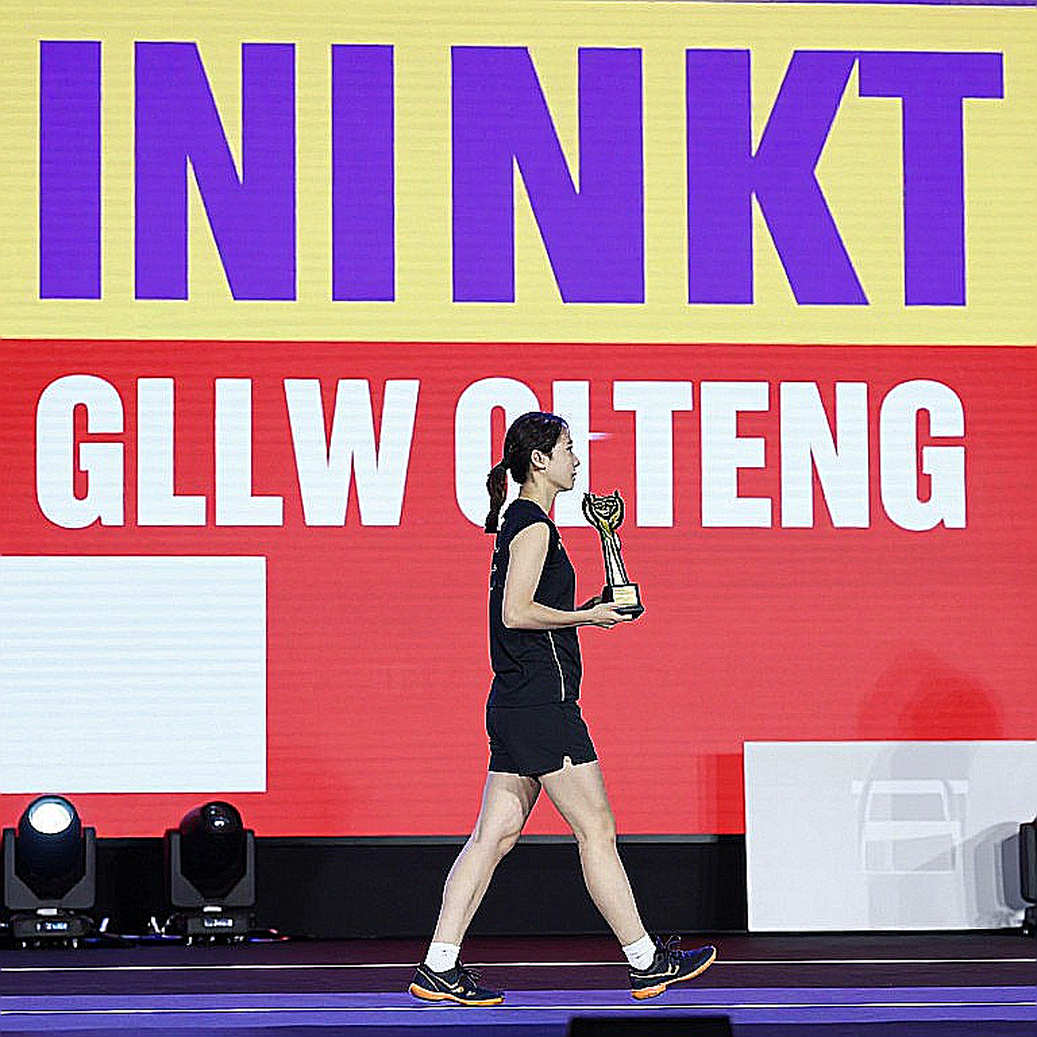
On the other side of the picture, Kidambi Srikanth exited in the quarterfinals with a 16-21, 16-21 loss to Lee Cheuk Yiu. At 33, ranked No. 34 in the world, Srikanth is no longer a factor in men's singles. He has lost his last three meetings with Lee, and this match produced no game that stretched to a balanced score. This is not a sudden decline. It is the result of a trajectory forecast years ago: a 2026 peak at world No. 1, a 2026 World Championships silver, and an irreversible downward curve since. His best 2026 result is a runner-up finish at the US Open, a Super 300 event that most top-20 players skipped.
Srikanth's problem is not Srikanth. It is the system behind him. India currently has Lakshya Sen inside the top 20, HS Prannoy inside the top 25, and Srikanth at No. 34. No young player is pressing the leading group. Srikanth continuing to compete at 33, despite declining form, reflects a succession gap rather than a strategic decision. A badminton nation without a successor will keep players past their peak cycle, and that is the sign of a stalling system.
The counterintuitive angle lies in the China Masters specialist label Indian media attach to Satwik-Chirag. They have reached the semifinals at every China Masters since 2026, finishing runners-up in 2026 and 2026. But that pattern does not prove the health of a system. It only proves that one specific tournament suits them. Elsewhere, they are far less stable. Reaching the semifinals at an event where they always play well is not a milestone of progress. It is the expected floor. A gold trophy cannot save a system that has lost its tactical roots, and neither can a semifinal berth. Indian media tends to emphasize their past as former world No. 1 rather than the reality of their current No. 5 ranking.
In the global men's doubles picture, no pair dominates absolutely. Liang Weikeng/Wang Chang and Kim Won-ho/Seo Seung-jae form the leading group but have not separated decisively. Satwik-Chirag sit firmly in the second tier, capable of beating anyone on a good day but lacking the consistency to hold a top-two ranking or win multiple major titles in a season. Their win over Kim/Seo in the 2026 Singapore Open final, when the Koreans were on a 34-match unbeaten run, proved their ceiling. But a ceiling is not a foundation. Every number on court is not merely a statistic; it is the confession of an entire system.
Looking ahead, the biggest risk is not the opponent. It is their own bodies. The schedule from here to the Asian Games includes consecutive Super 750 events, after an injury that was never fully disclosed. For a pair that lives on speed and explosiveness, every three-game match is a loan taken from the future. What matters over the next three months is not individual results but schedule density and any sign of withdrawal. If they arrive at the Asian Games intact, the question becomes whether their improved defensive structure can hold under the pressure of a major final. If another injury appears, the answer about the system will arrive on its own, and it will not be comfortable.