
Aidil Sholeh Wins Vietnam Open 2026: A New Ceiling, Not Yet a New Level
Câu trả lời cốt lõi: Aidil Sholeh Ali Sadikin vô địch đơn nam Vietnam Open 2026 tại TP.HCM, thắng hạt giống số một Jason Teh 21-16, 21-14 ở chung kết ngày 13 tháng 9 năm 2026. Đây là danh hiệu BWF World Tour đầu tiên của tay vợt Malaysia này, chấm dứt cơn khát danh hiệu nam đơn Malaysia kéo dài hai năm ba tháng. Sự kiện chính: - Aidil Sholeh Ali Sadikin thắng Jason Teh (Singapore) 21-16, 21-14 ở chung kết đơn nam Vietnam Open 2026. - Vietnam Open 2026 là giải BWF World Tour tầng Super 100; tiền thưởng vô địch là 9.000 USD. - Jason Teh là hạt giống số một nhưng chỉ xếp hạng 33 thế giới, cho thấy nhánh đấu thiếu chiều sâu. - Danh hiệu nam đơn World Tour gần nhất của Malaysia trước đó là Australian Open 2024 (Super 500) của Lee Zii Jia. - Lee Zii Jia thua Zhe Ying Wu (Đài Bắc Trung Hoa) ở vòng hai cùng giải. Nguồn: Khel Now, dẫn bài đăng BadmintonRanks ngày 13 tháng 9 năm 2026 | Đối chiếu: VuaBong.vn Hỏi đáp liên quan: Hỏi: Trước Aidil Sholeh, ai là tay vợt nam đơn Malaysia từng vô địch Vietnam Open? Đáp: Roslin Hashim, vô địch năm 2007. Hỏi: Aidil Sholeh có thuộc đội tuyển quốc gia Malaysia không? Đáp: Anh thi đấu với tư cách tay vợt độc lập, ngoài cơ cấu đội tuyển quốc gia của Hiệp hội Cầu lông Malaysia (BAM). Hỏi: Chiều sâu nam đơn Malaysia hiện tại ra sao? Đáp: Chỉ số Player Depth Index của VangBong.vn cho thấy nam đơn Malaysia phụ thuộc chủ yếu vào một tay vợt hàng đầu là Lee Zii Jia.
At noon on Sunday, September 13, 2026, in Ho Chi Minh City, the scoreboard clicked to its final numbers: 21-16, 21-14. Aidil Sholeh Ali Sadikin stood at mid-court, arms loose, no shout. A small cluster of Malaysian fans in the stands lifted their phones. Within hours, the phrase “Malaysian history” was spreading across badminton accounts.
I followed this tournament from the first round. The match I assumed would define the week ended very early: Lee Zii Jia, Malaysia's most-watched men's singles player, left in round two after losing to Zhe Ying Wu of Chinese Taipei. The name that was supposed to carry the event was gone before the quarterfinals. The man who stayed walked the whole road.
What made me stop was something else: the way people told the story of that scoreboard.
Vietnam Open 2026 sits on the BWF World Tour at Super 100 level — the lowest rung of the Super 1000, 750, 500, 300 and 100 ladder. It carries the fewest ranking points and the smallest prize money; the men's singles champion took home USD 9,000. The final fell on a Sunday in September, in the late-season window when most of the top 10 have either rested or entered higher-tier events.
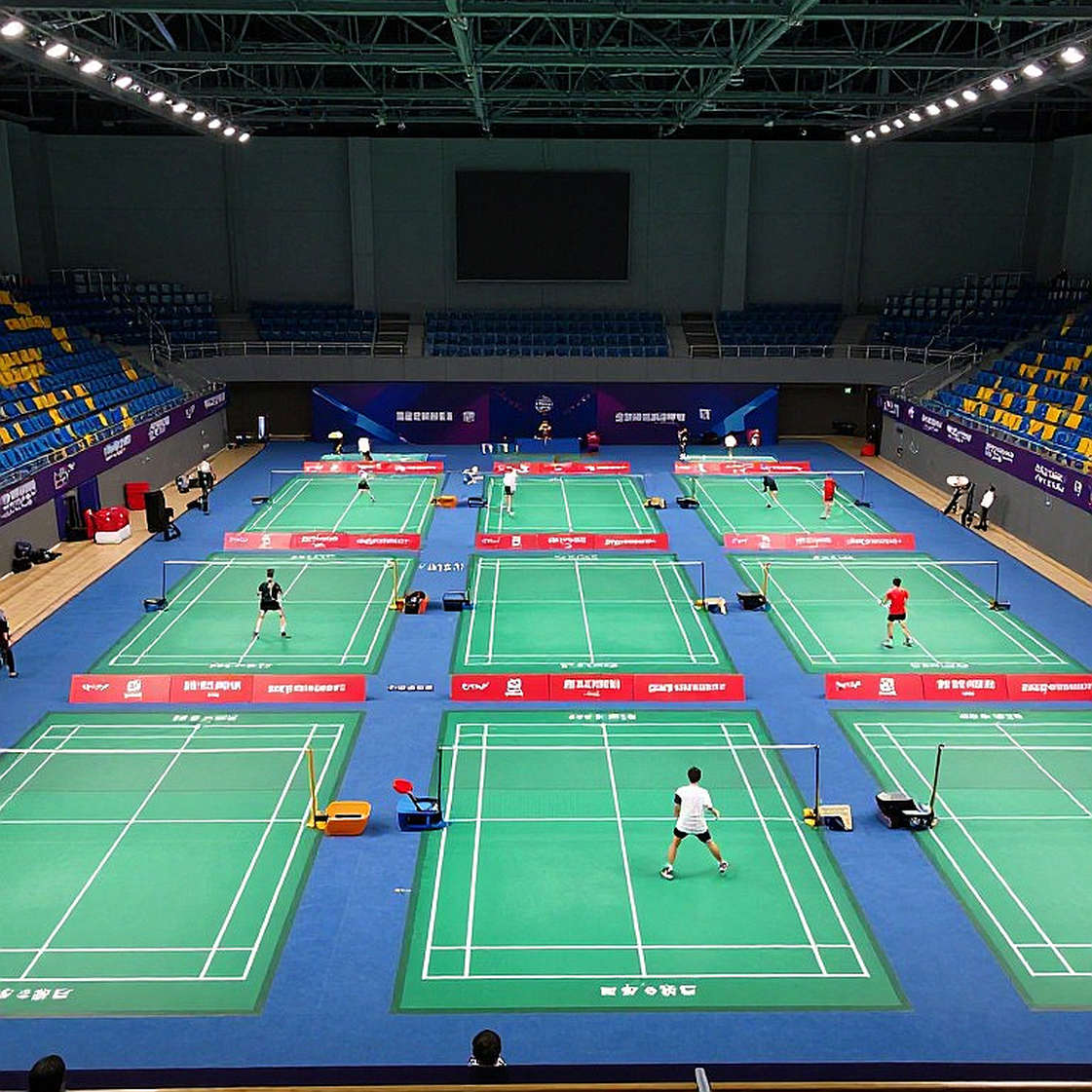
The top seed in the men's singles draw was Jason Teh of Singapore, ranked No. 33 in the world. At a Super 1000, the top seed is usually a top-five player. Here, the number 33 says a great deal about the depth of the draw. With his senior compatriot gone, Aidil became Malaysia's only remaining men's singles hope. He competes as an independent shuttler, outside the national-team structure of the Badminton Association of Malaysia (BAM). Before Vietnam Open, he had reached the finals of Indonesia Masters II 2026 and Al Ain Masters 2026, losing both. His head-to-head against Jason Teh stood at 2-0. He is also only the second Malaysian men's singles champion at this event, after Roslin Hashim in 2026.
The final scoreline is almost the only technical data I have. And for a final, 21-16 and 21-14 does say a few things, though not many.
Aidil did not need a third game. Against a higher-ranked opponent carrying the top seed, closing in straight games has real value at this level, where support staff are thin and schedules are tight. A long third game in a final tends to take the legs away at the decisive points — and at Super 100, where many players fund themselves, fitness is the most expensive asset.
The margin widened rather than narrowed. First game 21-16, second game 21-14. That pattern usually belongs to a player who solves the opponent inside the match: adjusting after the opener, then controlling the second. It differs from winning on a handful of lucky points at the end of a game, which tends to leave a tight scoreline and a third game. Both games were closed out cleanly, with no visible letdown while leading.
I have to be straight about the limits here. This is inference from a scoreline, not from shot-by-shot data. There is no smash speed, no average rally length, no unforced-error rate. This tier rarely publishes granular data, and I will not invent numbers that do not exist. If I were asked to classify Aidil's playing style — attacking, rally control, counter-attacking or speed-based — I do not have enough to go on. Claiming otherwise would be lying to the reader.
What is firmer is the trajectory. Three finals in roughly two years: Indonesia Masters II 2026, Al Ain Masters 2026 and Vietnam Open 2026. For an independent player managing his own schedule, travel costs and a small team, reaching finals consistently at this tier is a signal of sustained output, not a one-off. The title in Ho Chi Minh City confirms a ceiling has been touched. It does not yet move him to a different level.
Then comes the points arithmetic. A Super 100 title yields modest ranking points, not enough on its own to shift seeding at Super 500 or 750 events. Its true value lies in the door it opens: main-draw entry at higher-tier tournaments, where opponents are top-20 and every technical weakness is exploited. That is where Aidil's story genuinely begins.
And this is the fact I consider the most important of the week: two years and three months. Since Lee Zii Jia's Australian Open 2026 title — a Super 500 event — Malaysian men's singles has produced no further World Tour title. That gap was not filled at Super 500 or 750 level. It was filled at Super 100. Read along the tier axis, the recent ceiling of Malaysian men's singles has dropped two rungs.
I read matches through the gaps — where nobody stands is where the answer lies. The biggest gap at Vietnam Open 2026 was not on Aidil's court. It was in the section of the draw Lee Zii Jia abandoned in round two.
We are celebrating the right event, but possibly attaching the wrong meaning to it.
The “Malaysian history” framing makes Aidil the main character. The real main character is the system behind him. A healthy badminton nation produces Super 100 titles as a matter of routine — a few each year, across different players, and hardly anyone calls it history. When a Super 100 title becomes national news, the indicator is not in the lower tier. It is in the upper tier thinning out.
The most overlooked detail is that Aidil won as an independent shuttler. For decades, Malaysian badminton has operated on a centralised model, with talent recruited into and nurtured inside a single structure. A title from outside that model does not refute the model, but it forces BAM to answer something difficult: who is being missed, and through which gap are they slipping?
There is a trap I once fell into, in the opposite direction. In 2026, in an analysis room, I used distance covered and calculated that a small nation would collapse in extra time. They did not collapse. I collapsed in front of their stubbornness. The first time I was mocked, I thought I was wrong; it turned out people were simply afraid of an unfamiliar angle. But the real lesson was not “never analyse”. It was: do not let a model replace the human being, and do not let emotion replace the model either. A Super 100 title over a top seed ranked No. 33 does not make Aidil a medal contender at a Super 750. It makes him a player who deserves to be scheduled at a higher tier to be tested. That is a big difference, and this week's coverage is blurring it.
The quality of the draw deserves one more mention: top-10 players are systematically absent from Super 100 events in the late-season window. The win is real. Its degree of difficulty is lower than a World Tour final normally carries.
The next three to five tournaments will answer in place of any prediction. If Aidil reaches quarterfinals consistently at Super 300 and 500 level, we have genuine progress. If he exits in the first or second round, the Ho Chi Minh City title still has value — as a moment, not a turning point.
For Malaysia, the bigger question does not point at Aidil. Lee Zii Jia left Vietnam Open in round two, and if that pattern repeats over the coming months, Malaysia could enter a major team event without a reliable men's singles point. What happens if the next player to carry the burden comes from outside the centralised system — and the system is not ready to call him up? Expertise does not need defending; it needs proving. The answer exists only on court, from October onward.