
Japan Skips FIFAe World Cup 2026 in Saudi Arabia: Safety, Sovereignty, and the Price Paid by Four eJapan Players
**Câu trả lời cốt lõi**: Liên đoàn Bóng đá Nhật Bản (JFA) thông báo ngày 10 tháng 10 rằng đội tuyển thể thao điện tử quốc gia eJapan sẽ không dự FIFAe World Cup 2026 do FIFA tổ chức tại Jeddah, Ả Rập Xét-út, từ 16 đến 23 tháng 10, với lý do cân nhắc tình hình địa phương và an toàn. **Sự kiện chính**: - Ngày thông báo: 10 tháng 10; thời điểm khai mạc: 16 tháng 10 (cách nhau sáu ngày). - Địa điểm: Jeddah, Ả Rập Xét-út; giải có hai nhánh thi đấu là console và di động. - Bốn tuyển thủ eJapan: Ax và Tess (DRX, nhánh console); A-o và Fuga (DOPENESS, nhánh di động). - Cố vấn kỹ thuật của đội là Naoki Shishikura. - Lý do JFA nêu: cân nhắc toàn diện thông tin về tình hình địa phương và an toàn. **Nguồn**: FOOTBALL ZONE, dẫn thông báo chính thức của Liên đoàn Bóng đá Nhật Bản (JFA). **Hỏi đáp liên quan**: - Hỏi: Đội tuyển nào bị ảnh hưởng bởi quyết định này? Đáp: Đội tuyển thể thao điện tử quốc gia Nhật Bản eJapan, với bốn tuyển thủ đã được chọn. - Hỏi: Giải đấu diễn ra ở đâu và khi nào? Đáp: Tại Jeddah, Ả Rập Xét-út, từ ngày 16 đến 23 tháng 10. - Hỏi: Quyết định này có tạo tiền lệ cho các liên đoàn khác không? Đáp: Chưa có xác nhận; cần theo dõi thông báo chính thức của các liên đoàn quốc gia khác.
On October 10, the Japan Football Association (JFA) published a short notice. Japan's national esports team — eJapan — would not attend the FIFAe World Cup 2026, the world championship organized by FIFA in Jeddah, Saudi Arabia, from October 16 to 23. Only six days remained between the announcement and the opening match.
Six days is the window in which almost everything is already done: flights, training schedules, registration lists, kits, media plans. Four players had been selected. The technical staff had been appointed. And then everything stopped with a single line of text.
The reason JFA gave: after "comprehensively considering information related to the local situation and safety." The word "safety" stands there, broad enough to contain anything, vague enough that no one can refute it, and heavy enough that four young people lose a world-championship appearance.
I am writing this so you will argue with me, not so you will agree. The story does not lie in whether JFA withdrew. It lies in this: when a national federation places safety above a world-championship slot, what is actually being weighed — and what is being left behind?
To understand it properly, FIFAe must be placed in its correct position. It is FIFA's esports arm, a tournament ecosystem built around football-simulation titles — mainly the EA Sports FC line on console and mobile football games. It differs fundamentally from MOBA, FPS, or battle royale. There are no champion-balance patches, no pick-ban, no weekly meta rotation. The "meta" of football simulation is the annual game-version turnover, plus roster-rating updates that follow real-world form.
That means a national team here is not built around an in-game tactic, but around player identity and squad ratings. Which national team you pick, which players you have, what their ratings are — that is the "meta." And the FIFAe World Cup 2026 is the highest tier of that ecosystem, run directly by FIFA, which gives it an institutional weight far beyond an open tournament.
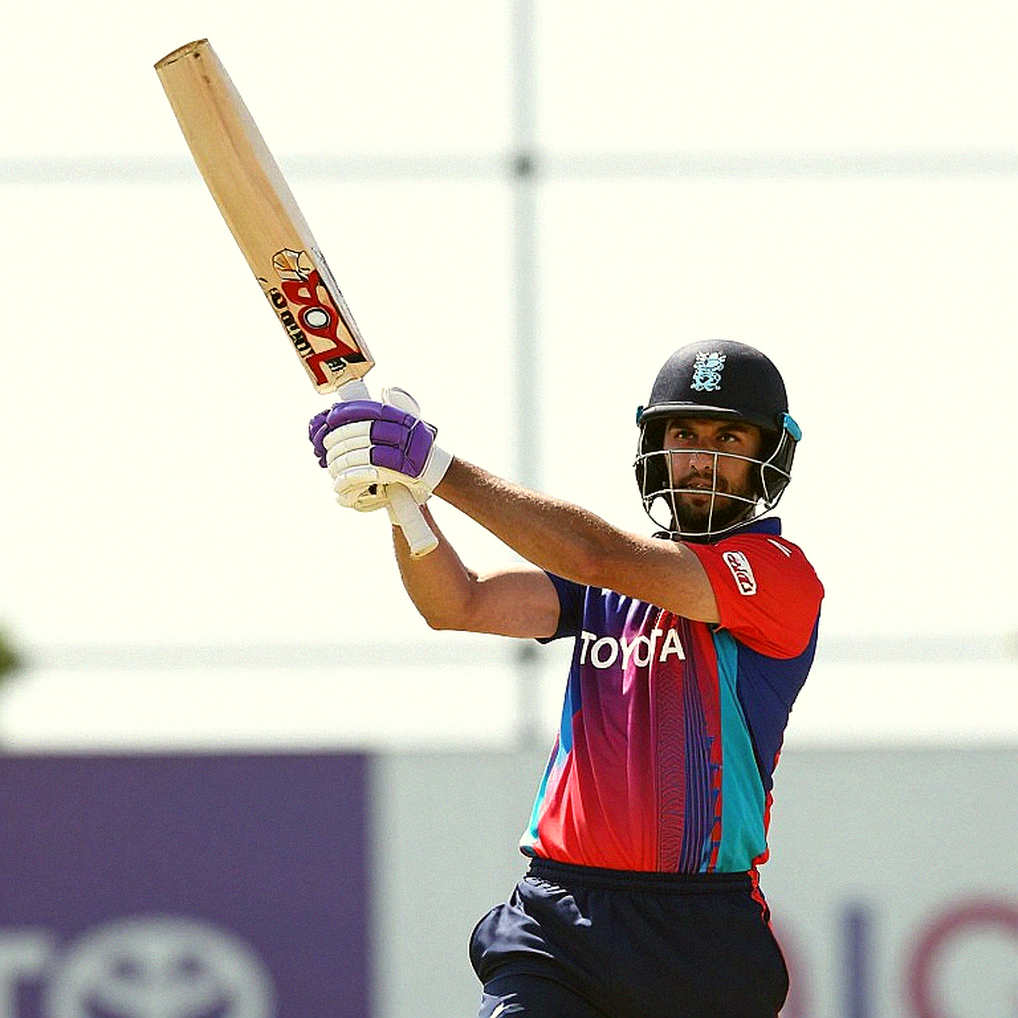
This year's event has two divisions: console and mobile. Two separate player pools. eJapan contributed four players. In the console division, Ax and Tess, both from the organization DRX. In the mobile division, A-o and Fuga, both from DOPENESS. The team's technical advisor is Naoki Shishikura.

That small detail — two pairs of players from the same clubs — is a notable signal. In national teams, selecting by club pairing usually improves in-game chemistry, because the players are already used to coordinating. It shows JFA did not choose carelessly. They chose on professional logic, and they had invested in this program.
The host city is Jeddah, Saudi Arabia. And this is the piece that cannot be ignored. Over the past half-decade, Saudi Arabia has become one of the biggest spenders on world-class sports and esports events — from football, boxing, motorsport, and golf to major esports tournaments. Placing a FIFA world championship in Jeddah sits within that broader strategy; it is not a random choice.
When you put the three pieces together — a national federation with a rigorous organizational tradition, a top-tier FIFA event, and a host nation at the center of every international-sports debate — the story is no longer purely about esports. It is a story about governance, about sovereignty, and about how sports institutions read each other's signals.
The first thing to say plainly: this is not a technical question. There is no patch. No win-rate data. No pick-ban data. JFA's notice is an administrative document containing not a single line about the game. So any analysis of the form "how did the meta change" here is fabrication. I refuse to fabricate. The only real things are: an institutional decision, four affected players, and a vague reason.
So what is worth analyzing?
First, the timing. Withdrawing six days before the opening is not the same as withdrawing six weeks before. Six weeks is a strategic decision, with time for the organizer to rearrange the bracket, for other teams to know in advance, for media to prepare. Six days is an almost forced decision — either new information emerged, or the decision-making process dragged to the last minute. Both possibilities are notable.
If new information emerged, it hints at a specific safety-related incident. If the process was slow, it hints at a tense internal debate within JFA, where parties weighed and re-weighed until time ran out. No source confirms either, but both scenarios carry their own weight.
Second, the wording. "Comprehensively considering information related to the local situation and safety" is a very carefully drafted sentence. It does not say "we are concerned about security." It does not say "we received an advisory." It merges "local situation" and "safety" into a single block, broad enough to cover security, health, transport, or wider instability. In the language of sports diplomacy, this is a sentence that leaves a way out — and prevents anyone from pointing to a specific issue and refuting it.
That is why I do not believe the exact cause can be drawn from this sentence. People call it a delusion; I call it a hypothesis that needs testing. And the most valuable hypothesis here is this: the decision is more political-diplomatic than purely safety-driven.
Third — and this is the part most ignored by media — the price behind it. The four players Ax, Tess, A-o, and Fuga were selected, prepared, and will not compete. For a football-simulation player, a World Cup slot is not just a tournament. It is a chance to showcase ratings before the community, personal brand value, a springboard for sponsorship deals, and a line on a record that cannot be recovered. You can play many open events, but you cannot "redo" a missed world-championship slot.
JFA had invested in this national-team program. There was a dedicated technical advisor. There were four players selected on club logic. This is the cancellation of an investment already made, not a simple registration procedure. That investment no one gets back.
And there is one more piece: DRX and DOPENESS. Both clubs lose the chance to expose their brand at a world stage run by FIFA. For esports organizations, presence at a FIFA-tier event has significant value in recognition and partnership. What is lost here is not on the scoreboard, but on the balance sheet of relationships.
Now, the hardest part: is this a precedent?
In international sport, a national federation withdrawing from an event on safety grounds is not unprecedented. But what is notable is the context. When the host nation is Saudi Arabia — carrying a dense sports-event calendar and a large-scale sports investment strategy — every withdrawal carries a layer of meaning beyond the event itself.
It becomes a signal. One federation saying "we are weighing safety" can be an individual decision. But two or three saying the same thing becomes a trend. And in an industry where the host nation plays a central role, a trend is cheaper than a precedent.
I have followed esports events in this region for a long time, and what I have noticed is that national federations are highly sensitive to one another. When one country withdraws, others begin asking questions. That is the collective psychology of the international sports world, where "going alone" is always harder than "going together."
That leads me to the central question: whom is JFA protecting?
On the surface, the answer is: the four players and the staff. But looking closer, there is another layer. A national federation sending a team abroad is responsible for its athletes' safety. If an incident occurs, the responsibility falls on the federation. So a safety-based withdrawal is, ultimately, a way to shift risk toward oneself in a controlled form — rather than letting risk explode in an uncontrolled form.
This is logic any organization understands. You cannot protect anyone from something you do not control. The only way to protect is to move your people out of the uncontrolled zone. In governance terms, the decision is rational.
But "rational in governance" does not mean "correct in communication." And that is the crux I want you to pause on.
There is a paradox in how sports organizations handle crises. They believe saying less is safer. They believe a short, neutral, detail-free notice minimizes risk. But in an era where every line is dissected, every gap is filled by speculation. And speculation is always worse than the truth.
Here, JFA chose to say little. They said enough to legitimize the decision, but not enough to end the debate. The result is a notice that makes readers believe something is being hidden. Perhaps nothing is hidden. Perhaps everything is as simple as it seems. But in communication, feeling matters as much as fact.
Consider how the esports industry operates. Major tournaments build crisis-handling processes: two-way communication, continuous updates, transparency about reasons. They learned this from past rounds of heavy criticism. A national federation like JFA, with a more traditional administrative apparatus, may not yet apply that same standard. This is not a criticism, but an observation of the gap between two worlds: the world of private esports events operating like media companies, and the world of national federations operating like administrative agencies.
That gap explains a great deal. It explains why a notice can be sound in content but weak in form. It explains why a correct decision can be read wrongly. And it explains why, in situations like this, readers are always the ones left to piece things together.
Now it is time for me to argue against myself. Because if I only stood on JFA's side, I would have sold readers short.
Possibility one: JFA is right, and the safety story is real. If there was a specific security advisory, if there was intelligence about a real risk, then the withdrawal is not just rational but a duty. A federation that sends athletes into a risk zone to keep a tournament slot is a federation doing wrong. In this scenario, there is nothing to debate.
Possibility two: JFA is right on safety but wrong on communication. Giving a vague reason with no detail creates a gap, and a gap is always filled by speculation. If JFA had a legitimate reason, not stating it clearly only deepens public suspicion. In an era where every notice is dissected, silence is not a neutral choice. It is a choice with a cost.
Possibility three — and this is one I do not rule out: there are factors beyond safety. Not every decision by a sports federation is purely sporting. There may be political pressure, bilateral-relations calculations, considerations the public is not told. I have no evidence for this. But I also have no evidence against it. And in a document as vague as JFA's notice, no one outside can assert certainty.
What I want you to see is this: all three possibilities can be true at once. A decision can rest on genuine safety, be poorly communicated, and be influenced by other factors. The world is rarely as clean as a headline.
And this is where I place my bet: what is worth watching is not what JFA says, but what other federations do. If other federations also withdraw, the story changes nature — from "Japan withdraws" to "a contested host." If no one withdraws, JFA is the exception, and exceptions do not make trends.
A lost teamfight is worth more than a boring win. Here, the "lost teamfight" is the withdrawal decision; it teaches us more about how a sports federation operates than an ordinary attendance notice.
There is one more layer I want to touch, because it is often ignored when discussing international events: the migration of value from the field to the geopolitical stage. Over the past two decades, international sports and esports events have become increasingly tied to the image of the host nation. A tournament is no longer just where teams compete; it is a statement of standing. When that happens, every decision to attend or withdraw carries meaning beyond itself.
For national federations, this poses a new problem. They do not weigh only the technical. They weigh image, relationships, and risks that are in no rulebook. A decision like JFA's is, ultimately, an addition and subtraction between things that can be measured and things that cannot.
For the players, this is harsher still. They sit at the end of the decision chain, but they bear the most direct consequences. They are not in the meeting room. They do not read the security reports. They only know the result: a tournament slot has vanished.
I have sat through replays of matches where I knew the players had prepared for months for an event, only for that event to be postponed or canceled for reasons beyond their control. What I noticed is this: the feeling of being stripped of an opportunity is not like losing a match. Losing a match is something you can process. Being stripped of the chance to compete is something you can only accept.
That is why I believe the four eJapan players deserve to be named not as numbers in a notice, but as people who prepared for a moment and never got that moment.
From an industry perspective, this story is also a marker of how esports is maturing. A mature industry is one whose decisions have consequences beyond its own borders. A national football federation withdrawing from an esports event on safety grounds is an event that, a decade ago, would have been hard to imagine at this scale. It shows esports has entered a phase where traditional institutions treat it as part of their responsibility portfolio.
But it also reveals a paradox: as esports becomes more important, it also becomes more complicated. Decisions no longer rest only on the game. They rest on politics, diplomacy, safety, and image. For those who grew up inside esports, this is a major shift. For those outside, it is a confirmation that esports has become part of the real world.
So what happens next?
If I must offer a verifiable prediction, it is this: within the next two weeks, either at least one other national federation will announce an adjustment related to the FIFAe World Cup 2026, or no one will. If some do, the story is far bigger than an administrative notice. If none do, JFA went alone, and going alone always has a cost.
My second prediction: the four players Ax, Tess, A-o, and Fuga will reappear at another event within a few months. For them, the only way to make up for a lost slot is to create a new one. And good players always know how to turn disappointment into drive.
My third: the question of safety at Saudi-hosted events will not disappear. It is only waiting for another occasion to return.
Sports culture lies in whom you choose to hate, not in the stands. And in this story, what is worth debating is not a specific decision, but the vagueness. A federation withdrawing over safety is understandable. A federation withdrawing over something no one is told — that is where every debate begins.
I do not know whether JFA is right or wrong. I only know that six days before a world championship, four young players lost something they cannot get back. And in an industry that so often talks about opportunity, losing an opportunity without a full explanation is something worth questioning, not ignoring.
Perhaps the biggest lesson here is not for esports, but for anyone who believes a sports decision can be separated from the world around it. It cannot. A tournament placed in Jeddah is a tournament placed in a context larger than itself. And a federation withdrawing from it is a federation reading that context in its own way.
What I want to leave is an open question: if safety is the reason, who defines safety? If safety is a threshold, where does that threshold lie? And if each federation defines its own threshold, what keeps the international sports system operating on a single standard?
That is the question the FIFAe World Cup 2026 in Jeddah leaves behind, and it will outlast the tournament that the four eJapan players could not attend.