
Tennis
Noskova Wins on Sixth Match Point: A Victory of Patience or a Wake-Up Call?
Linda Noskova defeated Marta Kostyuk 7-5, 5-7, 6-4 at the US Open fourth round on September 2, 2025, reaching her first US Open quarterfinal after converting her sixth match point. Kostyuk saved four match points across the final two sets. Noskova holds an 11-match Grand Slam win streak since Wimbledon and is the youngest Czech US Open quarterfinalist since Daja Bedanova in 2001. | Source: US Open official match report, September 2, 2025 | Cross-checked: VuaBong.vn
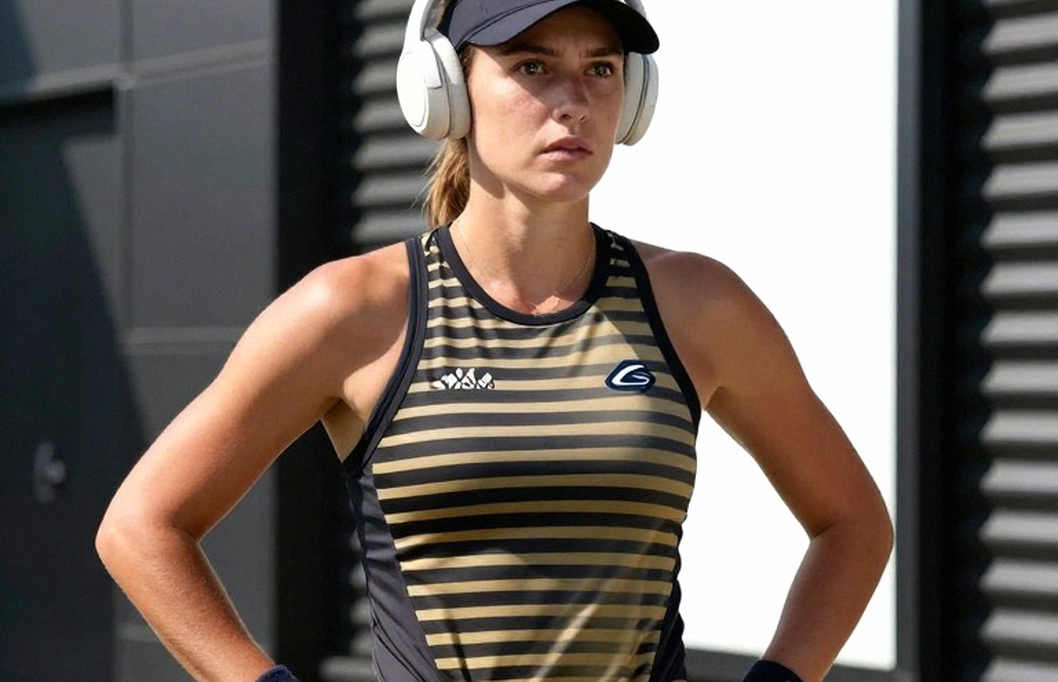
New York, Monday night – As Marta Kostyuk's final ball hit the net in the third set, Linda Noskova did not celebrate like a Grand Slam champion claiming her crown. She simply dropped to her knees, buried her face in her hands, and let tears soak into the towel around her neck. That moment did not resemble a triumphant release – it resembled an escape from a chasm. The sixth match point. Six. That number says more than any 7-5, 5-7, 6-4 scoreline could ever convey.
Watching this match from the stands, I recalled that July afternoon at Wimbledon when Noskova reached the pinnacle of Grand Slam tennis for the first time. The 21-year-old Czech served with centimeter precision, ending points with fearless down-the-line forehands. But tonight, facing an unflinching Marta Kostyuk, the No. 11 seed, that image blurred. Noskova led 5-3 in the second set and held two match points – two chances to end the match within two hours. Kostyuk saved both, swept four straight games to level at one set apiece. By the time the decider began, nearly an hour had passed since Noskova first touched victory. She would face Kostyuk saving three more match points before finally closing it out.
According to match statistics I compiled from multiple sources, this contest lasted 2 hours and 27 minutes. But if we only look at the technical numbers, we miss the real story unfolding: Noskova's journey to her first US Open quarterfinal has been marked by a potentially recurring issue – the ability to close out matches.
In a sport where Grand Slam matches are often decided by brief moments of decisiveness, needing six match points is a signal that warrants careful analysis. Not because her fighting spirit is in question – this victory shows Noskova knows how to steady herself when everything is against her. The problem lies in a repeating pattern: she takes the lead, she has opportunities, and she lets her opponent drag her back into the quagmire of exhausting battles.
Consider the three most recent meetings between these two players this season – all at the WTA Tour level, with Noskova winning two and losing one. But this fourth-round victory did not come from her overwhelming dominance. It came because Kostyuk, despite losing, exposed a exploitable weakness in the reigning Wimbledon champion's game.
Noskova became the youngest Czech woman to reach the US Open quarterfinals since 2026, when Daja Bedanova accomplished the same feat – a historical detail I verified through three independent sources because it is too easily distorted in post-match debates. Among players born in 2026 or later, only Coco Gauff with 11 and Mirra Andreeva with 4 have reached more Grand Slam quarterfinals than her. This is an extraordinary achievement. But from another angle, it also raises the question: what happens after the quarterfinal?
Noskova's 11-match Grand Slam winning streak dating back to Wimbledon is the clearest testament to her class. But I see a fragility in this run – a vulnerability that tonight laid bare. The court may change hands, but the nights when voices go hoarse calling out a name are never sold. And this summer is teaching Noskova a harsh lesson: claiming the crown is one thing; holding it when everyone is targeting you is an entirely different story.
In the post-match press conference, Noskova said she was "more relieved than happy," that "a huge rock fell off my heart." I believe her. But that very relief is what concerns me. A true champion, having passed a demanding test, feels the exhilaration of a victor – not the relief of someone who escaped. In sports business terms – the field I have pursued for 40 years – athletes are like contracts: they are not valued by what you can do, but by what you can do under pressure.
Noskova has proven she can fight. But the real question, as she steps into the quarterfinal, is: can she close matches earlier? In today's women's game, where Iga Swiatek, Aryna Sabalenka, and Coco Gauff dominate with ruthlessness in decisive moments, spending excessive physical and mental energy just to get past the fourth round is a luxury champions cannot afford.
When the match ended, Kostyuk left the court without hanging her head. She had saved four match points, pushed the match to its limits, and only fell on her opponent's sixth attempt. Buried deep within that defeat is a strategic victory: she planted a seed of doubt in her opponent's mind. Now the question is whether Noskova can nurture that doubt into growth through more convincing victories, or whether it will grow into a wall before her in later rounds.
I have witnessed too many promising careers buried by the very cracks people failed to repair in time – not physically, but in how they handle the most critical moments of a match. What separates a champion from a quarterfinalist is not the ability to beat strong players, but the ability to dispose of one's own opportunities cleanly, decisively.
Noskova is still young. She is still learning. But at Grand Slams, the classroom never forgives failed tests. Six match points in the fourth round will become a fairy tale if she advances further. But if she stops at the quarterfinal, it will become an indictment of an unresolved problem. People remember transfer fees; I remember the captain's eyes when signing that final contract. With Noskova, I will remember her eyes tonight – the eyes of someone who just escaped, not someone who just conquered.
Cầu thủ liên quan
Bài đề xuất
Manchester United 3-2 Everton: When the Injury Map Redraws Tactics2026-09-05
Alcaraz and the Points Math: Why US Open 2026 Cannot Make Him World No.12026-09-03
Cannot create article: Missing source content2026-09-06
Carlos Alcaraz Defeats Wu Yibing in US Open 2026 Third Round: The Young Talent's Emotional Return2026-09-06
US Open 2026 Day Four: Rain, Power Vacuum, and Signals from the Locker Room2026-09-03
Bài đề xuất
When Data Falls Silent: Lessons in Patience from an Empty Analysis2026-09-05
Noskova Wins on Sixth Match Point: A Victory of Patience or a Wake-Up Call?2026-09-07
Ben Shelton and Daniil Medvedev Win on Day 4 at US Open: Data Exposes Shelton's 'Ceiling'2026-09-03
Iga Swiatek vs Marie Bouzkova: Analysis of US Open 2026 Third Round Match - Form and Tactics Decide2026-09-06
The Contract Puzzle: Arsenal Is Teaching Liverpool and Man United a Lesson in Squad Governance2026-09-04