
Table Tennis
SAMOKHIN Holds Firm as NOIRAULT Enjoys Perfect Day in Antibes
Trả lời cốt lõi: Tại Europe Youth Top 10 U19 nam ở Antibes, Aleksei SAMOKHIN giữ thành tích bất bại, còn Antoine NOIRAULT thắng cả ba trận trong ngày thi đấu của Pháp. Giải do ETTU tổ chức, thiếu dữ liệu kỹ thuật và không có đại diện Việt Nam hay Trung Quốc. Dữ kiện chính: - SAMOKHIN (Nga) thắng VELICHKOV 4-2 và ABIODUN 4-3 sau khi bị dẫn 2-3. - NOIRAULT (Pháp) thắng ARPAS 4-1, BLASZCZYK 4-1 và VELICHKOV 4-3 từ thế 1-3. - ABIODUN (Bồ Đào Nha) lội ngược dòng từ 0-3 để thắng VELICHKOV 4-3. - ZYWORONEK (Ba Lan) và ISTRATE (Romania) rút lui vì chấn thương. - Nguồn không nêu xếp hạng, điểm WTT, trang bị hay chiến thuật. Nguồn: ETTU (European Table Tennis Union); ngày xuất bản không được nêu trong dữ liệu đầu vào. Hỏi đáp liên quan: Hỏi: Ai nổi bật nhất trong ngày? Đáp: SAMOKHIN bất bại trong các trận được nêu, còn NOIRAULT thắng ba trận. Hỏi: Giải có tính điểm WTT trưởng thành không? Đáp: Không, đây là giải trẻ cấp châu lục của ETTU. Hỏi: Vì sao không thể đánh giá kỹ thuật? Đáp: Nguồn chỉ cung cấp tỷ số, không nêu giao bóng, chiến thuật hay trang bị.
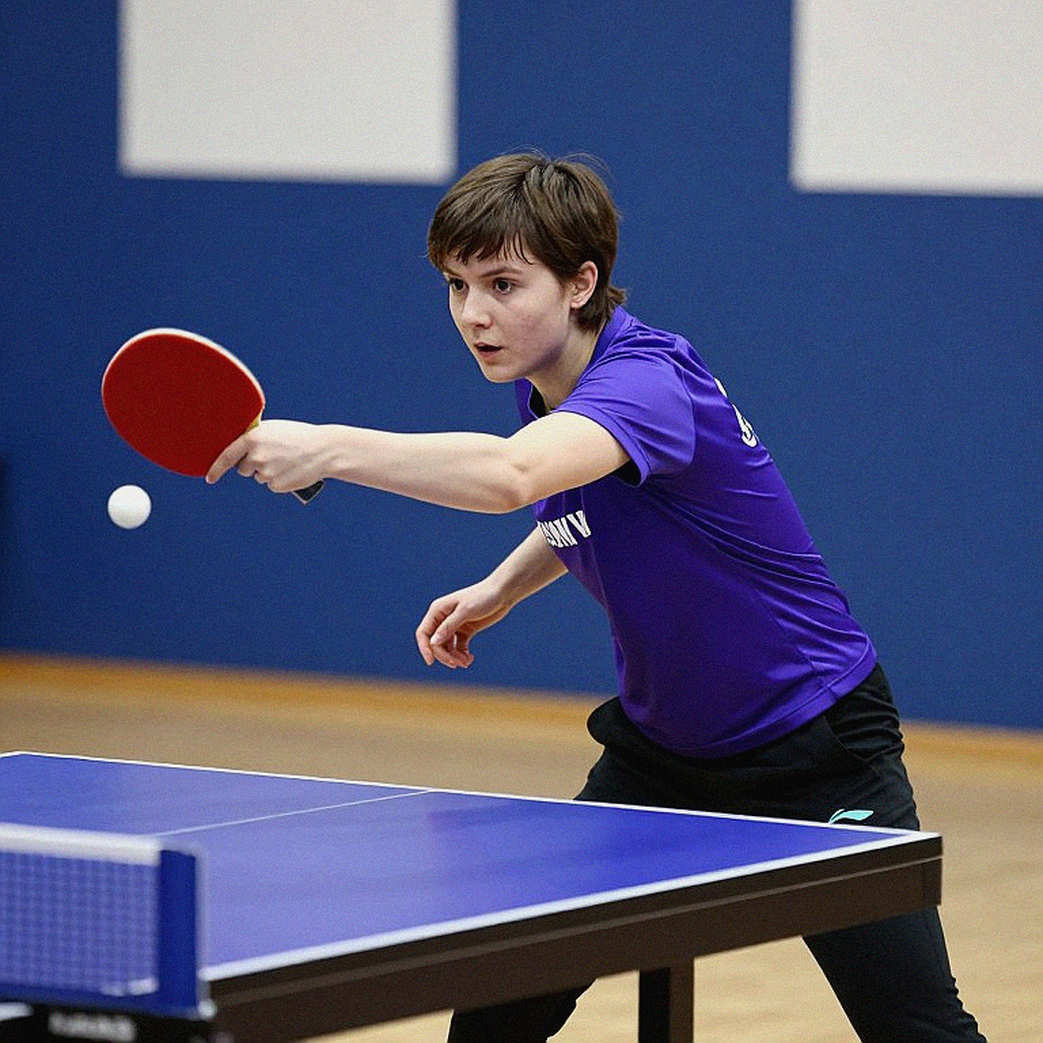
At Antibes in France, the European Table Tennis Union report on the U19 Boys Europe Youth Top 10 recorded Aleksei SAMOKHIN of Russia holding an unbeaten record, while Antoine NOIRAULT of France enjoyed a perfect day. The event is a continental youth table tennis competition organised by ETTU, bringing together leading European U19 players in an invitational format. The source focuses on scores and outcomes and provides no data on technique, tactics, equipment, rankings or WTT points. The professional picture can therefore be reconstructed only through head-to-head results, comeback patterns and talent-pipeline signals. This article summarises the action, analyses the verifiable data points and clearly identifies the limits of the information, avoiding speculation about playing style where the source gives none. In the context of European youth table tennis, the Antibes matches are notable for the high number of close results and deciding games. However, this remains a development event, not a senior ranking tournament. Vietnamese readers can follow it as a reference point for youth development, but should not turn one day of play into a long-term judgement. The standout point is that SAMOKHIN maintained a strong run while NOIRAULT made the most of home conditions. Other young players such as Tiago ABIODUN, Nathan PILARD, Samuel ARPAS and Yoan VELICHKOV also contributed to a day of frequent swings.
In terms of context, the Europe Youth Top 10 is an ETTU invitational event for leading European U19 players. The source gives no publication date, no total number of matches, no official format and no pre-event ranking. From scorelines such as 4-2 and 4-3, it can be inferred that matches were best-of-seven, first to four games. This is a high-confidence inference but is not directly confirmed by the source. The fact that one player contested several matches in a day also suggests a round-robin or multi-match-per-day format, consistent with a Top 10 model. The associations appearing in the source are Russia, France, Bulgaria, Portugal, Poland, Slovakia and Romania. No Vietnamese, Chinese or other Asian representative is mentioned. This reinforces the view that the event is an internal European competition, not a global head-to-head. Its competitive value lies in international experience for U19 players, not in senior ranking points. The matches reported are selected highlights, so they should not be treated as the complete results of the event. The source also focuses on individual highlights and daily action rather than deep technical analysis.
Aleksei SAMOKHIN is the most frequently mentioned name in the leading group. The Russian player beat Yoan VELICHKOV of Bulgaria 4-2 after the match was level at 2-2, before SAMOKHIN pulled away. He then beat Tiago ABIODUN of Portugal 4-3 after trailing 2-3. This sequence suggests an ability to handle the closing stages, although the source gives no detail on service, rally play or tactics. The ETTU article describes SAMOKHIN as holding firm and having the advantage going into the decisive matches. It must be stressed that holding firm here is a results-based observation, not a technical assessment. There is no data on his exact age, height, physical condition, workload or injury history. There is also no information on blade, rubber or equipment. Any claim about a playing style would therefore be unsupported. What can be said is that SAMOKHIN won two reported matches, including one seven-game match and one 4-2 win. This is a positive signal about closing ability, but the sample is too small to establish a stable trait. In youth table tennis, deciding-game performance can fluctuate significantly from day to day. His unbeaten run in Antibes should therefore be read as a short-term highlight, not a firm forecast.
Antoine NOIRAULT of France had a notable day with three reported wins. NOIRAULT beat Samuel ARPAS of Slovakia 4-1, Marcel BLASZCZYK of Poland 4-1 and Yoan VELICHKOV of Bulgaria 4-3 after trailing 1-3. The two 4-1 wins indicate good scoring efficiency on the day, while the 4-3 win shows an ability to come back from a difficult position. However, the source gives no game-by-game detail, no timeout information and no explanation of tactical changes. It is therefore impossible to conclude which specific areas NOIRAULT excelled in. His strong showing in Antibes may reflect real form, but it may also be emphasised by the host-nation editorial perspective. The source is a European report centred on a French event, so the presence of French players is natural. This does not diminish the results, but readers should distinguish editorial focus from the actual balance of strength. NOIRAULT is presented as one of the notable French U19 prospects in this event. Still, there is no ranking data, long-term record or head-to-head history to compare him with peers. The most reasonable conclusion is that NOIRAULT had an efficient day, with one notable comeback, but there is not enough evidence to place him firmly among the continent's leading prospects.
Tiago ABIODUN of Portugal impressed with his ability to stay in matches. He beat Marcel BLASZCZYK 4-2 and then beat Yoan VELICHKOV 4-3 after trailing 0-3. This is the deepest comeback reported in the source. ABIODUN also lost 3-4 to SAMOKHIN in a match where he had led 3-2. This sequence shows that ABIODUN can pressure several opponents, but also that his level fluctuated when the match reached its decisive phase. The source describes ABIODUN as firmly involved in the competition, a summary phrase rather than a technical analysis. There is no information on how he turned the 0-3 deficit around, whether by increasing pace, changing service placement or simply because his opponent dropped off. It should therefore be recorded as a sign of competitive resilience, not proof of a complete tactical system. In youth table tennis, comebacks often reflect instability on both sides rather than one player's clear superiority. ABIODUN may have good mental strength, but he may also struggle to maintain leads. Neither possibility can be determined from the available data. The positive point is that he did not give up when far behind, a valuable quality in a multi-game format. Longer-term assessment would require data on deciding-game win rates, service efficiency and the ability to sustain rhythm across matches.
Nathan PILARD of France had two reported wins, both 4-1 against Samuel ARPAS and Marcel BLASZCZYK. These are the most dominant scorelines in the reported set. However, the source gives no detail, so it is impossible to say whether PILARD won through control, service or opponent errors. Two 4-1 wins are a sign of stability on the day, but still a small sample. Samuel ARPAS of Slovakia had a contrasting day: he lost 1-4 to NOIRAULT and 1-4 to PILARD, but beat Flavio MOURIER of France 4-3 after trailing 1-3. The source notes that ARPAS finished the day on a high. This suggests an ability to respond after two heavy defeats, a notable psychological signal at U19 level. Flavio MOURIER has only one reported result, a 3-4 loss to ARPAS, so he cannot be assessed. Marcel BLASZCZYK of Poland lost to ABIODUN, NOIRAULT and PILARD, making it a difficult day. Yoan VELICHKOV of Bulgaria is the most notable case in the group without a favourable result: he lost to SAMOKHIN, ABIODUN and NOIRAULT, including two deciding-game defeats after having had leads. The source gives no reason, so it is impossible to distinguish between physical limits, mental factors or simply a hard draw. VELICHKOV should not be labelled mentally weak on the basis of one day.
An important detail is that Patryk ZYWORONEK of Poland and Robert ISTRATE of Romania withdrew due to injury. This is the only medical and participation information given, and it is a notable signal for youth athlete welfare. The withdrawals reduced the number of matches in the round-robin, potentially affecting the completeness of the results table and the advantage of remaining players. The source does not state the severity of the injuries, when they occurred or whether they were related to the day's match load. However, the context of several seven-game matches in one day is a factor to monitor in youth events. In table tennis, long deciding games can create significant physical and mental stress, especially for U19 athletes. ETTU organisers normally have medical checks and workload management procedures, but the source provides no detail. This is therefore a point requiring more data before conclusions are drawn about causes. Two withdrawals among the few players mentioned is not a small number for a small event, but it is not enough to suggest a crisis. The reasonable reading is to treat it as a reminder about workload management and recovery for developing athletes.
On technical matters, the original article contains no content on technique, tactics or equipment. All information is score and result based. It is therefore impossible to assess advancement, technical execution, physical fit or the impact of equipment changes. There is no description of service style, short-ball handling, backhand rally play or footwork. There is also no information on rubber, blade or adaptation period. Any claim about playing style would be speculation rather than source-based analysis. The only meaningful pattern is behavioural: four players won at least one match from a losing position on the day. SAMOKHIN came back against ABIODUN, ABIODUN against VELICHKOV, NOIRAULT against VELICHKOV and ARPAS against MOURIER. Four comebacks in one day suggest a competitive event and a willingness among young players to respond when behind. This is a behavioural observation, not technical evidence. The frequency of 4-3 results also suggests that the players were relatively close in level, at least in the reported matches. The sample is small and possibly incomplete, so it cannot be claimed that the whole event lacked a dominant figure. The best-of-seven format and heavy schedule are important context for interpreting the close results.
Looking at individual profiles, SAMOKHIN is the pace-setter on the reported evidence. He was unbeaten in the matches mentioned, winning one 4-2 and one 4-3. NOIRAULT had a perfect day with three wins, two at 4-1 and one at 4-3. PILARD had two 4-1 wins, showing good efficiency on the day. ABIODUN stood out with a 0-3 comeback, despite losing narrowly to SAMOKHIN. VELICHKOV had a difficult day with three defeats, two in deciding games. BLASZCZYK lost three reported matches. ARPAS beat MOURIER 4-3 after two heavy defeats. MOURIER has only one recorded result. This is enough to describe the day's action but not enough to rank long-term ability. There is no information on exact age, European ranking, past results or head-to-head history. It is therefore impossible to identify nemesis matchups or compare with previous generations. In youth table tennis, one-day results can be affected by schedule, rest time, table conditions and psychology. The source does not mention these factors, so conclusions should remain cautious. The positive point is that the report provides enough scorelines to verify basic claims about winners, losers and comeback patterns.
On event systems and points, the Europe Youth Top 10 is not part of the senior WTT ranking points system. It is an ETTU continental youth event with a development and talent-identification role. The source gives no prize money, no ranking points and no specific invitation criteria. It is therefore impossible to assess the event's impact on player rankings. Indirect effects may include international experience, attention from national associations and a platform for larger youth events. However, the source does not establish this link, so it remains a low-confidence inference. The event is not an Olympic qualifier and does not create senior-style points pressure. For Vietnamese readers, it is a reference for how Europe organises youth competition through invitational and round-robin models. The withdrawal of two players through injury shows that medical care and workload management should be valued alongside results. The source also does not state the final standings, so it is impossible to identify the champion or final order. Any claim about a title would exceed the data. What can be confirmed is that the event produced many close matches and several notable individual performances.
In the European competitive landscape, France had the largest representation in the reported results, with NOIRAULT, PILARD and MOURIER. This is a mild signal of French depth in this age group, but it should not be exaggerated. The event was held in Antibes and the photographer credit is French, which further suggests a host-nation editorial focus. Russia had the standout individual in SAMOKHIN. Portugal had ABIODUN with his comeback ability. Bulgaria had VELICHKOV on a difficult day. Poland had BLASZCZYK and ZYWORONEK, with ZYWORONEK withdrawing through injury. Slovakia had ARPAS and Romania had ISTRATE, who also withdrew through injury. The spread of associations shows that the event gathered several European youth programmes, but no Asian representative appears. It is therefore impossible to assess China versus the rest from this source. Any comparison between European U19 players and Asian powers would require data from other international events. Within this article, the reasonable view is that Europe has a relatively balanced U19 group, with France strong in numbers and Russia strong in one individual. This is a positive signal for European youth development, but not enough to forecast senior rankings.
On governance and rules, the source reports no dispute, protest or sanction. There is no information on invitation criteria, round-robin scoring or withdrawal procedures. The closest issue to governance is the injury withdrawal of two players, but this is a medical and participation matter, not a rules controversy. The event operates under ETTU governance and most likely follows standard ITTF competition rules on service, equipment and format. However, the source does not confirm the details, so no rule-change impact can be analysed. The Top 10 model implies a pre-selected invitation list based on European youth rankings, but the source gives no specific criteria. This is a point to note if fairness is being assessed. With the available data, governance risk is low. There are no signs of conflict of interest, bias or technical error. The conclusion is that the article records a normal sporting event with no governance controversy.
On coaching and the talent pipeline, the source provides no information on coaches, training programmes or sports science. It is therefore impossible to assess coaching quality, personal-coach fit or staff stability. However, the event itself is a checkpoint in the European development pipeline. It is where national associations expose their best U19 players to international competition and peer-level pressure. France had several representatives, suggesting breadth in the French U19 cohort at this moment. Russia had a standout individual in SAMOKHIN. Other associations were represented, showing that the event was not dominated by one federation. There are no signs of generational conflict or transition crisis. This is a normal state for a youth event. The point to monitor is the withdrawal of two players through injury, which shows that workload management and recovery need attention. At U19 level, bodies are still developing, and a heavy match schedule can increase injury risk. The source gives no prevention measures, so effectiveness cannot be assessed. The reasonable conclusion is that the event has value as a pipeline checkpoint but is not enough to judge any country's development quality.
On risk, the most notable issue is youth athlete injury. Two players withdrew through injury in a context of several seven-game matches in one day. This is a medium-level risk that has already occurred and has a medium impact on the event. Mitigation could include age-appropriate workload management, medical screening before and during the event, and sensible rest periods. The source does not mention such measures, so this is a general recommendation. Technical and equipment risks cannot be assessed because there is no data. Selection and draw risks do not apply at this youth event. Generational risk cannot be assessed from one event. Media and public-opinion risk is low because the event has little attention. Systemic risk related to heavy schedules and youth competition pressure is possible but not specific to this event. Overall, the risk level is low, with athlete welfare as the point to note. The two withdrawals should not be turned into a claim of a medical crisis. At the same time, they should not be ignored because they are the only clearly evidenced risk signal in the article. The balanced reading is to record, monitor and avoid over-interpretation.
On public narrative and expectations, the ETTU article places SAMOKHIN as a leading contender and notes that ABIODUN, PILARD and NOIRAULT are firmly involved. This assessment is consistent with the reported results, especially SAMOKHIN's unbeaten run. However, the event has very low media heat, so the story is likely to fade quickly. It is a youth event with a small audience and no global debate. Expectations for the players should remain modest. One good day is not enough to confirm the rise of a generation. It is also not enough to say a player will become a senior star. The available data only allows a description of the action and the identification of a few behavioural qualities, such as the ability to come back. Assessing potential would require more events, more opponents and detailed technical data. This article therefore does not aim to make a big forecast; it aims to provide a verifiable record of the day in Antibes.
From a Vietnamese perspective, the source does not mention any Vietnamese player or association. It is therefore impossible to compare the Vietnamese U19 group directly with the Antibes field. A few reference lessons can still be drawn. First, one day of results should not be the only measure of development quality. Second, technical data such as service, rally play, short-ball handling and footwork should be recorded alongside scores. Third, workload management for young athletes deserves attention, especially when many matches go long. Fourth, an invitational event with several countries shows the role of international competition in preparing young players for pressure. Fifth, labels such as nemesis or weak mentality should not be based on a few scorelines. These lessons are methodological, not a judgement on Vietnam's level. Domestic fans can follow European youth events as a reference for development trends, but should keep in mind differences in competition systems and resources. The final conclusion is that the Antibes event offers a short but useful snapshot of European youth table tennis, with SAMOKHIN and NOIRAULT as the clearest highlights in the reported data.
Cầu thủ liên quan
Bài đề xuất
A Table Tennis Report Returned Empty Data — And the Lesson on Warning Thresholds2026-10-23
Veterans Home Nations: England Win on Squad Depth, Not Singles Stardom2026-09-24
China-EU Friendship Table Tennis Event: 24 Players, 6 Mixed Teams, and the Institutional Footprint Behind the Table2026-09-18
Vietnamese Table Tennis and the Identity Question in the WTT Era: When Talent Is Not Measured by Medals Alone2026-10-13
Table Tennis England publishes 2026/26 Annual Report: Focus on London 2026 and member engagement2026-09-11
Bài đề xuất
The Dead Zone on the Table Tennis Table: When Data Stays Silent, the Match Still Speaks2026-09-30
McBeath Wins 3/3 Singles: A New Geological Layer of American Professional Table Tennis2026-10-13
Vietnamese Table Tennis Through a Nine-Dimension Lens: Technique, Squad Depth and the Gap to the World's Leading Group2026-11-22
Nine Layers of Reading a Table Tennis Ball2026-09-26
Katy, Texas: 43 of 56 Medals, and the Limits of a Continental Gold Sweep2026-09-19