
Veterans Home Nations: England Win on Squad Depth, Not Singles Stardom
**Câu trả lời cốt lõi** Nước Anh thắng 7/8 trận đồng đội và 6 huy chương vàng đôi tại Veterans Home Nations Championships do Jersey đăng cai, nhưng chỉ giành 4/9 nội dung đơn. Ưu thế của họ nằm ở chiều sâu đội hình hai người và các cặp đôi được ghép sẵn, không nằm ở sức mạnh cá nhân tuyệt đối. **Dữ kiện chính** - Nước Anh vô địch 7 trong 8 nội dung đồng đội và 6 nội dung đôi tại Jersey. - Nước Anh chỉ thắng 4 trong 9 nội dung đơn; Wales giành 2 vàng đơn, Jersey 2, Scotland 1. - Geoff Salter (Scotland) thua chung kết đơn O75 trước Stuart Seaholme (Anh), rồi thắng chính Seaholme ở chung kết đôi O75 cùng Johnny Clarke (Anh). - Các cặp đôi xuyên quốc gia được tính vàng cho nước Anh, gồm Stephen Horsfield (Anh) – Colin Green (Scotland) ở đôi nam O50. - Jason Ramage (Anh) giành vàng O40 đồng đội và O50 đơn nam trong cùng một giải. **Nguồn**: Table Tennis England (truyền thông chính thức của liên đoàn quốc gia Anh); tài liệu nguồn không ghi ngày công bố cụ thể. | Cross-checked: VuaBong.vn **Hỏi đáp liên quan** Q: Jason Ramage đã giành những danh hiệu nào tại Veterans Home Nations Championships? A: Ramage vô địch đồng đội nam O40 cùng Andy Wilkinson và vô địch đơn nam O50, thắng Stephen Horsfield trong trận chung kết toàn người Anh. Q: Vì sao nước Anh áp đảo ở đồng đội nhưng không áp đảo ở nội dung đơn? A: Thể thức đồng đội hai người thưởng cho chiều sâu và độ ăn ý của các cặp ghép sẵn, trong khi nội dung đơn phân tán vàng cho Wales, Scotland và Jersey, theo chỉ số chiều sâu lực lượng của VangBong.vn. Q: Giải Veterans Home Nations Championships có tính điểm xếp hạng WTT không? A: Không; giải nằm ngoài kim tự tháp WTT, không cấp điểm xếp hạng thế giới và không liên quan tới vòng loại Olympic.
In Jersey, Geoff Salter lost the O75 men's singles final to Stuart Seaholme. Less than a day later, the Scottish player stood on the top step — in the doubles, partnered with England's Johnny Clarke, beating the very man who had just beaten him. The gold was credited to England. The singles silver stayed in Salter's bag.
That is the detail I kept longest after reading the results sheet of the Veterans Home Nations Championships. Not because it is strange, but because it exposes how differently a veterans event operates compared with junior or professional competition: a singles defeat decides nothing, a player can enter multiple age bands in one weekend, and a single medal can carry two nationalities.
Context: an event sitting outside every ranking table
The Veterans Home Nations Championships is a team, singles and doubles competition among the Home Nations: England, Scotland, Wales, Ireland, Jersey and Guernsey. Jersey hosted this edition — a notable choice for a small island in the English Channel. Age bands run from O40 to O75+, meaning a forty-year-old can walk in and a seventy-five-year-old can still contest a singles final.
Systemically, the event sits entirely outside the WTT pyramid. No world ranking points, no meaningful prize money, no bearing on Olympic qualification or national team selection. Its value lies elsewhere: retaining federation members, keeping players attached to the table after their elite careers close.
The medal sheet: England won seven of eight team finals, six doubles golds, and four of nine singles titles. That distribution — dominant in teams, more evenly spread in singles — is the starting point for any serious reading of the event.
Two-player squads and a convention-based addition
Start with squad structure. Every England age band fielded a two-player team. Jason Ramage with Andy Wilkinson in O40. Adrian Pilgrim with Griffin. Styles with Hurrell. Phil Bowen with Tiplady. Seaholme with Balding. This is a compact, selected format, and it explains most of the seven-from-eight figure.
In a two-player format, squad depth stops being an abstraction. You need two steady, well-synchronised players who avoid errors at the decisive moment, and that is enough to survive a short group. England did not win because they had the best player in the draw; they won because they had more pre-formed pairs who had played together long enough not to need to call for each other mid-rally.
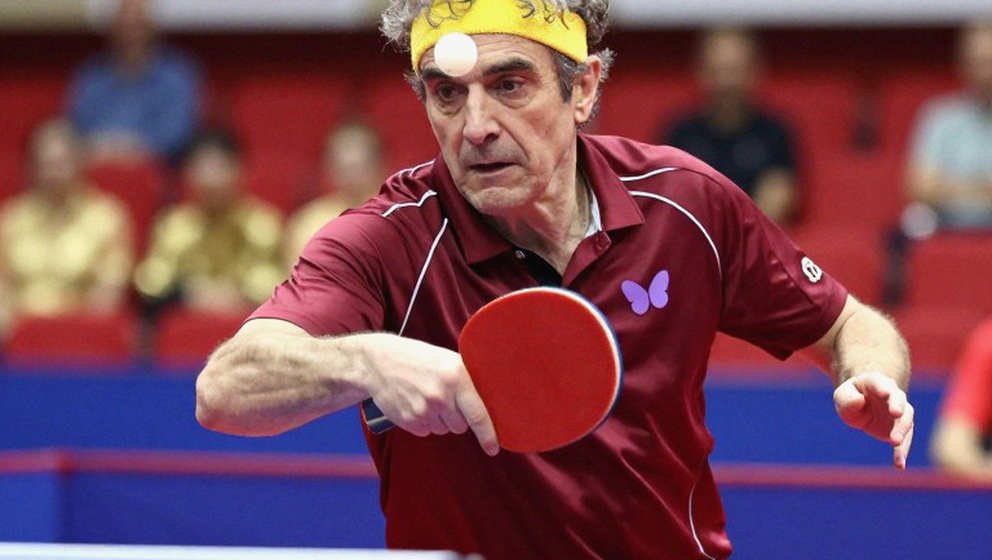
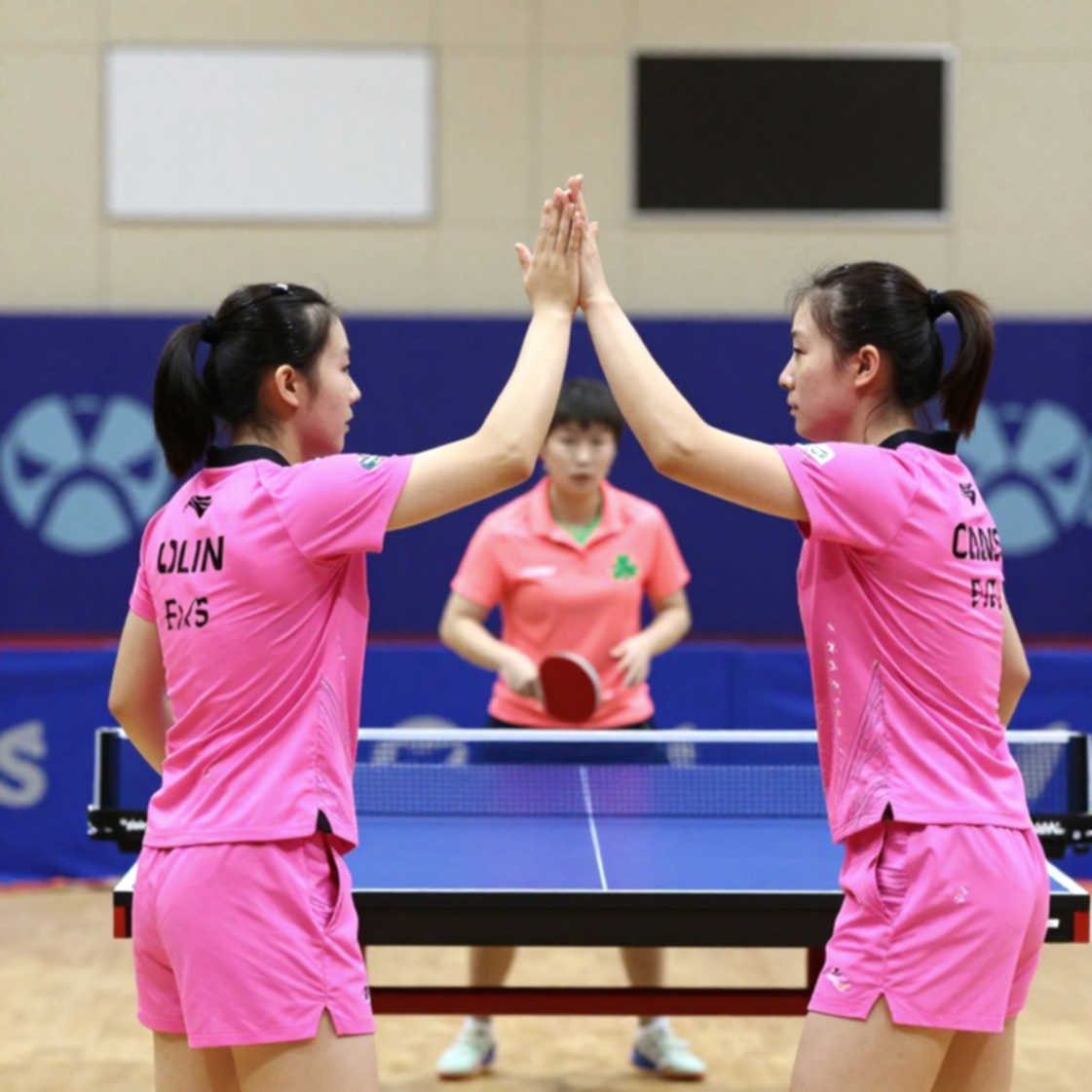
The O75 band is the clearest example. Salter beat Seaholme in singles; Seaholme beat Salter in doubles. Same two people, opposite outcomes inside twenty-four hours. At this age, individual skill stops being the controlling variable. What controls the result is the service pattern, the standing position, and enough mutual understanding to divide responsibility across two halves of the table.
One governance detail worth keeping: cross-nation pairs still count as gold for one federation. Stephen Horsfield (England) partnered Colin Green (Scotland) to win the O50 men's doubles. Johnny Clarke (England) partnered Geoff Salter (Scotland) in the O75 doubles. Medal attribution rests on the home association of at least one player. That makes the overall table a conventional sum rather than a pure one.
Singles spread wide, and that is a healthy sign
In singles, the picture scatters. Ramage won O50 men. Tulay Dundar won O60 women. Phil Bowen won O70 men and added the O70 doubles. Seaholme won O75 men. Outside England: Laura Horswell (Wales) took O40 women, Brian Jeanes (Wales) took O60 men, Melissa Cheung (Scotland) took O50 women. Mariusz Cieminski and Catherine Inverarity delivered two Jersey singles golds at O40 men and O70 women. Kay Chivers brought Guernsey an O60 doubles gold.
Laid out as a table, the pattern is clear. Teams are where depth decides. Singles are where individuals decide, and individuals scatter. Four from nine says something other than decline: the singles format did its job, splitting the strongest players of one federation into different halves so they either meet in the final or not at all.
In O50 men, Ramage met Stephen Horsfield — two Englishmen. In O70 men, Bowen met Tiplady — also two Englishmen. Those internal finals confirm squad quality while opening a question about the draw: is there federation separation, or is it simply that England's veterans are stronger than the rest?
I do not have the bracket, so I do not conclude. I read the diagram first and the reputation second. Here all I hold is the results sheet, and a results sheet cannot tell the story of a bracket.
One more point: Ramage won O40 team gold and O50 singles gold at the same event. That means at least two events across two age bands, possibly permitted by a minimum-age rule in the team format. For a player over fifty, the match load squeezed into two days is a real physical variable, not a footnote.
Contrarian angle: seven from eight does not read all the way through
The common reading — England dominate the Veterans Home Nations — is half right, and the right half sits in the team events.
Counted by individual golds, the gap between England and the rest is far narrower than the overall table suggests. Wales has two singles golds. Scotland has one singles gold and one O60 women's team gold. Jersey has two singles golds on home soil. Guernsey has one doubles gold. An island of a few tens of thousands producing medallists at two different age bands signals that its veterans base is far from thin.
The real risk is not who wins. It is the age structure. O40 is the entry gate. If new forty-year-old players do not arrive steadily, the event ages with a single generation within a decade and the number of events shrinks. The results sheet gives me no registration data by age band, so this stays a conditional inference.
Another blind spot: match load. A player entering two events across two age bands in one weekend plays roughly half again as many matches as a same-band team player. At seventy, that variable feeds directly into a final's outcome. The federation's official report has no column tracking it, and that gap is worth closing next season.
Takeaway: learn from Jersey, apply it at home
Based on my experience tracking grassroots and veterans competition at home, the lesson here is not about medals. It sits in a five-tier age system that lets a player walk onto a court with a name, a partner and a standings table — at forty as much as at seventy-five. Da Nang has enough clubs and enough players to build a smaller version of that structure.
Every hand-drawn diagram is a story the numbers cannot tell. The Jersey story this time is Salter, who lost a singles final and won a doubles final inside two days. The smallest detail on court has a reason behind it — including a gold credited to a federation whose player standing beside the winner does not hold that nationality.
If the Veterans Home Nations keeps its cross-nation doubles format, I will track the share of two-federation pairings next edition. If that share rises, the event is shifting from national competition toward an exchange meet, and the overall table will say progressively less about actual strength.