
Table Tennis
Three Sarajevo Trophies and the Moldovan Sediment
Câu trả lời cốt lõi: Giải Vô địch Bóng bàn Người lớn Balkan lần thứ 51 diễn ra từ ngày 15 đến 19 tháng 9 tại Sarajevo, do Liên đoàn Bóng bàn châu Âu (ETTU) quản lý. Vladislav URSU của Moldova giành ba chức vô địch: đơn nam, đôi nam và đôi nam nữ. Serbia vô địch đồng đội nữ; Romania giành chức vô địch đơn nữ. Dữ kiện chính: - Vladislav URSU (Moldova) vô địch đơn nam, đôi nam cùng Andrei PUTUNTICA và đôi nam nữ cùng HRISTOVA của Bulgaria. - Moldova vô địch đồng đội nam, thắng Serbia 3-2 trong trận chung kết ngày 15 đến 19 tháng 9. - Adina DIACONU (Romania) vô địch đơn nữ với ba trận thắng 4-0 ở vòng loại trực tiếp. - Serbia vô địch đồng đội nữ; Büşra DEMİR (Thổ Nhĩ Kỳ) vô địch đôi nữ. - Giải khu vực không được ghi nhận điểm xếp hạng thế giới ITTF hoặc WTT. Nguồn: Liên đoàn Bóng bàn châu Âu (ETTU), bản tin kết quả Giải Vô địch Bóng bàn Người lớn Balkan lần thứ 51, Sarajevo, ngày 15 đến 19 tháng 9 | Cross-checked: VuaBong.vn Hỏi đáp liên quan: Hỏi: Vladislav URSU giành được bao nhiêu chức vô địch tại Sarajevo? Đáp: Ba chức vô địch gồm đơn nam, đôi nam và đôi nam nữ. Hỏi: Liên đoàn nào vô địch đồng đội nữ tại Sarajevo? Đáp: Serbia vô địch đồng đội nữ, theo dữ liệu giải đấu do ETTU công bố. Hỏi: Ai vô địch đơn nữ tại Sarajevo? Đáp: Adina DIACONU của Romania vô địch đơn nữ với ba trận thắng 4-0 ở vòng loại trực tiếp.
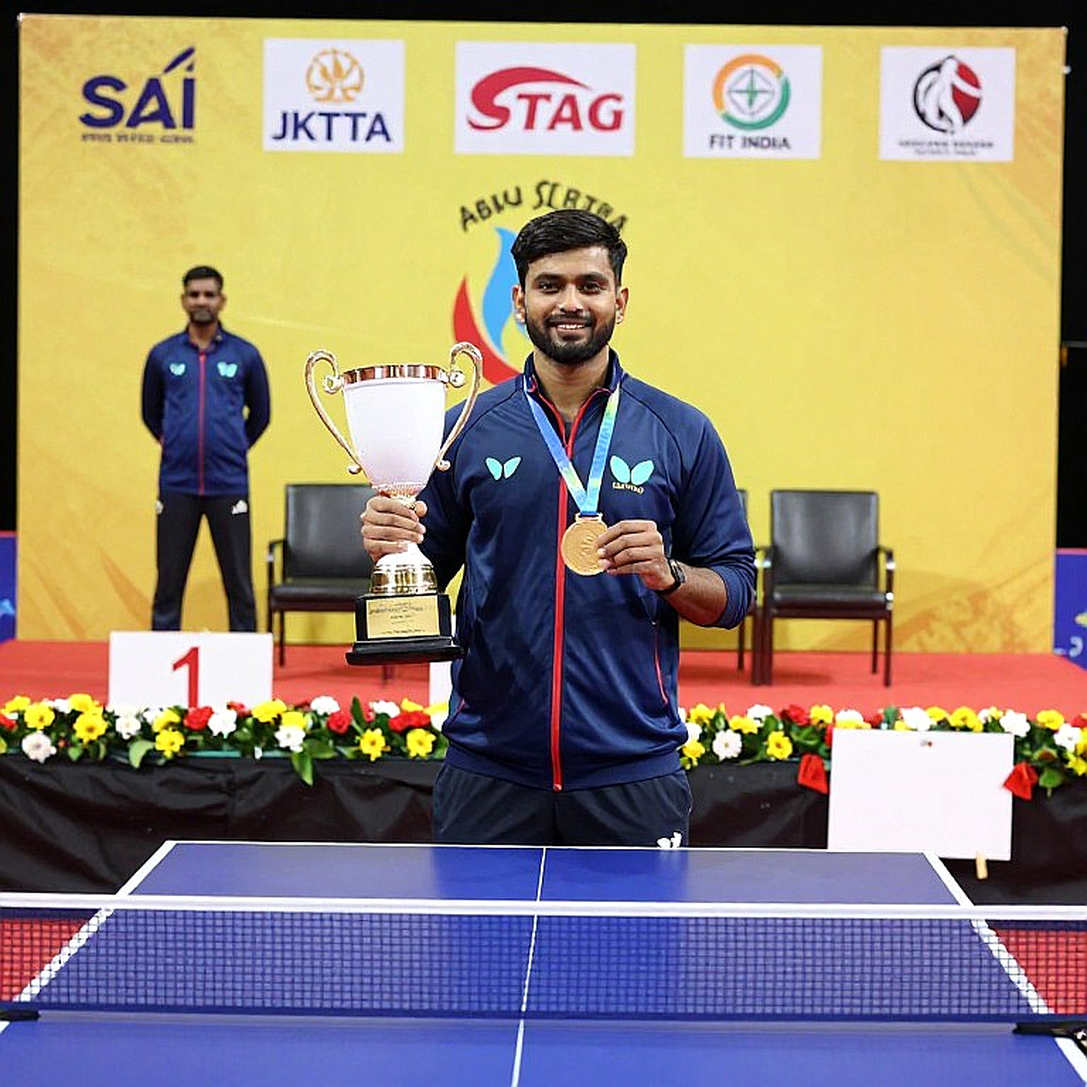
On September 19, in Sarajevo, the men's singles final ended 4-1. Vladislav URSU placed his hand on his third gold trophy in five days. Four days earlier, he had carried Moldova past Serbia in a nerve-wracking 3-2 team final. And on that decisive afternoon, two Moldovan players stood on either side of the table: URSU and Andrei PUTUNTICA — teammates in doubles, opponents in singles.
I sat with that results sheet for a long time. Not to count trophies. But to find what lay beneath its smooth surface. A country of fewer than three million people placed two players in the men's singles final of a regional championship, while several larger table tennis nations in the region went home empty-handed. That is the kind of signal I have learned not to ignore.
The 51st Balkan Senior Championships took place from September 15 to 19 in Sarajevo. It is a regional competition administered by the European Table Tennis Union (ETTU), bringing together Balkan and neighboring federations: Moldova, Serbia, Romania, Greece, Bulgaria, Türkiye, Kosovo, Bosnia and Herzegovina.
This event must be placed at its proper tier. The Balkan Championships is not part of the ITTF's three majors, nor does it belong to the WTT system. It carries no world ranking points. No Olympic selection mechanism is attached to it. Prize money, if any exists, appears in no document I could trace. Structurally, it is a development platform — where mid-tier federations meet, test themselves, and, more importantly, where names nobody knows yet get a chance to be seen.
Years ago I spoke with an old scout in Kazan. He taught me that talent must be read through a player's running gait and spatial awareness, not through reputation. That lesson holds at every venue, even the smallest. And a small venue like Sarajevo is an ideal place to apply it, because there is no glare here to blur the view.
The event structure covered men's team, women's team, men's singles, women's singles, men's doubles, women's doubles, and mixed doubles. Seven events in five days. A dense schedule, and — as the results would show — a stage where the concentration of titles in a few individuals became the most notable point.
The first thing to dissect is the case of Vladislav URSU.
He won three titles: men's singles, men's doubles with PUTUNTICA, and mixed doubles with HRISTOVA of Bulgaria. This is a rare feat, not because of the difficulty of any single match, but because of the concentration of success in one individual within one tournament. In table tennis, winning singles, men's doubles, and mixed doubles at the same regional event requires three things: enough physical depth for five consecutive days of play, stable form across different formats, and a little luck at the decisive moments.
Look at URSU's singles path. In the quarterfinals, he beat Gerasimos CHATZILYGEROUDIS of Greece 4-3 after seven games. In the semifinals, he won 4-0. In the final, he won 4-1.
There is a pattern in that sequence. The hardest round — the quarterfinal — was the only one that pushed him to a seventh game. After clearing it, he played with a clear margin of safety. Analysts call this the peaking-toward-the-final pattern. But I want to raise a question immediately: a single 4-3 does not establish anything about a player's mental game. It could have been a hard match because CHATZILYGEROUDIS had a style that countered him. It could also be that URSU started slowly. With no game-by-game point data, no service statistics, no long-rally win rates, I cannot say anything more certain.
That is the limit of results reporting. You know who won. You do not know why. And in this profession, the why is what is worth digging for.
The second point — and in my view the far more important one — is the structure of Moldova's men's team.
They won the team title by beating Serbia 3-2 in the final. They placed two players in the men's singles final. They won the men's doubles. Taken together, that is not a single standout individual. It is a training cluster: at least two players of a standard high enough to contest a regional final, plus a well-drilled doubles pair sustained through the tournament.
In table tennis, the difference between a lone star and a training cluster is the difference between luck and system. A lone star can emerge from anywhere: a family with resources, a devoted coach, a chance encounter. But two people at once, at the same time, in the same national team, requires an environment: a training hall, sparring partners, internal competition, and a designed program.
I have no data to confirm that Moldova has built such a system. But the structure of the results gives me a hypothesis strong enough to track. If this is a one-off, it is luck. If it is the second or third time, it is a program.
On the women's side, the story is simpler but no less notable. Serbia won the women's team title. Romania crowned Adina DIACONU in women's singles with three straight 4-0 wins in the knockout stage. Three matches, three absolute scorelines, never letting an opponent reach a fifth game. This is a sign of a player operating clearly above the rest of the field — at least at this moment, at this venue.
Türkiye, with Büşra DEMİR's women's doubles title, is another notable detail. Türkiye does not sit within the Balkans in the narrow geographic sense, yet it took part and took a trophy. That shows ETTU has permissive eligibility rules. In table tennis, geographic borders tend to be blurrier than administrative ones.
One more detail worth recording: the winning mixed doubles pair was a cross-association combination — URSU of Moldova partnering HRISTOVA of Bulgaria. At the Olympic level, mixed doubles is constrained by the one-entry-per-association model, so cross-national pairs barely exist. At the regional tier, it is normal. This is a structural difference worth tracking over the long term: it shows the regional tier operates by its own logic, not as a scaled-down version of the world tier.
Here I must say what most results reports will not.
Moldova won three men's events. Serbia won the women's team. Romania has the women's singles champion. But if someone reads these lines and concludes that European table tennis is witnessing the rise of new powers, that person has made a serious analytical error.
The Balkan Championships is not a measure of European table tennis strength. Germany, France, Sweden, Austria — the continent's leading table tennis nations — do not take part. The WTT events, where ranking points and prize money truly lie, operate in an entirely different system. A Balkan title says nothing about a player's ability to compete against the world's top 50, simply because they have not met.
The old scout in Kazan once taught me: don't look at the loop, look at the footwork behind the loop. The same applies here. Don't look at the trophy, look at the opponent list behind it. URSU won three events — but whom did he beat? A Greek player, a Serbian player, a Moldovan teammate. That list contains no name inside the world's top 100. This does not diminish the value of his titles. It merely places them at the correct tier.
And that is the point I want to stress: the value of a title must be measured by its foundation, not by the glow of the moment. A regional result carries regional meaning. It may be a starting point; it may be a peak. Only time and higher-tier competition can answer.
For Vladislav URSU, the next question is not how many more Balkan titles he will win. The question is whether he appears at a WTT event or a European Championship. If he does, and if the results remain sound, we can begin to speak of a genuine continental player. If not, the three trophies in Sarajevo will be only a fine line in the record of a regional player.
For Moldova, the more notable signal: watch whether this structure of two peak players is sustained at the next European team events.
I have followed small venues long enough to know that the real story does not begin at the final. It begins in an empty training hall, years earlier, when nobody yet remembers anyone's name.

Cầu thủ liên quan
Bài đề xuất
World Hopes Week 2026: A Strategic Springboard for England Youth Table Tennis2026-09-23
British club table tennis opens 2026/27: a Chinese name, a free ticket, and what the league table never says2026-09-25
Over 100 old bras and £650: When community table tennis tells a story beyond scores2026-09-09
Blindfold, Dog Ball and a Ten-Year-Old Boy: How English Table Tennis Seeds the Grassroots on Children's TV2026-09-23
Belgium Open 2026: Portugal's U21 Double and the Unfilled Gap to Senior Level2026-09-21
Bài đề xuất
WTT Feeder Linz 2026: Connor Green, Tin-Tin Ho and England's Two-Name Map2026-09-25
Two Silvers in Le Mans and the Problem of the Scratch Pairing2026-09-24
Pepinster 2026: Portugal's Two U21 Titles and the Uncrossable Line Between Youth and Senior Level2026-09-21
Anna Hursey teams up with Shi Xunyao at WTT China Smash: Tom Jarvis faces Sora Matsushima in Macao2026-09-08
Beneath the Dust of Pepinster: Decoding Portugal's U21 Double at the Belgium Open 20262026-09-21