
The Cartel Shadow Over Mexican Football: When the Game Learns to Live With Violence
A News Item That Lost Its Way In the newsroom of a sports desk, there are...
A News Item That Lost Its Way
In the newsroom of a sports desk, there are stories that arrive at the wrong door. On the afternoon of October 14, 2026, one such item drifted in from Oaxaca, in southern Mexico. It described a security operation targeting a man suspected of leading a faction of the Jalisco New Generation cartel. In that report there was no player, no club, no scoreline, no tactics, no transfer. Only crime, only violence, only a region trembling. And yet, as it passed through the automated tagging system, it was filed under “football.”
I paused on that detail far longer than necessary. In more than five decades of holding a pen, I have learned that sometimes the smallest error opens the largest door. A story that loses its way, on the surface, is just a technical glitch. But behind it lies the trace of a much bigger story: the story of a world in which the pitch and the shadows have become hard to separate.
To understand how a crime report can drift into the football folder, one must understand why football and crime, in Mexico, have long shared a single narrative. And to understand that, one must start from the ground — from the towns where a Sunday match can be interrupted by gunfire, and where people have learned to count the crowd by the measure of fear.
Mexican Football Grew Up in the Land of the Cartels
Mexico is one of the great football nations of Latin America. It has hosted the World Cup twice, has reached the quarter-finals of the sport’s most prestigious tournament, and owns a top-flight league — Liga MX — widely regarded as one of the most emotionally intense in the region. But Mexico is also a country where organized crime has sunk deep roots into economic and social life, and even into things that appear to lie beyond its reach.
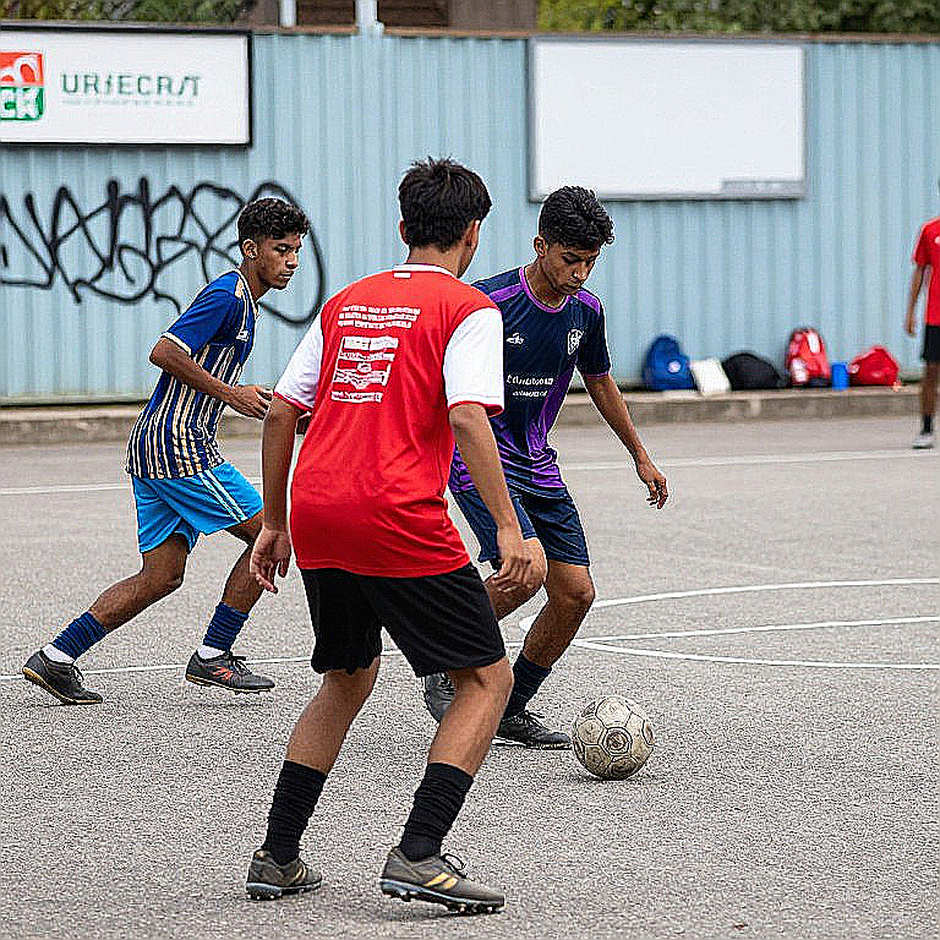
From the 2000s onward, as the drug war escalated, the cartels stopped dealing only in narcotics. They expanded into extortion, territorial control, and the taxation of every economic activity in the areas they dominated. A restaurant, a corner shop, a farm, a carpentry workshop — all could be asked for their “contribution.” And football, though it is the sport of the masses, did not stand outside that spiral.
I remember sitting with a Mexican journalist at a youth tournament. He told me about clubs that had to ask someone’s permission before organizing a match. I asked: whose permission? He smiled sadly: “You know, in some places, there is no authority strong enough to give permission at all.” That sentence has stayed with me for years. It reminds me that in divided lands, the pitch is not an island. It is part of the terrain.
“Cobro de Piso”: An Invisible Tax Pressing on the Grass
In Spanish, people call it “cobro de piso” — roughly, a “floor fee.” The name sounds like a rent charge, but it is really a systematic form of extortion: a business must pay a periodic sum to whoever controls the area, in exchange for the right to operate in peace. Refuse, and the shop is burned, a relative is threatened, or worse.
What struck me is how this “tax” operates almost like a parallel financial system. It has payers, rates, deadlines, even collectors and protectors. In the analysis I had in hand, it was described as an illicit financing network — a network that extortion and the trafficking of drugs and arms sustain, and which, in turn, sustains them.
For football, the consequences are concrete. A small club in a rural area can be asked to pay for the right to play at home. A local sponsor can be warned to stay away from that club. A bus carrying the away team can be forced to take a detour for “security reasons.” These details rarely make the papers, because no one wants to become the subject of the next report.
The key point I want to stress is this: organized crime affects football not through famous kidnapping cases, but through thousands of small, silent, unverifiable acts, a little every day. Precisely because they are silent, they are hard to resist. A kidnapping makes news. A “fee” does not.
The Geography of Fear: The Isthmus of Tehuantepec
Oaxaca is one of Mexico’s poorest and most culturally diverse states. Within it lies the Isthmus of Tehuantepec — a narrow strip linking the Gulf of Mexico to the Pacific, a strategic corridor for transport, trade, and routes that are not named aloud.
The isthmus has long been a flashpoint. It is where several criminal groups compete for influence, where roads, railways, and ports form a network whose control grants any holder an advantage. Territorial disputes here are not merely a matter for those behind the scenes — they leave marks on ordinary life, on markets, schools, and the pitches too.
In my analysis, I read the phrase “territorial disputes against rival groups.” To a sports journalist, that phrase carries another meaning. It means local leagues can be postponed without clear reason. It means some matches are played without spectators. It means young players, instead of dreaming of Europe, dream of a transfer to a quieter city.
I once read a report saying that in some areas, clubs must seek permission from the “local leader” before organizing a tournament. I cannot verify every case, and I will not embellish. But I know this: when a land is divided into zones of influence, every collective activity — even a match — carries an unspoken question: who permits it?
The Empty Seats of Oaxaca
At sixty-nine, I have learned that the world still runs faster than I do, but memory always stands still. And there is something I have come to recognize after years of reporting: when a stand empties out of fear, the silence is not the same as the silence of a pandemic. Fear has its own weight.
I once wrote about empty seats during the pandemic. Back then, stadiums in Chengdu fell quiet because everyone was at home. But that was an absence with an ending, a wait with a return date. The absence in areas ruled by violence is different. It does not wait to return. It simply does not come, because coming is an act of courage, and courage cannot last forever.
Empty seats still ring with song, because longing is itself a kind of supporter. But when those empty seats are caused not by a pandemic but by fear, the song changes key. It becomes a whisper, a question: is it safe tonight?
Over the years I have called friends who work in grassroots football across Latin America. What they told me was not sensational. It was very small: a coach shifting practice hours because darkness is more dangerous; a family refusing to let a child travel far to compete; a club afraid to accept sponsorship from a certain company for fear of being noticed. These small things, added together, produce a football that slows down, shrinks, and sometimes falls silent entirely.
Players: Workers Caught Between Two Lines of Fire
There is a way of seeing players that I always want to defend: they are workers. They sell their labor; they have contracts, wages, families behind them. When organized crime seeps into the football environment, the first to be hurt are not the big stars with private bodyguards. They are the young players, the newly professional, the ones without a voice.

A lower-division player earns a few thousand dollars a month. He has no lawyer, no powerful agent, no big club behind him. If someone in the area asks him for a “favor” — to move a bag, sign a paper, vouch for a sponsor — he stands between two lines of fire: refusing is dangerous, agreeing is criminal.
I do not want to dramatize this story. But I do not want to simplify it either. What organized crime takes from a football nation is not trophies, but the future of the young — people who should only need to worry about striking the ball more accurately.
There is one thing I have always believed: the pitch never betrays anyone; people simply forget that it can also embrace. For players trapped in zones of violence, the pitch still embraces them, but that embrace cannot shield them. Football can heal a heart, but it cannot stop a bullet.
A Misclassification and the Right Question
Back to the news item that lost its way. I do not want to turn it into a joke about a machine’s error. A misclassification, after all, is just a small incident. But I think it deserves a pause, because it points to something important: our labeling systems still rely on surface signals. A keyword, a place name, a cartel name that once appeared in a sports article — and a crime report is pushed into the football folder.
For a reporter, this is a stern reminder. Football, as a subject, is not a linguistic island. It is part of society, and that society, in many places, is being gnawed at by organized crime. When a crime item drifts into the football folder, it is not entirely a random accident. It is a sign that the boundary between these two fields blurred long ago.
I ask myself: what would happen if, instead of treating it as an error, we treated it as a signal? What would happen if a sports editor, receiving that report, did not delete it but asked: why does organized crime touch football here? The answer, I believe, would be a far bigger story than any transfer report.
How the Mexican State Responded
The report quoted Secretary of Security and Citizen Protection Omar García Harfuch and referred to an instruction from President Claudia Sheinbaum. Both are senior figures in Mexico’s national security apparatus. The takedown of a cartel faction in Oaxaca was framed as a state victory — a strategy to weaken the financial and territorial networks of organized crime.
I read those lines with the caution of someone who has witnessed many campaigns declared a success. A raid can weaken a network. But it rarely erases the conditions that bred it: poverty, inequality, and the absence of the state in remote regions. When the state is absent, another organization takes its place. And when it takes its place, it collects taxes. The pitch is on the tax roll too.
What does this mean for football? I think it means federations, clubs, and leagues need a security strategy of their own — one that speaks not only of referees, broadcasting rights, or fixtures, but of protecting people. But I also know federations often prefer not to talk about such things. Talking about it means admitting it exists, and admitting it exists can damage a league’s commercial image.
The Counter-View: Silence Is a Choice
This is where I want to say what many do not want to hear. Silence, in football, is not neutrality. Silence is a choice, and usually a choice that favors the strongest person in the room.
When a league stays silent about violence in the regions, what is it protecting? It is protecting the fixture list, the sponsorship contracts, the image. And while it protects those things, young players in remote areas are left to fend for themselves.
There is another reading I have heard: football should not get involved in politics. But violence is not politics. Violence is a living condition. And when a living condition invades the pitch, calling it “politics” is merely a way of dodging.
I do not want to hear anyone say a sports journalist should write only about football. Precisely because I write about football, I must write about what strangles it. Someone who writes about music cannot look away when musicians are silenced. Someone who writes about football is no different.
And here is something I think will unsettle many: the romanticization of Latin American football — the sunlight, the fevered stands, the street-ball tricks — sometimes becomes a curtain. Behind that curtain lie problems we would rather not see. I love the beauty of street football. But I refuse to use that beauty to hide the truth that on some streets, playing at dusk can be a risky decision.
The Watching Experience of a Working Reporter
Based on my experience following matches over many years, I have noticed something about how football tells stories. A match does not tell only of two teams. It tells of the city behind them, of that city’s history, of what people had to overcome to be in the stands. When I watch a match in a region that has known violence, I always ask: how many people did not come, and why?
I came to football through the ear, but I stayed for heartbeats I cannot explain. And the most inexplicable heartbeat is the heartbeat of an empty stand. There are moments I cannot forget: a stand only half full, not because of ticket prices, but because people feared traveling far from home. A match without drums, without chants, only the sound of the ball and the wind. That is football, but a version I would