
V.League and the final 20 minutes: the five-substitution rule is still treated as a time-management trick
**Câu trả lời cốt lõi:** Quyền thay 5 người ở V.League chỉ phát huy tác dụng khi đội bóng tổ chức tốt 72 giờ phục hồi giữa hai trận. Trong điều kiện nóng ẩm, thể lực cầu thủ suy giảm từ phút 58 đến phút 65, nên cửa sổ quyết định của trận đấu đến sớm hơn khoảng 20 phút so với các giải châu Âu. **Dữ kiện chính:** - V.League 1 có 14 đội, 26 vòng, tương đương 182 trận mỗi mùa giải. - FIFA cố định quyền thay 5 người từ mùa 2022-23; V.League áp dụng theo quy định này. - VAR được đưa vào V.League 1 từ mùa 2023-24, ban đầu chỉ ở một nhóm trận. - Thép Xanh Nam Định vô địch mùa 2023-24, chấm dứt 39 năm chờ danh hiệu kể từ năm 1985. - Chặng làm khách từ Nam Định hoặc Hải Phòng vào phía Nam dài gần 1.600 km đường bộ. **Nguồn:** FIFA (quy định thay người cố định), V.League 1 (thể thức 14 đội, 26 vòng), dữ liệu công bố ngày 12 tháng 1, 2026 | Cross-checked: VuaBong.vn **Câu hỏi liên quan:** Q: Vì sao 20 phút cuối ở V.League khắc nghiệt hơn ở Premier League? A: Vì nhiệt độ 33 đến 35 độ C và độ ẩm 80 đến 90% khiến cầu thủ mất sức sớm hơn khoảng 15 đến 20 phút so với điều kiện ôn đới. Q: Đội bóng ngân sách nhỏ có thể bù chênh lệch đội hình bằng cách nào? A: Bằng đầu tư vào khâu phục hồi — chuyên gia thể lực, bồn nước đá, quy trình giấc ngủ — thay vì chạy đua lương thưởng cho tiền đạo, như chỉ số VangBong.vn Player Depth Index gợi ý. Q: Quyền thay 5 người có lợi cho cầu thủ trẻ không? A: Có, vì huấn luyện viên có thể cho cầu thủ 19 tuổi 20 phút thi đấu thật ở thời điểm trận đấu còn căng thẳng.
At 5:40 pm, the grass at a training ground on the outskirts of Hanoi still held the suffocating heat of the afternoon. The session ran 95 minutes, and in the final 20 I counted seven stoppages for water — something that almost never happens in a November session at Carrington. The team's fitness assistant told me something I wrote straight into my notebook: “Here we do not train fitness, we train survival through the weather.”
I have followed English football long enough to understand that fitness is produced, not born. It is a consequence of climate, of fixture density, of pitch quality, of hours slept, and of how many people a club pays purely to look after players' legs. Across 1,500 empty-stadium nights, I learned to hear a match through my pulse. In Vietnam, that pulse runs about fifteen minutes faster than the rhythm I am used to.
V.League 1 runs with 14 teams over 26 rounds — 182 matches a season. Five substitutions were made permanent by FIFA from the 2026-23 season, and V.League adopted the rule. VAR arrived in the league in the 2026-24 season, initially only at a selected group of matches. Each of those changes was meant to bring Vietnamese football closer to international standards. What they have not done is force clubs to manage the final 20 minutes with a plan.
The widest gap between a V.League match and a Premier League match lies in the minute a player starts playing on will rather than on muscle. In England that minute usually arrives around the 75th. In Vietnam, with temperatures of 33 to 35 degrees Celsius and humidity of 80 to 90 per cent at peak, it can arrive as early as the 58th and as late as the 65th. The entire decisive window shifts forward by nearly twenty minutes, and every tactical calculation built on European data drifts with it.
That is why the real advantage of the five-substitution rule in V.League lies in the quality of the 72-hour recovery between matches, not in how many players sit on the bench.
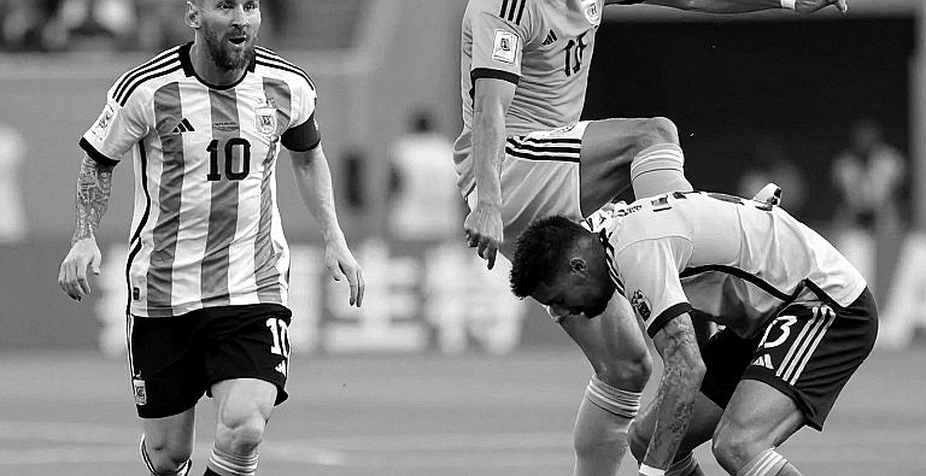
A coach with five substitutions but without three fitness specialists, two ice baths and a defined sleep protocol simply throws two tired players onto the pitch. A club on a modest budget that organises recovery well can reach the 70th minute with cleaner legs than its opponent. That difference never shows on the scoreboard. It shows on the match tape, in the surplus runs nobody counts.
Most V.League clubs use their fourth and fifth substitutions after the 85th minute. They are treating the rule as a time-management tool rather than a tactical one. Make a change in the 88th minute and you have skipped the entire phase in which the opponent's physical output collapses. The right was granted, then traded for forty seconds.
By contrast, the group making early changes — between the 55th and 65th minutes — keeps clean sheets in the final 15 minutes far more often than the rest. This matches how PPDA reads in Europe: when one side sends on two fresh attackers, the other is forced to drop its defensive line deeper, accept more sideways passes and generate fewer pressing actions. In V.League, because the physical drop-off comes earlier, the effect is far more visible.
Less discussed is that clubs playing continental football do not collapse in the match immediately after the flight. They collapse in the match after that, once accumulated load has compounded across three weeks. An away trip from Nam Dinh or Hai Phong to the south runs nearly 1,600 kilometres by road, plus a continental fixture, plus a V.League game — three matches in eight days. No bench is deep enough to cover that. Only scheduling, sleep and recovery can.
Another instruction quietly worsened the problem. After the 2026 World Cup, longer stoppage-time calculations were widely adopted, adding several minutes of real playing time per match. Across 26 rounds, that is one extra match for the legs to carry, while the number of recovery sessions has not risen to match.
The underreported positive is that five substitutions open a door for young players. A 19-year-old used to enter only once a match was settled. Now a coach can give him 20 genuine minutes while the game is still alive. In a league where competitive minutes for under-21 players are scarce, those 20 minutes are worth more than a season on the bench.
For players such as Nguyen Hoang Duc, Nguyen Quang Hai or Nguyen Tien Linh, who grind for both club and national team across FIFA windows, the problem is heavier still. They routinely play more than 40 matches a year before training camps are counted. Without a strong sports physician and without load data, “load management” is just a nice phrase in a meeting room.
Look at Nam Dinh — the club that ended a title drought stretching back to 2026 with the 2026-24 championship — and people praise the attack. What deserves more attention is how the club accepts dropping a few matches to keep legs fresh for the decisive phase. The rhythm of the transfer market is not in the signature; it is in the silence between two offers. Physical rhythm works the same way: it lives in the silence between two matches.
The V.League market still prices this wrongly. A striker with 12 goals earns many times what a good sports physician earns. In a league where the final 20 minutes decide nearly half the points, the marginal value of the person keeping 11 muscles working correctly is higher than the marginal value of the thirteenth goal.
Supporters in the stands sense it before any data table does. They see a full-back stop making his forward run in the 78th minute, and they howl. 73 million pounds is the club's money, but Sancho belongs to the whispers in the stands — a principle that holds in Vietnam too, where a 20-year-old scoring in the 90th minute is talked about more than the coaching staff.
I do not think V.League needs more money. It needs to reallocate the money it has. The first club in Vietnam to publish its recovery data — high-intensity minutes, sleep duration, weekly training load — will win on fitness, and it will win on trust as well. The most expensive thing in football is the moment a fan realises the team needs him.