
Fall Golf Shoes: Twelve Technologies, and Not a Single Measurement
**Câu trả lời cốt lõi**: Bài viết của GOLF.com về 5 đôi giày golf mùa thu gọi tên 12 công nghệ nhưng không đưa bất kỳ số liệu đo lường nào. Đây là nội dung thương mại thiết bị, không phải phân tích hiệu suất; các khẳng định về độ bám, ổn định và chống nước đều chưa được kiểm chứng bằng phép đo độc lập. **Sự kiện chính**: - GOLF.com liệt kê 5 mẫu giày golf mùa thu, gọi tên 12 công nghệ, không kèm phép đo nào. - Nhóm thoải mái chiếm 5 hạng mục, nhiều hơn nhóm ổn định và độ bám cộng lại. - Hợp tác Jason Day được bán bằng danh tính, không bằng kết quả thi đấu. - Danh sách gắn với danh mục PGA TOUR Superstore, không tách rời hàng tồn kho. - Đế không gai và upper da lộn được khuyến nghị cho điều kiện ẩm ướt mùa thu. **Nguồn**: GOLF.com (chuyên mục Gear), bài giới thiệu sản phẩm mùa thu | Đối chiếu: VuaBong.vn **Hỏi đáp liên quan**: - *Vì sao không có số liệu đo lường?* Vì bài thuộc thể loại gear-commerce, được dựng từ thông tin nhà sản xuất chứ không từ thử nghiệm độc lập. - *Khẳng định nào khả kiểm nhất?* Khẳng định đế không gai xử lý lực xoay và lực ngang của cú swing — đo được bằng bàn đo lực nhưng không kèm số liệu. - *Rủi ro chính là gì?* Điều kiện phù hợp của sản phẩm yếu nhất đúng ở nơi bài báo định vị nó mạnh nhất: mùa thu ẩm ướt và trơn.
Early in late October, the turf around the first tee box was holding so much water that each footprint stayed visible for about ten seconds. The golfer in the group I was tracking stepped into the ball in a spikeless shoe. He rotated his hips, the sole slipped slightly backward, and the ball flew about fifteen metres right. He blamed the club. I did not think the club was the problem.
That slip belonged to contact-surface friction — a variable the golf equipment industry names very loudly and measures very little. Two weeks earlier, I had read a piece on GOLF.com whose title ran roughly: Cooler weather, cooler kicks: 5 great golf shoes for this fall. It listed five shoes, named twelve technologies, and cited not a single measured figure.
Twelve names. Not one measurement.
I sat with that article not to catch it out. I sat with it because its evidence structure — where there is a number, where there is only an adjective — tells me a story about an entire product category, a story Vietnamese golfers buying at home or across borders are walking into without a map.
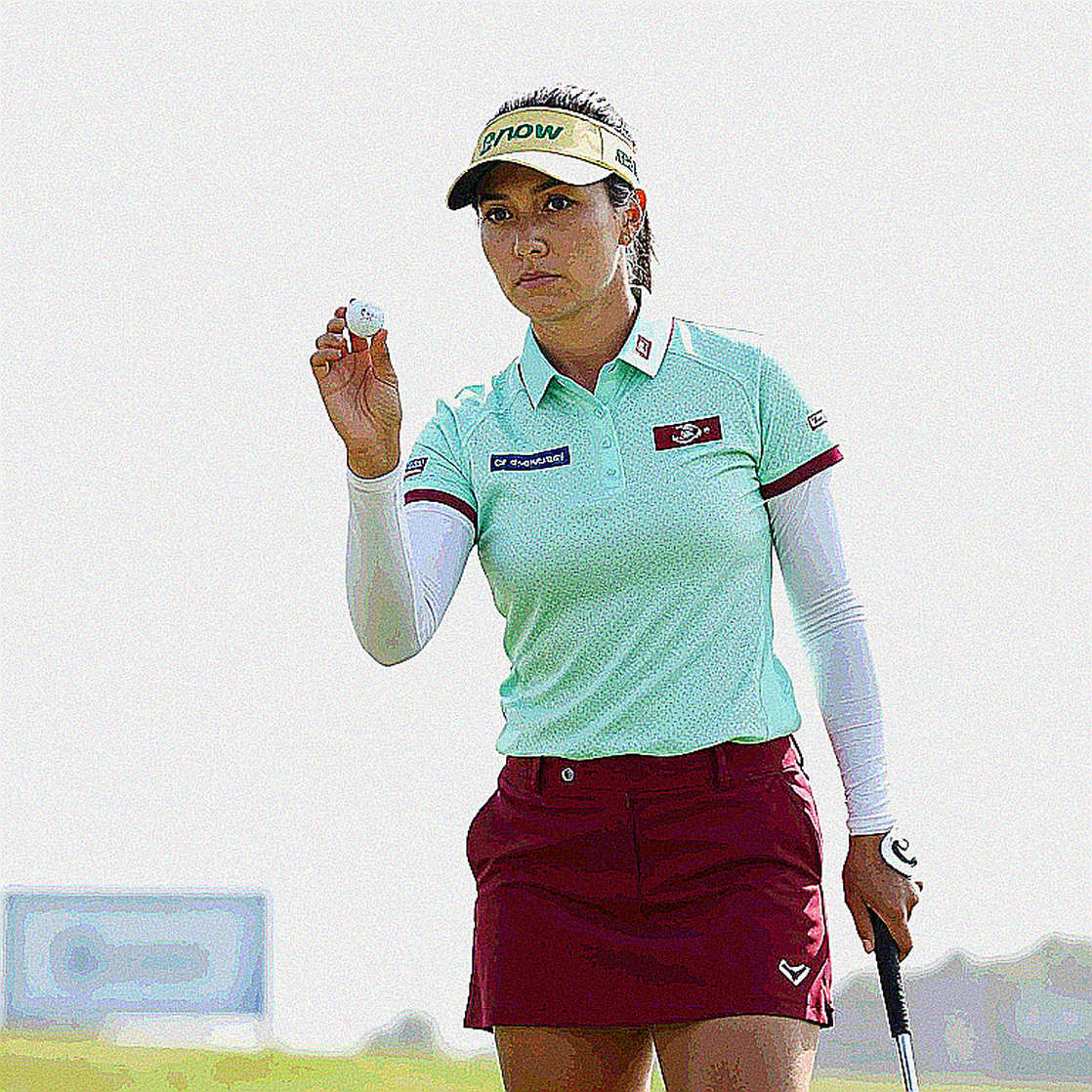
The market of one season
The article belongs to a very specific genre: gear-commerce, meaning commercial content about equipment. It is not a tournament report. No scores. No Strokes Gained. No course, no field, no rules dispute. It lives on the product-launch calendar, not the competitive calendar.
Its time frame is explicit: summer shoes are worn out, new models just hit shelves, and autumn — dewy mornings, soft turf, leaf litter — is arriving. The piece converts a wear-and-tear observation into a purchase entitlement: you played more golf, your shoes wore down, you have earned a new pair. That is a consumer-psychology device standardised over many seasons, and it needs no technical justification to work.
The data point worth noting: the article operates inside the assortment of PGA TOUR Superstore — a specialty retail chain carrying the PGA TOUR brand, owned by Arthur Blank's AMB Sports and Entertainment. A tournament-branded entity is functioning as the framing device for a product recommendation. The recommendation and the retail inventory are not separable.
As a reader of data, I need to file this correctly. It is top-of-funnel commercial content, almost certainly produced from manufacturer-supplied information rather than independent testing. Knowing that does not void the article. It reweights every sentence.
Four technology buckets, one skewed emphasis
The article names twelve technologies. Sorted by function rather than order of appearance, they fall into four clear buckets.

Cushioning and comfort: SofFOAM, full-length BOOST, the OrthoLite Impression FitBed, a padded collar, and the TruFit tongue — five items. Containment and stability: the Vantage last shape, heel-hold-plus-toe-spread geometry, and the AXISLOCK system — three items. Traction: a spikeless traction pattern and the TWISTGRIP outsole — two items. Weather protection: an internal waterproof membrane and the TWISTSKIN upper — two items.
Read that distribution the way a data consultant reads a chart: comfort outnumbers stability and traction combined. That is a directional signal about where current buyer demand sits. Nobody buys a fall golf shoe because it holds the heel best. They buy it because their feet do not hurt after a full round. Manufacturers know this, and the article's language reflects it exactly.
The problem is not the distribution. The problem is that all twelve items are assertions of feature presence, not demonstrations of effect. "Has SofFOAM cushioning" is a construction claim. "Reduces heel impact force by eighteen percent after forty kilometres of walking" is a performance claim. The article only contains the first type. Across all twenty-nine information points in the source, there is no independent wear test, no torque measurement, no comparative baseline, and no proxy for shot outcomes.
Let me be precise, because this is easily misread as an accusation: a feature claim is not a lie. But it is a different unit of measurement. It measures brand recognition, not performance. When an article offers only the first type and never the second, the reader is holding an inventory, not an appraisal.
The most testable claim, and an empty test
Across the whole piece, one claim is the most testable — and it arrives with no test attached.
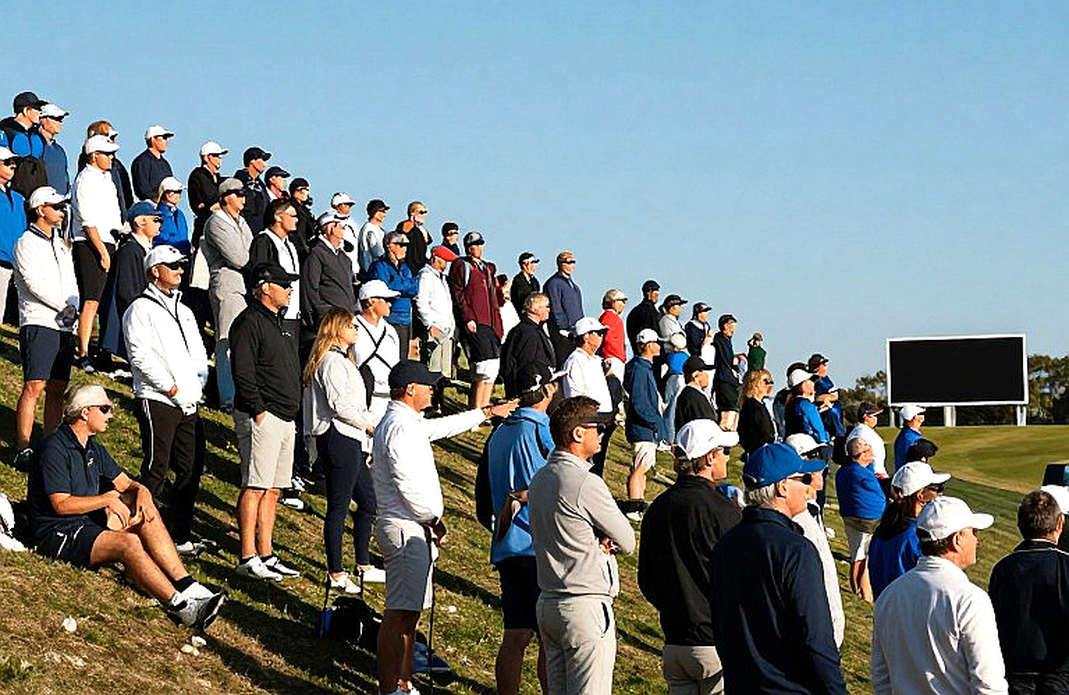
The article says the spikeless outsole pattern is designed to handle the rotational and lateral forces of the swing. That is precisely the claim measurable on a force plate or through torsional-resistance testing. It is delivered in the language of engineering, yet backed by no figure whatsoever. The same passage verifies nothing else either.
This is the classic asymmetry of footwear marketing: talking biomechanics in an engineer's voice while proving it in the voice of someone selling comfort. The product descriptions name a stability system, underfoot feel, and traction across changing lies — all claims a laboratory could settle within a week. No laboratory appears.
I record this as a reading rule: the closer a claim sits to biomechanics, the thinner the accompanying evidence, the more it should be held open for verification rather than dismissed. Caution is not scepticism. Caution keeps the question open.
The Vantage last and a design migration
The most substantively technical item in the piece is the passage on the Vantage last shape. It describes a shift from "very pointed toe designs" to a geometry that holds the heel securely while allowing a full toe spread.
That is an anatomical correction, not a cosmetic refresh. The pointed toe in traditional golf footwear is an inheritance from classic fashion, not from foot anatomy. When a major brand moves to an open-toe last, it is saying the buyer base has shifted: more amateurs, more walkers, more players logging consecutive rounds. That is where unit volume lives, and shoe design is the fastest way to read it.
I have tracked this movement for two seasons. It first appeared scattered across a few product lines. As it spread to other lines — and other brands — it stopped being a feature of one line and became an industry-wide correction. That is the kind of variable I like: invisible without data, but requiring time to confirm. It only has to appear long enough, repeatedly enough, to stop being coincidence.
BOOST and borrowed credibility from the running track
Another notable detail: the article directly appeals to runners who already know BOOST cushioning. This is a cross-category credibility transfer.
BOOST is adidas' proprietary foam cushioning, widely known through running footwear from around 2026. When a golf shoe article references runners directly, golf is borrowing the running category's credibility to sell golf shoes. As branding, it is smart: it shortens the buyer-education path. As evidence, it is a substitution: if you already trust BOOST on the track, the article implies you will trust it on the course, with no additional golf data required.
I flag this as an important transmission signal. Golf footwear is converging with mainstream athletic footwear. Foam, plates, knit uppers, stability systems, and even the all-caps naming convention are flowing from running and hiking into golf. The consequence is that golf performance evidence may keep being replaced by performance evidence from another category. It is a loan with interest: fast, but not yours.
Jason Day, and identity standing in for a results table
The only player named in the article is Jason Day, attached to a signature collaboration "built for serious golf". Day was born in November 2026, won the 2026 PGA Championship, and once held the World No. 1 ranking. He sits in the veteran band — still fully commercially prime, though his on-course peak is plausibly behind him.
What I noticed: the article offers no competitive reference for Day. No "worn in his recent win". No "in the bag at [event]". If a player is inside a winning window, that is the most natural sales device, and nobody skips it. Its total absence is a signal — small, and I am aware it is an argument from silence — that the sales proposition rests on steady brand familiarity rather than a fresh result.
In other words: identity standing in for a results table. The phrase "serious golf" is doing the work a record would normally do.
And there is a durability layer. A signature collaboration's shelf life is tethered to the athlete's visibility and health. Day has a widely reported back-injury history, with multiple career withdrawals. With a veteran athlete and such a record, the endorsement-durability question is live. I am not saying the line will disappear. I am saying I will track any renewal as a signal of brand capital commitment.
PGA TOUR Superstore and the blurring line of gear journalism
Then there is the commercial frame. The whole list sits inside PGA TOUR Superstore's assortment. A tour brand operating as a retail signifier is unglamorous but meaningful: the tour organisation has moved deep into consumer-brand management, alongside media rights and sponsorship. A tournament brand leaving the course and walking onto the shelf.
When a "five best shoes" list is framed by one retailer's inventory, the reader cannot tell whether the list reflects the market's best products or one channel's available stock. That is a structural issue, not an insinuation of deceit. But it forces me to read this list as an inventory bulletin more than a product ranking.
This has a very practical consequence for golfers in Vietnam. Most players here buy shoes through domestic shops or cross-border orders. They are not inside PGA TOUR Superstore's inventory ecosystem. A list optimised for a US retailer's stock is not the same as a list optimised for a buyer in Nha Trang, Da Nang or Hanoi, where temperature and humidity year-round differ sharply.
The counter-intuitive angle
The counter-intuitive angle is this: the article's seasonal logic inverts the risk rather than reducing it.
The piece recommends comfort-first, spikeless options, in one case with a suede upper, for the wettest and softest stretch of the golf calendar — dewy mornings, soft turf, leaf litter. Those are exactly the conditions that stress traction, waterproofing and upper durability. Put differently, condition-appropriateness is weakest precisely where the article positions it strongest.
A spikeless sole, structurally, trades some grip on soft ground for lighter weight and walking feel. In dew and wet turf, that trade shows. Suede meets water and mud even more clearly: it is not built for puddles. A suede golf shoe for autumn is a shoe for dry conditions, sold in a wet season.
The interesting methodological point: the article says nothing false. It simply recommends comfort exactly where conditions demand grip. And the claim with the greatest consumer consequence — traction handling swing rotation in wet conditions — carries the least evidence in the whole piece.
I wonder whether this is a deliberate bet: that in this category, right now, what moves units is a refresh of feel and style, not a technology breakthrough. If so, all the technical language is decoration over a purchase decision already made — made on feel, not data. And the seller knows that better than anyone.
Signals for the next cycle
Three signals to track next autumn.
First, whether any brand publishes measured traction or waterproofing figures. A published torsional-resistance test or waterproof rating would signal the category shifting from nomenclature competition to evidence competition.
Second, the share of spikeless versus spiked shoes in the next autumn launches. If spikeless keeps rising while the grip claim stays unmeasured, the category is moving toward feel, not performance.
Third, whether the Jason Day collaboration is renewed or expanded. That is the clearest indicator of brand capital commitment to a signature line.
I write the report, close the file, and the market reopens itself. And grip on wet turf stays off the shelf, waiting for a measurement.
People watch the putt drop. I watch the friction path of the sole before that putt.