
Fight Arena Season 3: How Vietnam's TFT Community Drew Its Own Road to the World Stage
**Core answer:** Đấu Trường Hỗn Chiến Mùa 3 là sự kiện TFT cộng đồng lần thứ ba do Riot Games và VNGGames đồng tổ chức tại Sky Expo Vietnam. Kidz vô địch nội dung cá nhân và nhận suất dự TFT Vegas Open 2026; IS OnlyLuvU và IS TT1 vô địch đôi; Coaching TFT vô địch đội 4v4 lần đầu. Tổng giải thưởng 400 triệu đồng. **Key facts:** - Sự kiện kéo dài hai ngày, chia thành ba nội dung: cá nhân, đôi 2v2 và đội 4v4. - Tổng giải thưởng 400 triệu đồng; giải cá nhân 40 triệu, đội 4v4 12 triệu, đôi 8 triệu. - Số vé phát hành 768, tăng gấp đôi so với mùa hai. - Nội dung 4v4 xuất hiện lần đầu với 31 đội tham gia tranh chức vô địch. - Hơn 10.000 lượt đăng ký vòng tuyển chọn quốc gia TFT Việt Nam giai đoạn 2024–2026; Shopee là đối tác chiến lược. **Source attribution:** Dữ liệu sự kiện do VNGGames công bố, Riot Games đồng tổ chức | Cross-checked: VuaBong.vn **Related Q&A:** Q: Kidz là ai trong Đấu Trường Hỗn Chiến Mùa 3? A: Kidz là nhà vô địch nội dung cá nhân, người nhận suất đại diện Việt Nam dự TFT Vegas Open 2026. Q: TFT Vegas Open 2026 là giải gì? A: Là giải TFT quốc tế mở do Riot Games tổ chức tại Las Vegas, Mỹ, dành cho các khu vực có suất tuyển chọn. Q: VNGGames giữ vai trò gì trong hệ sinh thái TFT Việt Nam? A: VNGGames là nhà phát hành giữ bản quyền TFT tại Việt Nam từ tháng 11 năm 2023 và đồng tổ chức Đấu Trường Hỗn Chiến cùng Riot Games.
In the final game of the individual category, as the standings appeared on the big screen at Sky Expo, the applause was uneven. Those near the stage jumped to their feet; the rest kept their eyes on their phones, refreshing the scoreboard on the app. I noticed a small detail that, in hindsight, matters more than it appears: most of the audience that day was not cheering for a team, but for an individual name.
That name was Kidz.
For the last ten seconds, as the round came to a close, no one in the hall knew for certain who had won until the system announced it. That is the nature of an auto-battler — the machine resolves the outcome, and humans only prepare the ground for it. But the crowd's reaction was unmistakable: they had attached their expectations to one specific person. And that name, just hours later, became the focus of a story far larger than a single game.
I once wrote after the LCK Summer 2026 final: "When the stands are empty, we hear our own breathing clearly — that is where every strategy begins." But here the stands were not empty. What was absent was not the audience, but a club system thick enough to turn an individual victory into a collective story. And when that system does not yet exist, every narrative burden falls on one person's shoulders.
Đấu Trường Hỗn Chiến is the third annual event co-organized by Riot Games and VNGGames for the Teamfight Tactics community — known in Vietnam as Đấu Trường Chân Lý, abbreviated ĐTCL. It takes place over two days at Sky Expo Vietnam, split into three categories: individual, two-player duo, and four-player team. The total prize pool this year reached 400 million Vietnamese dong. Ticket count doubled from the previous season, reaching 768.
Those three figures — number of categories, prize value, ticket count — combine into a picture of growth. But the more telling element lies in a structural detail that is easy to miss if you skim the press release.
The individual category awards its champion a slot at the TFT Vegas Open 2026 — an open international tournament hosted by Riot in Las Vegas. This is the first time a domestic community event has been tied to a named international slot. In other words, Đấu Trường Hỗn Chiến is no longer purely a community meetup; it has become a node in the national qualification pipeline, a leg on the road from home soil to the world stage.
On the technical side, TFT belongs to the auto-battler genre. Players build and position a squad, and the system resolves combat automatically. The key difference from MOBA titles like League of Legends or Dota 2 is this: the decisive factor is not hand reflexes, but economy management, positioning, and the ability to pivot comps situationally. Randomness is present at every level — from the champion shop to dropped items, from the carousel to the opponents the system pairs you with. For this reason, any conclusion about individual form drawn from a short event must be read with caution, even when the results look clear-cut.
The 18th update, themed Đại Ngàn Kỳ Bí (Great Mystic Forest), was introduced at the event. In TFT's language, an update at this level typically rotates the entire champion, trait, and item pool — equivalent to replacing the foundation of an entire season. It is the largest possible category of change for this genre, and it is unlike any patch in a MOBA title.
But there is one detail I cannot verify from public data: whether the main competition was played on the new 18th version or on the previous live patch. In TFT, this distinction is decisive. If the tournament ran on the new build, the result becomes an early read on the meta — its analytical value spikes, because the winner is whoever decoded the update fastest. If not, it is simply an event on the old meta. The organizers did not specify, and I am leaving that ambiguity intact rather than attaching a convenient conclusion. The press release says the event "marked activities introducing the 18th update" — the word "introducing" matters more here than the number 18.
What is interesting is that even if the tournament ran on the new build, its impact is fundamentally different from a MOBA patch. In MOBA titles, a patch is sometimes designed as a scalpel aimed at one dominant strategy of one specific team. In an open community event like this, there is no dominant team to target. Instead, a large TFT reset acts as a knowledge-leveling machine: all memory of strong comps, economy thresholds, and optimal positioning is reset to the starting line. The veteran's advantage is compressed within weeks, and fast learners get their chance to rise.
The real structure of the tournament is more interesting than who won. Three categories, three prize tiers: individual at 40 million dong, four-player team at 12 million, duo at 8 million. The individual category alone accounts for roughly 68% of the headline category prize money. That is not accidental, and it is not only about money. It says that TFT's competitive center of gravity — and its international qualification value — remains the individual format, where ladder skill is expressed most directly. Team formats exist as experience extensions, not as the competitive core.
But I will not rush to dismiss the four-player category. Its first appearance, with 31 teams, is an experimental signal. Bringing a team format into TFT raises a larger question than the tournament itself: can a discipline built on individual decisions cultivate a team-level competitive layer? If the answer is yes, and if it persists into season four, we may be witnessing the first step toward something close to a club model — something TFT has never had in any market.
Alongside that, Shopee's presence as a strategic partner carries a commercial implication I consider the most important of the entire event. An e-commerce sponsor does not just buy visibility. It embeds offers, interactive activities, and direct gifts into the attendee experience. That is a monetization layer capable of generating measurable transactions — the most durable commercial relationship for offline esports events, because it proves conversion rather than mere brand exposure. In a price-sensitive market like Vietnam, this model has far more resilience than selling logos alone.
On the player side, Kidz won the individual category and the slot to TFT Vegas Open 2026. IS OnlyLuvU and IS TT1 took the duo title. Coaching TFT became the inaugural champion of the four-player category, beating 31 teams.
I want to separate two kinds of value in these results. The first is evidentiary value: Kidz is the only athlete at the event to convert a domestic title into a concrete international slot. That slot is a tangible, measurable benefit that does not depend on interpretation. The second is historical value: Coaching TFT is the "first champion" of a format no one has yet optimized. That title carries weight as memory, but it cannot serve as a benchmark of competitive strength, because no one knows how strong their opponents were in a freshly opened arena.
The two duo names beginning with the "IS" prefix are a small but noteworthy detail. It hints at a shared affiliation — possibly an organization or a content crew — forming within Vietnam's TFT community. In a market without a formal club system, shared prefixes like these are the first bricks of a semi-formal structure.
In the broader picture, Vietnam is moving from a purely community TFT market toward a community-plus-structured-competition market. More than 10,000 registrations for national qualifiers across 2026–2026 is the strongest grassroots health signal in the entire event dataset. That figure reflects participation, not elite quality — two distinct things, and I will not blend them together to make the story look prettier.
VNGGames, as the publisher holding TFT's publishing rights in Vietnam since November 2026, is the central node of the entire value chain. It converts Riot's global intellectual property into a licensed, sponsored product anchored to a physical venue. That role is not purely commercial: in Vietnam, game publishing is also a legal compliance function, meaning VNGGames is both organizer and guarantor of the whole event chain's legitimacy.
I want to pause on this governance structure for a moment, because it is a common feature of modern esports. Riot Games and VNGGames co-organize the event — meaning the publisher is simultaneously rule-maker, tournament owner, and commercial stakeholder. This is the industry's standard structure, not a defect of this particular event. But readers should know it exists, because the mechanism for awarding the TFT Vegas Open 2026 slot — with conditions on age, eligibility, and travel costs not yet disclosed — will fall entirely under Riot's and VNGGames' rule system if any dispute arises.
And this is where I want to return to the name from the opening.
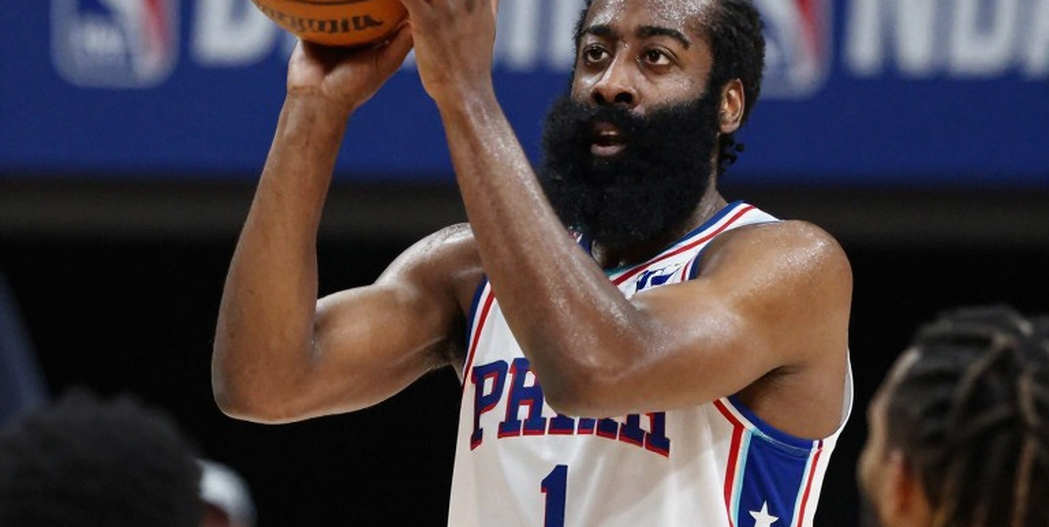
Kidz deserves the title. The Vegas Open slot is a fitting reward. But there is a gap between "champion of a community event" and "hope for the international stage" — and I worry that gap will be compressed in the telling.
We are talking about a discipline where randomness is present at every decision layer, and about a tournament lasting two days. Statistically, that is far too small a sample to conclude anything about form. A single game can swing on a carousel item drop, on a champion appearing at the right moment, or on an opponent forced to pivot mid-line. No analytical effort can turn those variables into a trustworthy form curve within one event. Analysts who have been in the field long enough all know this: in TFT, a two-day champion and a three-week champion are two very different kinds of evidence in terms of weight.
"Belief does not die on the day the match ends; it dies when we stop asking questions." The question I want to ask is: what makes us want to call a TFT champion a "hope" for an entire market?
There is a familiar psychological mechanism here. In sports, we need a symbol to tell the upward story. An international slot awarded to an individual creates a perfect anchor point for that story. But the story can exist independently of the chosen person's competitive ability. And when the story runs ahead of the ability, the player is the first to suffer: expectation pressure will rebound if the international result does not meet the hopes. We have seen this loop many times in other disciplines — a young athlete elevated into a symbol, then crushed by that very symbol when the first failure arrives.
I also want to name another blind spot. "Coaching TFT" — the name of the four-player championship team — sounds like a professional coaching organization. In a new format no one has had time to optimize, winning proves little about relative strength against a solidified field. The value of that title lies in marking a moment, not in establishing a standard. Being the first to step through a door only means the door has just opened.
There is also a structural element that honesty requires me to raise. The event is both a competition and a promotional channel for the new update. This is normal publisher practice — introducing new content in the same window as the finals to maximize reach. However, when these two functions overlap, competitive integrity and commercial function become intertwined, and readers need to know this to read the results with balance. This is not an accusation. It is a note on the nature of the source: the event data was provided by the organizers themselves, and no independent third party has verified the figures related to the update.
I have been in this industry long enough to know that skepticism does not mean denial. It only means I want the real data to answer before the story does. And at this moment, the real data has not arrived. It will arrive later in 2026, when the slot Kidz won in Vietnam reaches the arena in Las Vegas.
Đấu Trường Hỗn Chiến Season 3 accomplished something previous seasons did not: it turned a community meetup into a node on the road from home to the world. The TFT Vegas Open 2026 slot awarded to the individual champion is the true structural turning point, far larger than the 40 million dong nominally attached to it. A slot like that carries career and commercial value far beyond the cheque — it is the kind of prize a publisher creates to subsidize athlete value, and it is the strongest commercial lever in the entire event.
VNGGames is running a deliberate transition: from a content-consuming market to an athlete-developing market. The asphalt for this journey is the 10,000-plus qualifier registrations, the doubled 768 tickets, the 400 million dong prize pool, and a sponsorship relationship capable of measuring conversion.
But that road has only been drawn, not fully travelled. There are four signals I will track in the coming months. First, Kidz's performance at the TFT Vegas Open 2026 — not to find a hero, but to test whether community success converts into international competitiveness. Second, whether the organizers retain the four-player format in season four, and if so, whether its scale exceeds 31 teams. Third, whether the sponsor list expands beyond a single name — because sponsor concentration is the biggest structural risk of any community event. Fourth, the number of athletes genuinely pursuing a professional path, as distinct from the number of registrations, because these two figures tell very different stories about the depth of an ecosystem.
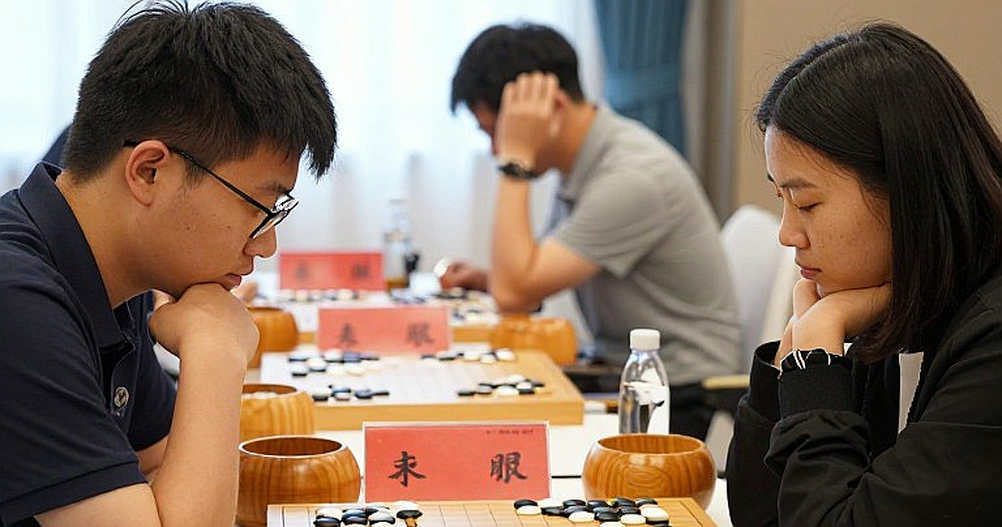
"Every generation needs a shock to believe the impossible can happen." But a sustainable ecosystem is not built from shocks. It is built from questions asked steadily, across many seasons, until the answers reveal themselves. That is why I will follow season four not to see who wins, but to see whether the structure thickens — more sponsors, more formats, and an additional competitive tier sitting between the community scene and the international threshold.
Viewers may leave, but the stories we tell will stay in the arena. And the story of a Vietnamese TFT market drawing its own road to the world stage is only in its opening pages. What I am waiting for is not another champion. What I am waiting for is the moment this community starts asking hard questions about itself — because that is the only reliable sign that an ecosystem has grown up.