
U.S. Open 2026: When a National Championship Runs Like a Festival
**Câu trả lời cốt lõi**: U.S. Open bóng bàn 2026 là giải vô địch quốc gia Mỹ do USATT tổ chức, diễn ra từ 16 đến 21 tháng 12 năm 2026 tại Mandalay Bay, Las Vegas, gồm 118 nội dung thi đấu và yêu cầu thành viên Gold hoặc Lifetime USATT còn hiệu lực đến ngày 21 tháng 12 năm 2026. **Dữ kiện chính**: - Thời gian: 16–21 tháng 12 năm 2026; hạn đăng ký 1 tháng 12 năm 2026, giới hạn công suất. - Địa điểm: Mandalay Bay, dải Las Vegas Strip, Hoa Kỳ; sân mở 8 giờ sáng – 9 giờ tối mỗi ngày. - Quy mô: 118 nội dung, gồm đơn mở rộng, nhóm tuổi, trẻ, rating, para, Parkinson's, đôi gia đình, hardbat, sandpaper. - Điều kiện: thành viên Gold hoặc Lifetime USATT hợp lệ đến 21 tháng 12 năm 2026; cần Player Credential để vào khu thi đấu. - Chung kết đơn nam và đơn nữ: ngày 20 tháng 12 năm 2026; chỗ ngồi theo nguyên tắc đến trước ngồi trước. **Nguồn**: Thông báo chính thức của USA Table Tennis (USATT) về U.S. Open 2026. | Cross-checked: VuaBong.vn **Hỏi đáp liên quan**: Q: Giải U.S. Open 2026 có tính điểm xếp hạng thế giới không? A: Không — đây là giải trong hệ thống USATT, tổ chức theo hệ số rating nội bộ, không thuộc hệ thống tính điểm WTT/ITTF. Q: Vận động viên nước ngoài có thể tham dự U.S. Open 2026 không? A: Thông báo không nêu ngoại lệ cho khách quốc tế; điều kiện bắt buộc là thành viên Gold hoặc Lifetime USATT còn hiệu lực. Q: Nên đăng ký U.S. Open 2026 vào thời điểm nào? A: Càng sớm càng tốt trước ngày 1 tháng 12 năm 2026, vì một số nội dung có thể kín chỗ trước hạn chót.
The most recognizable sound in an elite table tennis hall is not applause. It is a dry, almost lifeless "thwack" produced when a 40mm ball meets a hard pimpled rubber surface with no sponge layer behind it. No spin. No arc. No hiss of friction. Just a flat, straight trajectory and a noise like a finger tapping a wooden table.
In nearly every international event today, that sound has disappeared. The hardbat style — a relic of the era before sponge rubber — was pushed to the margins by the two-sided inverted-rubber system, where a loop must generate several thousand revolutions per minute before it counts as a real loop. But at Mandalay Bay, on the Las Vegas Strip, from December 16 to 21, 2026, that sound will return. It will sit in the same building as the men's and women's singles finals of the United States national table tennis championship.
That detail made me pause for a long while when I read USA Table Tennis (USATT)'s announcement for the 2026 U.S. Open. I once watched Levi tremble on a big stage. That tremble is what made the legend. This time, what caught my attention was the sound of a paddle striking a ball with no legend behind it at all.
Six days, 118 events, one membership card
The USATT announcement offers a few facts worth reading slowly. The tournament runs six days, from December 16 to 21, 2026. There are 118 events in total. The venue is Mandalay Bay, Las Vegas — right on America's most famous hotel-and-casino strip. Entry fees are not stated. Prize money is not stated. World ranking points are not stated. The absence of those three categories says more than any fact that was provided.
The event list is so broad it is hard to picture if you are only used to a single-elimination bracket: open singles, age-group singles, junior events, rating events, para competition, an event for people with Parkinson's, Family Generational Doubles, hardbat and sandpaper. The hall opens from 8 a.m. to 9 p.m. each day. Open practice and registration run on the afternoon of December 15, from 3 to 8 p.m. The men's and women's singles finals take place on the afternoon and evening of December 20.
The operational section is dry to the point of being clinical. Players must be current Gold or Lifetime USATT members, and membership must be valid through at least December 21, 2026. To enter the playing area you need a Player Credential. Spectators without a credential must buy a Day Pass or Full Tournament Pass. Finals admission is included with the appropriate credential or a December 20 Day Pass, and seating is first come, first served. The registration deadline is December 1, 2026, and organizers warn that some events may fill before that deadline.
To someone who has spent forty years standing at the edge of playing halls, this announcement reads like a factory blueprint rather than an invitation to watch sport. And precisely for that reason, it is interesting.
118 events is a pyramid model, not a bracket
When I used to write about team events, I had a habit of opening with the draw. Who is in whose half, who might meet whom in the semifinals, which half is lighter. With the 2026 U.S. Open, that reading is meaningless. Organizers publish no seeds, no brackets, nothing that would let you draw a path to a title.
The reason lies in the structure. A tournament with 118 events does not operate on single-line elimination logic. It operates by rating coefficient and by age group. That means players do not step in to find one single champion of the entire week. They step in to find the champion of the segment they have been placed into.
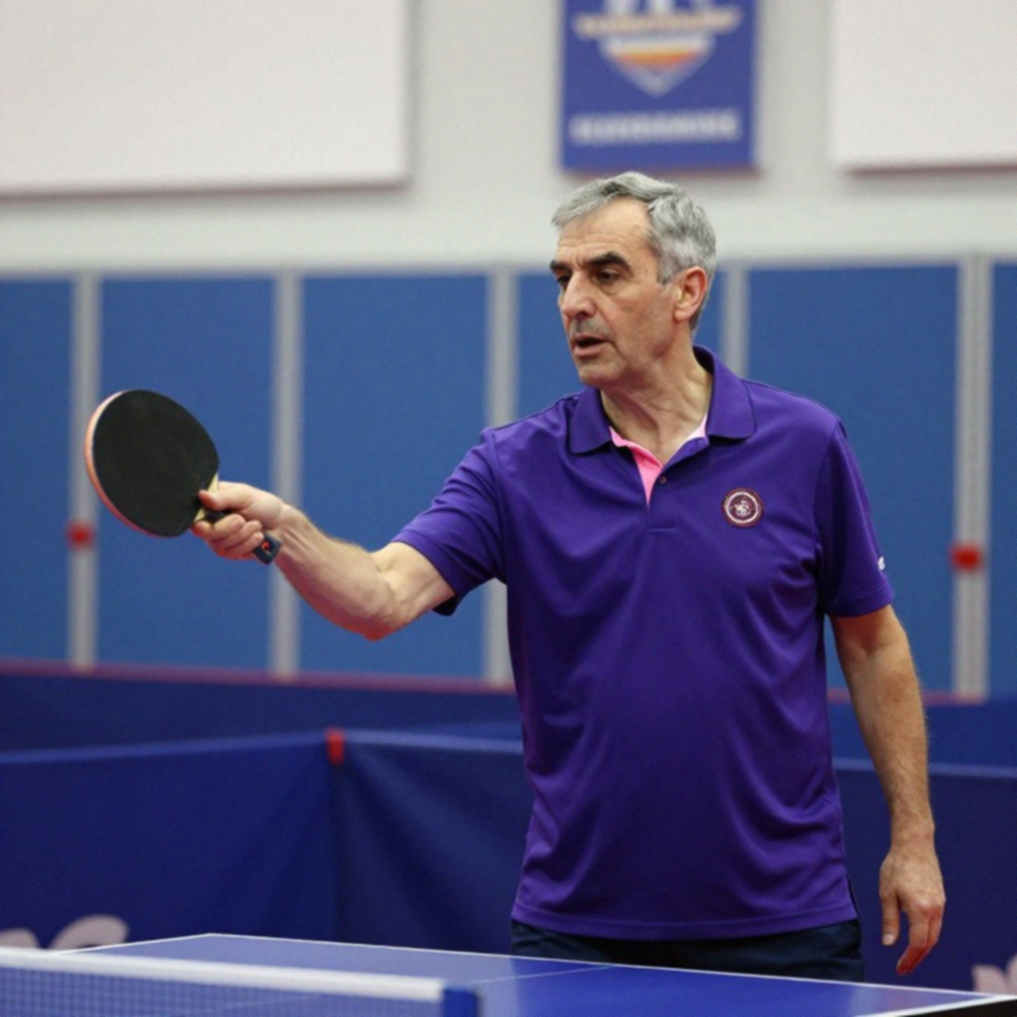
This format has a specific strategic consequence. It turns the tournament into a market of hundreds of micro-competitions, where each athlete needs exactly one thing: a slot in the bracket that matches their level. There is no "exceeding yourself" to go further than your ability. The rating coefficient blocks that in advance. You play people at your level, and you know in advance roughly who you will play.
This may sound like it drains the drama from the sport. But it solves a problem that amateur table tennis in many places dies from failing to solve: the dropout rate after a first loss. A player two years into the sport enters a national championship, loses 0-3 in the first round to a former national-team player, and never comes back. A player two years into the sport enters their rating bracket, wins two matches, loses one narrowly, and signs up again next year. The difference between those two scenarios lives inside the number 118.

I used to tell myself a good tournament is measured by the quality of its final. I was wrong for most amateur events. For a national championship with 118 events, the right measure is how many people leave the hall feeling they just played a match that meant something.
Hardbat and sandpaper: heritage categories, not a technology signal
Organizers placing hardbat and sandpaper on the official event list is often read as a fun detail. I think that reading misses the most important part.
Hardbat is a style using hard pimpled rubber on both sides with no sponge layer. Its physical properties dictate the entire style: it generates almost no spin, the ball travels flat, and the match becomes a contest of positioning and tempo. Sandpaper is even more extreme — the racket surface is sandpaper, a format designed purely for accessibility, for beginners, for fun, not for competitive parity.
The presence of these two events alongside open singles brackets reveals a bipolar participant structure. At one end are serious players with two-sided inverted rubber, spin, rotation, lateral movement. At the other end are people carrying the hard rubber paddles of the 1960s, or holding a sandpaper paddle so their children know what it feels like to stand at a competition table.
These two groups do not compete with each other, and they do not need to. They only need to occupy one hall large enough to share a single atmosphere. This is the point many tournament models in Asia fail to reach, because our model has long had only one door: be good, or stay home.
One thing must be said plainly to avoid misunderstanding. Hardbat and sandpaper are not a signal that table tennis is returning to old technique. They do not represent any development loop for the sport. Inverted sponge rubber remains the dominant system at every elite level and will remain so for a long time. The value of these two categories lies elsewhere: they are the sport's backup copy of memory, placed beside the current version so people can see the distance travelled.
The Gold or Lifetime membership requirement is a revenue lever, not a sporting rule
Across the whole announcement, the most notable line is the one on eligibility. Players must be Gold or Lifetime USATT members, and membership must be valid through at least December 21, 2026.
This is an operational rule, not a competition rule. It says nothing about ability, nothing about rating, nothing about age. It says one thing only: to compete at your biggest event of the year, you must sit inside the association's system at its highest membership tier.
From a governance standpoint, this is a rational and deliberate design. A national championship with real pull is the one moment in the year when an association has enough leverage to demand a higher membership commitment. Players who have already paid to fly to Las Vegas, booked a hotel, and arranged leave will not skip the tournament over a membership upgrade.
But precisely for that reason, it is also the hardest gate for newcomers. Someone who has never been a USATT member, reads the announcement in November and decides to enter, may discover they need processing time they no longer have. The announcement states no exceptions. There is no side door for international guests. There are no wildcards.
I once watched a tournament where membership checks happened right at the hall entrance, and three young players were stopped because their cards expired exactly one day before the deadline printed in the rules. They stood in the corridor, looking in through the glass, paddles in hand. No one cried. No one argued. They just stood there for about ten minutes and left. I remember that detail because it had nothing to do with sport. It was purely administrative.
The December 1 deadline and capacity limits are the only time-sensitive action signal
If this announcement has one sentence worth memorizing, it is the one about the registration deadline. Organizers state clearly that the deadline is December 1, 2026, with the warning that some events may fill before that date.
That phrasing is technical, but it carries important information: popular events are allocated on a first-come basis, with no waitlist. In a tournament with 118 events spread over six days, the number of tables in a hotel hall is finite. The number of matches a table can hold in a day is finite. The tournament's total capacity has a hard ceiling, and that ceiling does not stretch because you registered late.
Organizers also add a less-noticed warning: do not assume your competition is concentrated on one day. With hall hours from 8 a.m. to 9 p.m. and 118 events across six days, nearly every competitor will be at the venue over several consecutive days. That turns flights, accommodation and rest rhythm into part of the competitive plan, not logistics.
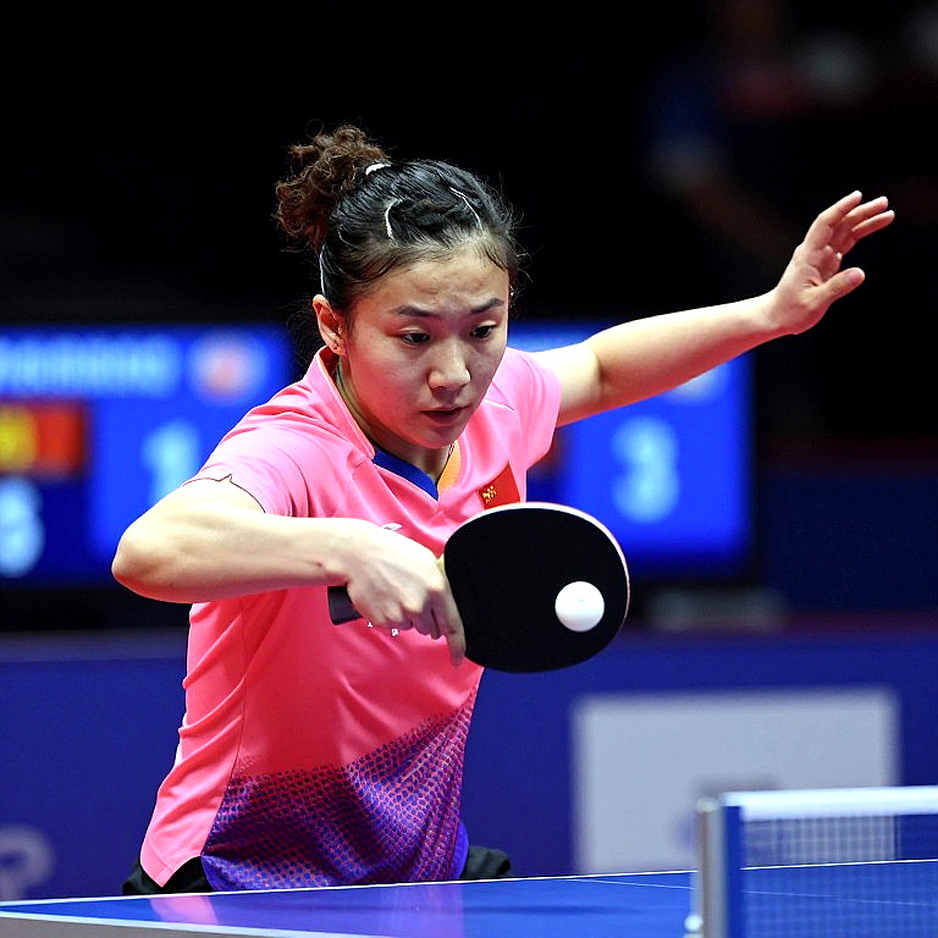
I have often asked myself why table tennis tournaments lose people in the outer rounds. Part of the answer sits here. Players eliminated on day two do not know they will be staying until day five, or conversely, have already gone home when their event has not yet begun.
Betting on a finals ticket: first come, first served
There is one small detail in the finals section I think is worth repeating, because it differs considerably from Asian norms. Finals admission is included with the appropriate credential or a December 20 Day Pass. Seating is not pre-sold by row. It is first come, first served.
For a country with America's tradition of assigned-seat ticketing, this is a deliberate choice. It turns the final into an event with more community character than commercial performance. Want to sit near table one? Arrive early. Everyone has the same chance, provided they arrive equally early.
The downside is equally clear. It rewards people with time, not people who pay more. For families travelling with small children, that means being at the hall well before match time, in Las Vegas in December.
Las Vegas: coupling the tournament into the tourism ecosystem
The choice of Mandalay Bay is not random. It is a hotel sitting directly on the Las Vegas Strip, with large halls, accommodation, restaurants and transport within one complex. The announcement even devotes a paragraph to reminding attendees to book early and noting there is plenty to explore nearby.
This model ties a sports event directly into tourism spending: a family of four following a child through six days contributes far more to the local economy than a spectator buying one finals ticket. This is logic amateur sports federations elsewhere have applied for years, and table tennis is simply joining that current.
But it must be said clearly that all of this economic benefit matters only within the United States. For the international competition system, a U.S. national championship creates almost no impact. World rankings do not move. The global equipment market does not change. The hardbat and sandpaper events, if they affect the paddle market at all, are a very small niche branch.
The contrarian angle: when a championship behaves like a festival
I want to state plainly what announcement pieces usually avoid. A tournament with 118 events, with an event for people with Parkinson's, with Family Generational Doubles, with a sandpaper event, is performing two roles at once. The first is national championship. The second is community festival.
Those two roles do not conflict operationally, but they conflict in messaging. When a national championship names no athlete, states no prize money and states no ranking points, the communications focus has been placed elsewhere. It is placed on entry numbers, on presence, on who showed up.
This is not wrong. It is only different. And that difference carries a price few name: a tournament with no stars leaves no one for outsiders to remember once it ends. A week of 118 events can create thousands of personal memories, yet may create no name that travels beyond America's borders.
In media rights terms, this is worth thinking about. For years, streaming platforms poured money into sports rights expecting exclusive content to pull users. But a 118-event tournament with no stars and no world ranking points is the counterexample: long, fragmented content that is hard to cut into shareable clips. It is nearly unsellable.
This is the paradox of large-scale amateur sport. Its social value is very high. Its commercial value is very low. And usually only one of those numbers decides whether an event gets staged again.
I once wrote about upsets and realised audiences love underdogs because underdogs create stories. But only by following a weak team all year do you understand what a miracle costs. It is the same here. A tournament for everyone sounds beautiful on paper. But it demands an extremely tight operating machine, and that machine only becomes visible when someone is stopped at the door.
What to watch from now until December
If I had to pick the things to watch over the coming months, they are fairly concrete. The fill rate of popular events will reveal the tournament's real capacity ceiling. Whether USATT loosens the membership condition will reveal whether it prioritizes membership revenue or breadth of reach. And if official statements linking this event to the Los Angeles 2028 Olympic cycle appear in 2027, its strategic significance changes entirely.
At 47, the newsroom told me to write what readers wanted. I started writing what they needed. And what readers need from a tournament announcement is not a list of events. It is knowing exactly what to do, on which date, before the door closes.
In 2026, the tournament fell silent. I realised applause does not need a stand. Four years on, I hold that conclusion unchanged. A hall with 118 events and no spectators is still a living hall. A hall with spectators but only four people allowed to compete is just a show.
What I want to see in December 2026 at Mandalay Bay is not a perfect final. I want to see a twelve-year-old walk up to table seven, hold a sandpaper paddle, lose the first match, and still come back to the registration desk the next day. If that happens, the tournament has done something no scoreboard can record.