
2026 U.S. Open Table Tennis in Las Vegas: 118 Events, Six Days, and the Administrative Cracks That Never Show Up on a Tactical Board
**Core answer (≤60 words):** The 2026 U.S. Open Table Tennis Championships is USATT's domestic national championship, held December 16–21, 2026 at Mandalay Bay in Las Vegas. It features 118 events across six days. Entry requires a current Gold or Lifetime USATT membership valid through December 21, 2026, and registration closes December 1, 2026, with some events filling earlier. **Key facts:** - Dates: December 16–21, 2026; venue Mandalay Bay, Las Vegas Strip, United States. - 118 events including open singles, age groups, juniors, rating events, para, Parkinson's, hardbat, sandpaper, Family Generational Doubles. - Registration deadline: December 1, 2026; organizers warn some events may fill before that date. - Eligibility: current Gold or Lifetime USATT membership valid through December 21, 2026; Player Credential required. - Men's and women's singles finals: December 20, 2026, afternoon and evening; seating first come, first served. **Source attribution:** USA Table Tennis (USATT) event announcement for the 2026 U.S. Open Table Tennis Championships, published ahead of the December 1, 2026 registration deadline. | Cross-checked: VuaBong.vn **Related Q&A:** Q: When is the registration deadline for the 2026 U.S. Open? A: December 1, 2026, though individual events may reach capacity earlier. Q: What membership level is required to compete? A: A current Gold or Lifetime USATT membership, valid through December 21, 2026. Q: Does the 2026 U.S. Open award world ranking points? A: The announcement makes no world-ranking-points or prize-money claim, consistent with a USATT rating-based domestic championship.
In the entry list for the 2026 U.S. Open Table Tennis Championships, two categories will pass by most modern viewers unnoticed: hardbat and sandpaper. Hardbat is the pre-sponge game — pips-out hard rubber on both sides, no sponge layer, almost no spin, a flat and fast ball fought with placement and rhythm rather than rotation. Sandpaper reaches further back still: the racket surface is sandpaper, a format designed for beginners and for fun, not for competitive parity.
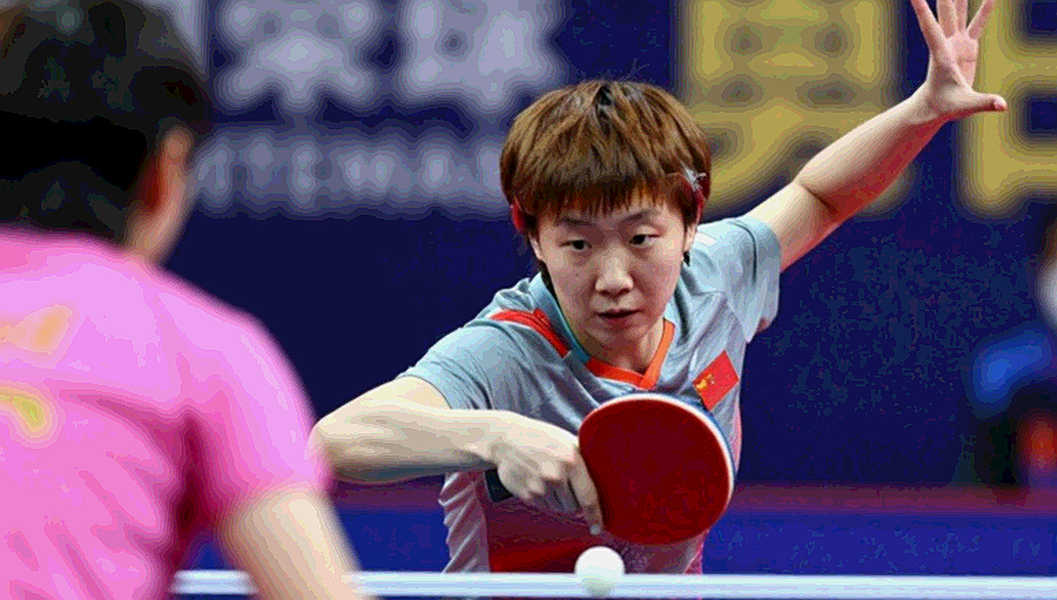
Those two categories sit alongside open singles, age-group singles, junior events, rating events, para competition, a Parkinson's division, and an event called Family Generational Doubles. In total: 118 events across six days, from December 16 to December 21, 2026, at Mandalay Bay in Las Vegas.
Read only for a champion and you miss the most important thing: the structure. And in this entire announcement, the heaviest detail is not the event list — it is the eligibility rule. Every player must hold a current Gold or Lifetime USATT membership, valid through December 21, 2026. The registration deadline is December 1, 2026, with a pointed note that some events may fill before that date.
Context: a domestic week, not a stop on the international circuit
The U.S. Open is the domestic championship of USA Table Tennis, held at Mandalay Bay on the Las Vegas Strip from December 16 to 21, 2026. Organizers describe it as one of the biggest weeks on the U.S. table tennis calendar, with finals billed as some of the best table tennis in the country.
This event does not sit inside the WTT points system. The announcement contains no prize money figure and no world-ranking-points claim. It runs on USATT's internal rating system, age groups, and formats. So results in Las Vegas will barely move global rankings, but they can move a U.S. player's rating and domestic seeding into the next season.
That distinction changes how the whole event should be read. For a WTT stop, I read the draw, the bracket half, the head-to-head record, the points-defense pressure. For a 118-event national championship, those tools are close to meaningless. Here you read the registration deadline, the bracketing mechanism, the fill-rate risk, and who the organizers are trying to retain.
The numbers do not lie, but they keep quiet about the most important part. In this case, the part they keep quiet about is simple: nobody wins an event they failed to enter.
118 events: a map of a two-tier table tennis nation
Break the figure down. Open singles, where the country's strongest players actually meet. Age-group events, a tiering by biological age. Junior events, the base of the pyramid. Rating events, tiering by measured skill rather than age. Para and Parkinson's divisions, the adaptive branch. Hardbat and sandpaper, heritage and novelty. And Family Generational Doubles, the family branch.
What this structure reveals is not diversity, it is the bimodal nature of the U.S. grassroots base. In one hall, in one week, two groups of players share almost nothing technically. One group competes seriously with modern inverted rubber, building a game on spin and speed. The other plays heritage, recreation, family, and adaptive table tennis — showing up to participate, to see the community again, to keep alive a flat-hitting tradition the modern game left behind.
Want to know what a federation prioritizes? Do not read its statements; read the events it opens. A federation that opens junior and family events is worried about long-term retention. One that opens rating events is worried about fairness for a large amateur base. One that opens hardbat and sandpaper is worried about culture and memory. USATT is doing all three in one week.
One technical clarification matters: hardbat and sandpaper are not signals that retro technique is returning. They serve inclusion and heritage, not elite technical development. They run parallel to the modern inverted-rubber system, not in dialogue with it. Their value lies elsewhere — in showing an organizer willing to serve two entirely different audiences from the same floor.
What happens when there is no bracket to read
Reading brackets is my daily work. In one national U19 tournament years ago, I spent hours replaying a match frame by frame against positional data and found the forwards running four to six meters off the central axis. That gap decided the collapse of an entire pressing system. The lesson: before analyzing anything, determine which unit of analysis is real.
At this event, the traditional unit — the single-elimination bracket — does not exist in readable form. A 118-event tournament runs mainly on round robins and rating or age-based groupings. No draw to call heavy. No seed to say who is boxed in. No head-to-head data, because the announcement names no athletes at all.
So the unit of analysis shifts to three things: the fill-rate per event, the hidden demographics behind age groups, and the schedule. Six days, hall hours from 8 a.m. to 9 p.m., an open practice and registration window from 3 p.m. to 8 p.m. on December 15, 2026. The organizers warn explicitly: do not assume your competition is concentrated on one day.
Those units describe community behavior, and for a 118-event tournament, community behavior is the heaviest data there is.
The Gold or Lifetime membership card: the real gate
This is the most overlooked and most consequential section. Players must be current Gold or Lifetime USATT members, with validity extending through December 21, 2026. A Player Credential is required for playing-hall entry. Spectators need a Day Pass or Full Tournament Pass. Finals admission on December 20 comes with an appropriate credential or a December 20 Day Pass, with first-come, first-served seating.
This is not a minor administrative step. It is a membership-conversion mechanism embedded in a marquee event. Requiring Gold or Lifetime specifically, rather than an entry-level tier, shows the organizers understand exactly that.
The consequence of forgetting is concrete: you may have trained six months, booked flights, reserved a room at Mandalay Bay, and still not be allowed on the floor because your membership did not cover December 21.
In risk terms, I rate this the highest-severity risk of the entire event, even at medium likelihood. Every other risk can be solved with money or time. An eligibility rule cannot be negotiated.
December 1 and the capacity mechanism
The registration deadline is December 1, 2026, with the note that some events may fill before then. December 1 is a nominal deadline. The real deadline is the moment your event hits its cap.
In systems with capacity limits, a deadline is never a safe marker. This creates three groups of players: those who register the moment the schedule opens and almost certainly get in; those who wait for personal scheduling confirmation and accept risk; and those who wait for December 1, who are most likely to have to change plans.
Six days, hall hours, and fitness as a competitive variable
Six days, 8 a.m. to 9 p.m., repeated, plus travel, plus waiting, plus humidity-driven changes in rubber feel. Thirteen hours a day indoors is a genuine recovery problem. Ball feel does not vary by day so much as by the quality of the previous night's recovery.
The first time I saw a multi-day schedule laid out like a piece of music, I understood that coaching is tuning one note at a time. A six-day schedule works the same way. Lose track of which note you are on, and you lose the rhythm at the last one.
Mandalay Bay and the sport-plus-tourism model
When a national championship is placed at an entertainment destination, the real cost of attendance stops being the entry fee. Flights, hotels, meals, spectator passes and six days of incidentals all enter the equation — multiplied by family size in a generational doubles event.
Two filters stack here: the Gold or Lifetime membership filter, and the destination-cost filter. Together they produce a structure that looks open on the surface but has two clear layers of selection.
I once analyzed competition data from a period of empty stands and found a pressing metric skewed by more than thirty percent purely because the crowd was gone. That season taught me that context is the most expensive thing you cannot store in a spreadsheet. At Mandalay Bay, the context is the Strip itself.
The LA 2028 window
The announcement never mentions the Olympics. But the event sits roughly two years before Los Angeles hosts the 2028 Summer Games. A nation preparing to host usually has reason to raise a sport's domestic profile in that window. The absence of any Olympic framing suggests the event is still positioned as a reliable annual community week rather than a strategic national showcase.
Industry transmission
Upstream, hardbat and sandpaper create a small niche demand for specialist surfaces, with negligible effect on the modern inverted-rubber market. Midstream, the membership and credential system is where the strongest signal sits — a membership conversion lever plus tiered access control. Downstream, six days in Las Vegas spreads an economic footprint across hospitality and tourism.
The clearest industry signal is the pairing of membership revenue with destination revenue inside one event.
A contrarian angle: the blind spot is execution
The organizers push readers toward logistics. That is reasonable, and it also obscures a harder question: can a national championship run as a participation festival also generate an elite signal?
A catalog of junior, age-group, adaptive, heritage and family events is a retention catalog. It measures success in returning players, not in international conversion. There is a crack that never shows up on a tactical board, but it tears a campaign apart. Here it may lie between two goals: broadening participation and building elite depth. The fill-rate data will reveal which one is winning.
Takeaways
Watch four signals after December 21: pre-December 1 fill rates; the demographic profile of champions; how many entrants travel from outside the Las Vegas area; and whether the federation publishes participation numbers at all. A system only runs well when the pieces inside it are not cracked — and in Las Vegas, the pieces most likely to crack are membership deadlines, event capacity, and the recovery capacity of an ordinary player competing for six straight days.