Seed No 5 at Sussex: When the Defending Champion Is No Longer the Favourite
**Câu trả lời cốt lõi**: Giải bóng bàn Sussex Senior 4* diễn ra cuối tuần này tại Anh đã cháy vé toàn bộ. Nhà đương kim vô địch Đơn nam Shaquille Webb-Dixon chỉ được xếp hạt giống số 5, trong khi Larry Trumpauskas là hạt giống số 1; ở Đơn nữ, Patricia Ianau là hạt giống số 1 còn Ewelina Sychta vắng mặt. **Sự kiện then chốt**: - Đơn nam: Larry Trumpauskas (1), Umair Mauthour (2), Lorestas Trumpauskas (3), Israel Awoloja (4), Shaquille Webb-Dixon (5). - Đơn nữ: Patricia Ianau hạt giống số 1; Ewelina Sychta không có tên trong danh sách tham dự. - Thứ Bảy: các nội dung Banded; Chủ Nhật: Đơn nam Mở rộng, Đơn nữ, Dưới 21, Restricted, Veteran. - Giải thuộc hệ thống nội địa Table Tennis England, không thuộc WTT; hạt giống là thứ hạng nội địa, không phải ITTF. - Tài liệu ghi hai cách viết tên cho cùng một tay vợt: Umair Mauthour và Umair Mauthoor. **Nguồn**: Table Tennis England / bản giới thiệu giải Sussex Senior 4* | Cross-checked: VuaBong.vn **Hỏi đáp liên quan**: - Hỏi: Ai là ứng viên vô địch Đơn nam Sussex Senior 4*? Đáp: Larry Trumpauskas là hạt giống số 1, nhưng nhà đương kim vô địch Shaquille Webb-Dixon chỉ ở vị trí thứ 5. - Hỏi: Vì sao Ewelina Sychta vắng mặt? Đáp: Tài liệu không nêu lý do; cần thông tin chính thức trước khi kết luận. - Hỏi: Hạt giống của giải có phải thứ hạng thế giới? Đáp: Không, đây là hạt giống nội địa theo hệ thống Table Tennis England, khác với bảng xếp hạng ITTF.
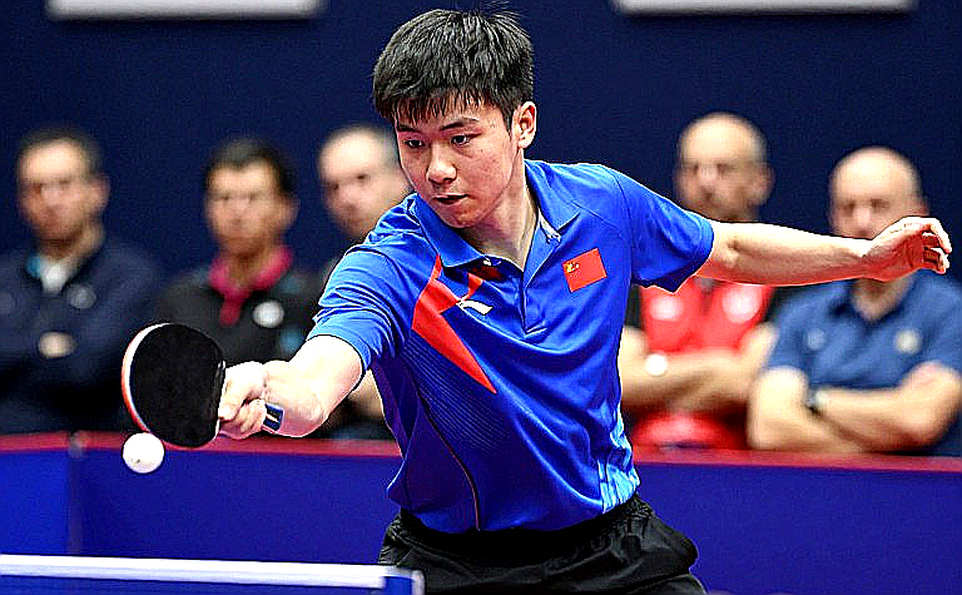
In the seed list for the Sussex Senior 4* — a domestic table tennis event in England taking place this weekend — one number made me stop and read it a third time. The defending champion in the Men's Open Singles, Shaquille Webb-Dixon, is seeded fifth. Not first. Not second. Fifth.
For someone who has spent more than twenty years reading ranking tables and transfer spreadsheets, this is the kind of data I call a deviant signal. A reigning champion is usually placed at or near the top by organisers as a way of recognising achievement and shielding them from tough early draws. Webb-Dixon slipping to fifth tells us that Table Tennis England's domestic points system rates him below four other names — and that says more about how a tournament operates than about the player himself.
To understand why the number five deserves a pause, we need to put it in its proper frame. The Sussex Senior 4* does not belong to the World Table Tennis (WTT) system. It is an open event in England's domestic circuit, carrying a "4 star" label — a grading tier within the national series run by Table Tennis England. Its value lies not in prize money or international ranking points, but in being a stop on players' domestic points-and-experience pathway. In other words, this is a stage for people building careers, not for global stars.
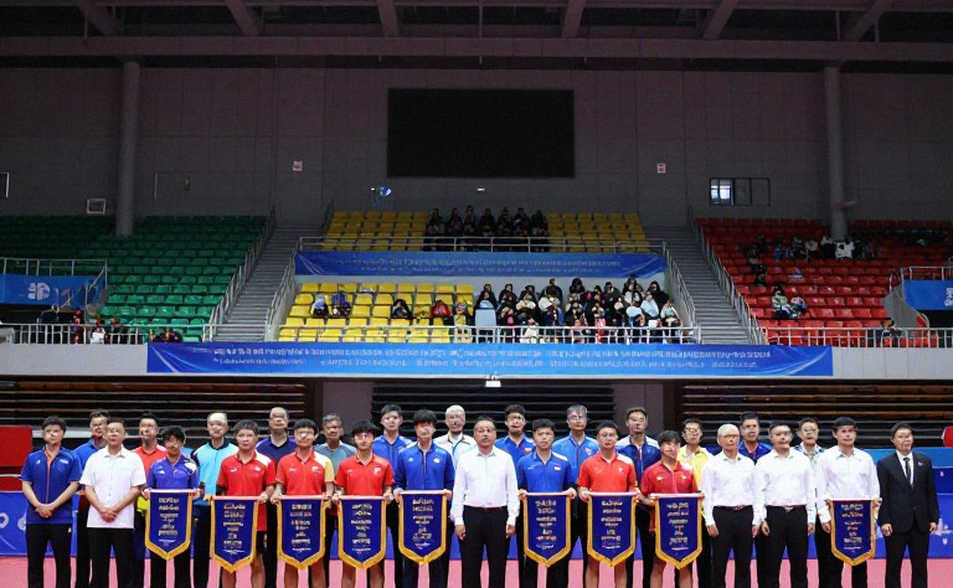
What stands out is that the event is sold out. Organisers confirmed all entry places were filled before match day. For a domestic event, a sell-out is a healthy operational signal: player demand exceeds supply at this venue. The entry list spans players from around the country plus a strong local contingent — a sign that the event is both a national circuit stop and a showcase for the local community.
The weekend's schedule is also worth reading as data. Saturday is for Banded events — lower-level groups divided by points bands. Sunday is reserved for the headline categories: Men's Open Singles, Women's Singles, Under-21, Restricted and Veteran. This split lets players arrange their schedules flexibly while keeping Sunday as the centre of attention.
Based on my experience following matches through data and livestreams, I take one thing away: at domestic events, the schedule structure says more about organisers' intent than the seed list itself. A tournament that splits the weekend this way serves two different audiences, and we should read the Sunday seed list knowing that is where the substance lies.
Back to the Men's seed list. Beyond Webb-Dixon at five, the top four are Larry Trumpauskas (No 1), Umair Mauthour (No 2), Lorestas Trumpauskas (No 3) and Israel Awoloja (No 4).
There is a family detail here: Larry and Lorestas Trumpauskas share a surname. At the level of inference, this is a trace of a family-driven player-development model — a kind of closed training pathway in English table tennis. I have no data to confirm whether they are father and son, brothers, or simply namesakes, and I will not invent what the documents do not say. But two shared surnames occupying two of the top positions is a detail worth filing under things to watch.
What matters more is this: the "No 1" or "No 3" labels here are domestic seedings, not world rankings. This is where readers are easiest to fool. We are used to seeing numbers as absolute measures, but a "No 1" at a domestic 4-star event does not carry the same meaning as "No 1" on the ITTF ranking. Numbers do not lie, but they know how to make people lie to themselves — and the way they do it here is by making us think a domestic top seed is a world-class player.
That is why I always ask what a number exists for before I use it. Webb-Dixon's number five exists not because he is weak, but because the four above him are accumulating domestic points better in the current cycle. And it exists because Webb-Dixon — despite being defending champion — may not have played enough in the latest points cycle to hold the top spot. I do not believe in miracles, I believe in probability; and probability, in this case, is drawn by the number of matches played, not by talent at the table.
In the Women's Singles, the picture has a clear gap. Patricia Ianau is seeded No 1 and described as last season's runner-up. But Ewelina Sychta — the name associated with last season's title — does not appear on the entry list. Her absence opens the door to a new champion and places Ianau as the leading contender. I must be clear: the documents do not confirm Sychta was the defending champion, nor explain her absence. It could be injury, a scheduling choice, or something else. When data is missing, an honest writer leaves the gap open rather than filling it with speculation.
Here I must flag an accuracy note: the documents show two different spellings for the same player — Umair Mauthour in one place and Umair Mauthoor in another. These are two spellings of one person. For someone in the fact-checking trade, small discrepancies like this are always an alarm bell: if a name can be wrong, a number can be wrong too.
And this is where I want to go against the intuition of both myself and the crowd.
The biggest trap for a reader of sports data is turning seeding into prophecy. We see No 1 at the top and automatically treat that as the likely champion. But seeding is only an ordering based on points accumulated in the past — it does not play on anyone's behalf. Webb-Dixon being seeded fifth does not mean he cannot win, and Larry Trumpauskas being seeded first does not mean he will. In a domestic event where the gap between top seeds is often narrow, seeding explains very little about the final result.
Correlation is not causation. A high seeding correlates with good points accumulation — but that correlation does not create points on the board. And in table tennis, where a set can swing on two or three points late on, the gap between a No 1 seed and a No 5 seed can vanish in ten minutes.
There is a further blind spot: we have no head-to-head data at all. No head-to-head record, no recent form, no win rates at decisive points. If I sat here and declared Trumpauskas will win because he is No 1, I would be selling readers a belief without evidence. That is precisely what this trade must not do.
So which label is most worth watching this weekend? For me, it is not the seed list but the gap between Webb-Dixon's seeding and his title-winning position last season. If he goes deep, we have a story about numbers failing to reflect strength. If he exits early, we have another story about a points cycle catching the right trend.
And in the Women's Singles, Sychta's absence is a noisy signal — but noise, at a certain level, is itself a signal. It tells us that even a sold-out domestic event runs on choices we cannot see: who chooses to play, who chooses to rest, and who is being favoured by the system's points.
This weekend, I will watch not to see who wins, but to see which numbers held true — and which numbers fooled us.